


Chandigarh, November 11, 2026 (Yes Punjab News)
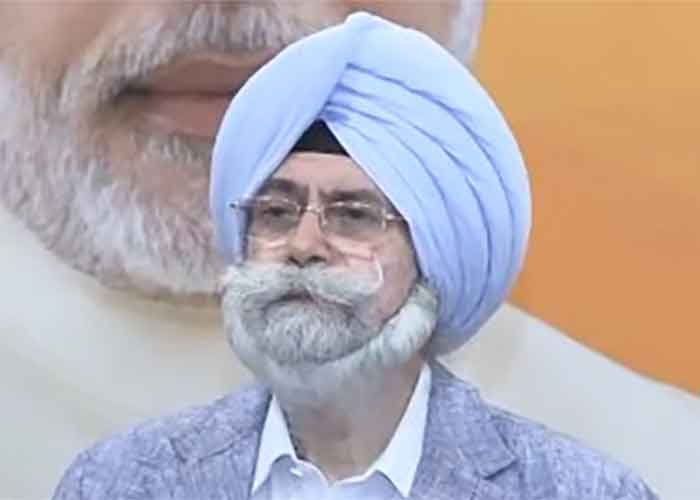
Senior Advocate H.S. Phoolka, who has spent four decades pursuing justice for victims of the 1984 anti-Sikh massacre, on Wednesday criticised claims in Sonia Gandhi’s newly released memoir, Belonging: A Journey of Love. Addressing the media in Chandigarh alongside state media head Vineet Joshi, Phoolka accused the memoir of distorting historical facts and giving an unwarranted clean chit to former Prime Minister Rajiv Gandhi and the Gandhi family.
Phoolka rejected the portrayal of the 1984 violence as a spontaneous Hindu-Sikh conflict triggered by public anger. He maintained that the killings were organised and carried out by Congress workers and affiliated elements, while law enforcement failed to intervene. He described the violence as not only the murder of innocent people but also a premeditated assault on justice, the rule of law and the Constitution.
Challenging Sonia Gandhi, Phoolka asked her to identify even a single incident of public unrest or communal violence in Delhi during the afternoon of October 31, 1984, after then Prime Minister Indira Gandhi was shot. He claimed that the city remained peaceful that afternoon and alleged that the violence began around 5 pm, when organised groups attacked the motorcade of President Giani Zail Singh outside AIIMS. He described the incident as the beginning of a planned political operation rather than a spontaneous public reaction.
Phoolka also disputed Sonia Gandhi’s account of the delay in deploying the Army, which reportedly attributed the hesitation to then Army Chief General A.S. Vaidya’s concerns about Sikh soldiers in units stationed near Delhi. Citing Justice Misra Commission records and testimonies of senior military officers, he said the Army Chief’s role was to make troops available upon formal requisition, while deployment, allocation of sectors and orders to shoot at sight rested with the civil administration.
According to Phoolka, nearly 6,000 trained troops were already present and available in Delhi between the night of October 31 and the morning of November 1. He alleged that they were kept inside cantonment barracks while the violence continued, and claimed that timely deployment could have saved more than 2,000 Sikh lives.
Questioning the absence of action against police and civil officials accused of delaying the deployment, Phoolka asked why no such officers were held accountable if Rajiv Gandhi bore no responsibility. He further alleged that leaders and officials named by victims were subsequently rewarded with parliamentary tickets, ministerial positions and promotions. He also referred to Rajiv Gandhi’s remark, “when a big tree falls, the earth shakes”, describing it as an explicit justification of the genocide.
Demanding accountability, Phoolka said historical claims must be assessed against judicial commission records, inquiry documents and evidence from the time rather than political memoirs. He called on Sonia Gandhi to either produce verifiable documentary evidence supporting her account or issue an unconditional public apology.
 FOLLOW NOW