



Panaji, July 16, 2026
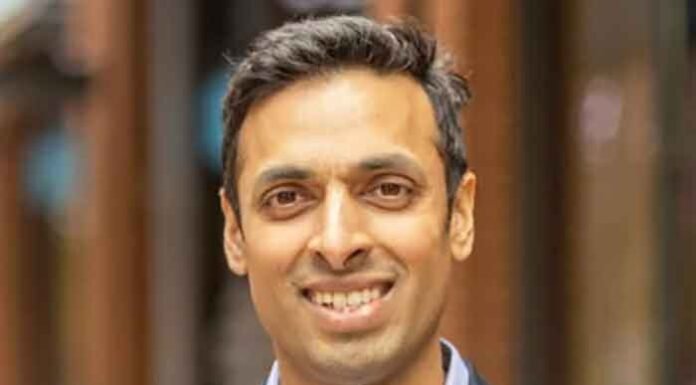
Philosopher and author Acharya Prashant, speaking at length on the NEET paper leak, the student suicides and the protests that have followed, has said the crisis is not merely an administrative lapse but “a sign of a far deeper crisis in our education system and our society.”
Amid the ongoing student protests at Jantar Mantar and educationist Sonam Wangchuk’s eighteen-day fast, he urged Wangchuk to end his hunger strike and appealed to the government to open a dialogue.
Speaking to the media in Goa, Acharya Prashant said that a matter this grave calls for reflection rather than an instant reaction.
Turning to the human depth of the crisis, he said, “Twenty-two lakh applicants means twenty-two lakh families. Among these students, some gave two years, some four, some five. They gave up playgrounds, gave up childhood, gave up festivals. And when they learn the paper has leaked, it is not just one examination that breaks, but their trust breaks.”
That broken trust, he said, does not stay confined to a single day. “They carry the conclusion through their whole lives that truth, honesty, knowledge and hard work count for nothing, and that the one who gets ahead is the one who is dishonest and has money.”
Because in India an entire family invests together in a single student’s preparation, he noted, the weight of this collapse falls on the whole family. He acknowledged that the administration does act after such allegations, that examinations are re-conducted and arrests are made, but said that these incidents, recurring year after year, have shaken the basic trust of the young.
Referring to more than a dozen student suicides in recent months, he said that a person breaking from within is itself a great form of self-destruction, one whose numbers are never even recorded.
Of Wangchuk, he said that his entire life stands as testimony to his sincerity. “As far as his track record bears witness, he is a serious and truthful man. In a dry, cold desert like Ladakh, where the formal system could not even deliver education, he brought children to school. He showed through his own life that education is not the name of rote learning, but of living rightly.”
His appeal that followed was direct: “You can serve India far more by staying alive. Society, Ladakh, India, the environment and education all need you. Please break your fast.”
He appealed to the government to talk. “Conversation is a mark of graciousness; dialogue is a sign of good character. It does not befit a democracy that a sensible and respected citizen must stake his life merely to be spoken to.”
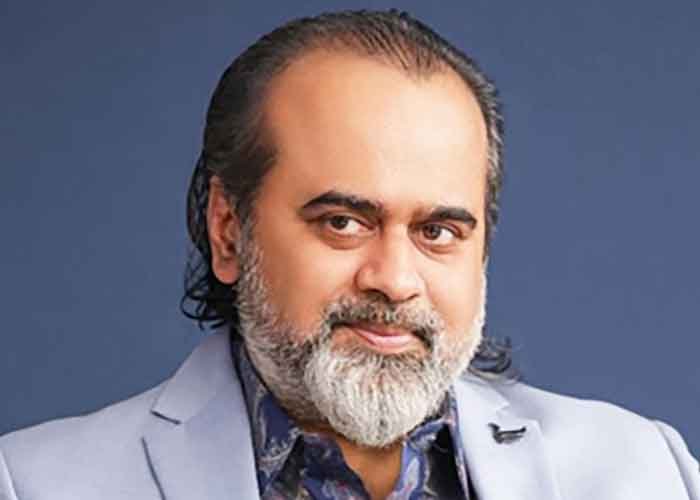
Acharya Prashant then turned to what he considers the real question. “There are two events here. The first, which everyone is discussing, is that the system broke and the paper leaked. But the second event is deeper, and it is hidden. Someone taught our young that the price of a rank is greater than the price of their life.”
He described the leak not as an accident of the market but as its product. “Papers leak only when someone is willing to sell and someone willing to pay heavily to buy. With twenty-two lakh candidates and a few thousand seats, in such a stampede brokers are bound to appear. The leak is no accident that befell this market; it is a product of this market. Both sides have agreed that this piece of paper is worth a very great deal.”
He then asked who had set up this market. “It was not set up by the broker who leaked the paper, nor by any ministry. This value system was built in the home, in the meetings of relatives, under the watch of parents.”
To parents, his question was, “An ordinary, beautiful child was born in your home. When did you turn that child into an entrance-exam project? If you truly loved the child, you would not tie its self-worth to the result of a single examination.”
To teachers, he put the question of how they had defined education. There are two kinds of education, he said, “one that gives a livelihood and one that gives life,” but teachers had placed before the child only the race for a livelihood, turning education into an instrument for the suppression of the individual rather than the development of the individual.
He held the students’ demand for justice to be entirely legitimate, yet placed a question before them too: “The model of the future you have built for yourselves, who gave it to you? If it were truly your own, ten thousand people would not be running behind a single seat in one and the same direction. Everyone says we are unique, so why is everyone in the very same race? This is an imported dream, an implanted desire.”
Clarifying his point with a metaphor, he said that the world today treats every crisis the way a society would that builds better roads, installs softer dividers and arranges faster ambulances rather than attending to the condition of a drunk driver. “We are ready to do everything except look at the driver’s condition. Man is that driver, and that is the one thing that needs to change.”
He accepted the need for external reform but called it incomplete. “By all means fight the wrongdoing in the system; that is your right. But if awareness does not awaken within, then however many changes you bring outside, things will remain just as they were, having only changed their names and forms.” Citing the vision of the saints, he quoted, “Maala pherat jug bhaya, phira na man ka pher: turning things only on the outside does not carry one very far. We are the ones who build the system. If we are corrupt within, we will build a good system by day and slip out through the very back doors of our own making by night.”
This, he said, is why self-knowledge is needed. “We do not need only vocational education; we need a mass education of the self. If we keep avoiding it, such tragedies will keep recurring, and the lives of our children will keep being lost, on one pretext today and another tomorrow.”
In closing, he said that for India he had no appeal but a question. “How is it that whenever any incident occurs, we see only its outer side and never its root? We are eager to point the finger outward, to say he is responsible, he is responsible. Those outside are indeed responsible, but will we honestly admit that those within bear just as much responsibility?” His conclusion: “A system cannot be honest if the people who build it are dishonest within. The one seated within, who wishes to change everything outside but not himself, to look at that one honestly may itself be enough to change it.”
Acharya Prashant is an alumnus of IIT Delhi and IIM Ahmedabad and the founder of the PrashantAdvait Foundation. His work, drawing on Indian and global philosophy, reaches more than 110 million subscribers across social media. He recently concluded an extensive tour of the United Kingdom, holding dialogues at Cambridge, Oxford, the London School of Economics, University College London and the British Parliament with academics, scientists and policymakers on questions of consciousness, education and inner transformation. He was recently named to the prestigious Watkins 2026 list of the world’s most influential living thinkers.(Agency)
 FOLLOW NOW