


Mumbai, July 10, 2026
The Maharashtra government on Friday passed a Bill to reconstitute the trust governing the historic Ram temple at Ramtek, drawing sharp rebukes from Opposition leaders who question the legality and logic of legislating religious devotion.
The legislative move comes on the heels of a separate controversy surrounding the Shri Ram Janmabhoomi Trust in Ayodhya. Rocked by an alleged Rs 1,400-crore donation theft row, the Ayodhya trust recently began searching for its first CEO, stipulating that “Ram ke prati shraddha ka bhav” (devotion to Lord Ram) is the foremost prerequisite for the role.
However, while Ayodhya’s search committee treats this as an internal hiring preference, the Bharatiya Janata Party (BJP)-led Maharashtra government has taken it a step further by making a declaration of faith a statutory legal requirement.
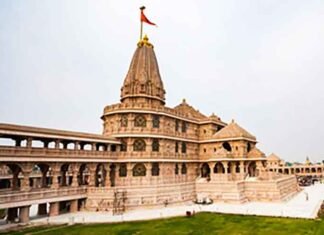
Located roughly 50 km from Nagpur, Ramtek holds immense religious significance. Local tradition holds that Lord Ram stayed there during his 14-year exile, and the site attracts hundreds of thousands of pilgrims annually for festivals such as Ram Navami and Kartik Purnima.
The new Bill seeks to revamp the administration of the Bhosala Devasthan at Ramtek, an ancient temple complex currently overseen by a court-appointed Sub-Divisional Officer. Under the new law, any prospective member of the trust’s management committee must submit a formal declaration affirming they are a “devotee of Shri Ram of Ramtek.”
The newly constituted board will feature government-appointed office-bearers alongside ex officio members, including the local Member of the Legislative Assembly (MLA) and the president of the Ramtek Municipal Council. Trustees will be entitled to an honorarium, travel allowances, and daily allowances funded directly by the temple’s management reserves.
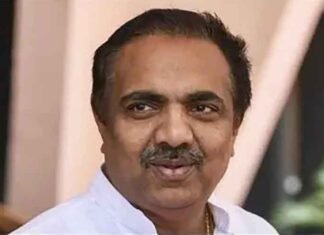
The mandate sparked intense debate on the assembly floor, with Opposition MLAs cutting straight to the clause’s theological and practical absurdities. NCP SP MLA Jayant Patil asked how anyone could be a devotee of Lord Ram from a particular area and whether the government was dividing devotees of Lord Ram.
Shiv Sena (UBT) MLA Varun Sardesai questioned the enforceability of the mandate, asking what the affidavit meant and whether the government had a mechanism to cross-check its authenticity.
Beyond the spiritual metrics, Congress Legislature Party leader Vijay Wadettiwar took aim at the Bill’s financial provisions, invoking the recent financial shadow over Ayodhya. Wadettiwar noted that a total theft of Rs 1,400 crore was reported in Ayodhya.
He questioned why political leaders were being placed on the trust and why trustees should be paid allowances for serving Lord Ram.
The Bill was introduced by Minister of State Ashish Jaiswal, who represents the Ramtek Assembly constituency.
Jaiswal defended the legislation as a necessary step toward transparency, arguing that the temple’s expanding activities, growing financial footprint, and substantial properties require modernised, efficient administration.
However, Minister Jaiswal’s dual role sparked immediate pushback. NCP (SP) MLA Jitendra Awhad publicly questioned whether a clear conflict of interest existed, given that Jaiswal introduced a piece of legislation under which he would automatically secure a seat as an ex officio trustee.
Minister Jaiswal did not respond to the conflict-of-interest allegations or to the Opposition’s questions regarding the verification of the devotion affidavit.(Agency)
 FOLLOW NOW