
New Delhi, May 5, 2026
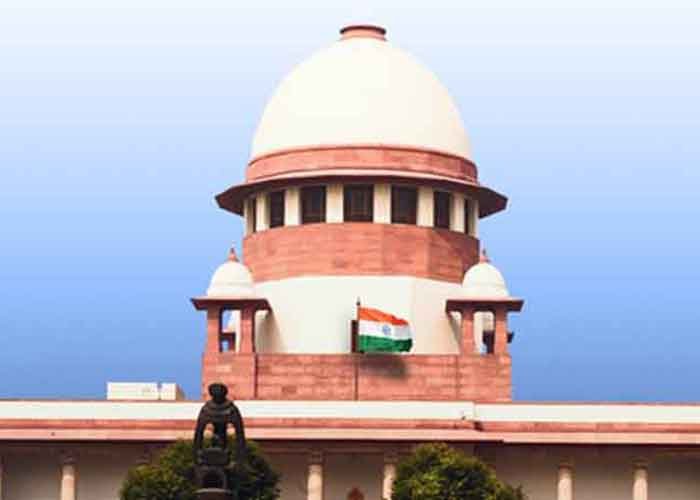
The Supreme Court has quashed criminal proceedings against a man accused of rape on the false promise of marriage, holding that the case stemmed from a prolonged consensual relationship between two adults, which later turned sour.
A bench of Justices K.V. Viswanathan and Manmohan allowed the appeal filed by Shaileshbhai Govindbhai Makwana and set aside the Bombay High Court order refusing to quash the case pending before a trial court in Maharashtra.
The proceedings arose from an FIR lodged in February 2021 under Sections 376(2)(n), 377 and 506 of the IPC, in which the complainant alleged that the appellant had subjected her to repeated sexual assault on the false promise of marriage.
After examining the material on record, the apex court found that both parties were previously married and were fully aware of each other’s marital status at the time they entered into the relationship.
“A careful perusal of the records indicates that both parties were aware that they were earlier married to different spouses,” the Justice Viswanathan-led Bench observed, adding that the complainant had even created a matrimonial profile seeking a second marriage before her divorce was finalised.
It further said that the relationship between the parties continued for over four years, during which they travelled together and maintained a physical relationship without any complaint of coercion.
“Admittedly, for over a period of four years, the parties travelled together and established a physical relationship,” the bench recorded.
The top court also took note of the delay in lodging the complaint, highlighting that no allegation of forcible sexual intercourse was made for nearly four years after the first alleged incident in October 2017.
“Even after 17.10.2017, the parties travelled together and had a physical relationship,” the judgment said, adding that no complaint regarding the alleged forcible acts was lodged until February 2021
The Supreme Court also rejected the argument that the relationship was based on a false promise of marriage, holding that the facts did not indicate any deception from the outset.
“We are of the opinion that this was not a case where a promise of marriage resulted in the appellant deceiving the complainant,” it said, adding that the parties had “happily cohabited together between 2017 and 2020” and that the criminal proceedings were initiated only after the relationship deteriorated.
Referring to its earlier rulings, the bench reiterated that not every breach of a promise to marry would amount to rape, and that there must be a clear nexus between the alleged promise and the physical relationship.
“It would be a folly to treat each breach of promise to marry as a false promise and to prosecute a person for the offence under Section 376 (rape),” the judgment said.
“Unless it can be shown that the physical relationship was purely because of the promise of marriage… it cannot be said that there was vitiation of consent under misconception of fact,” added the apex court.
In view of the facts, the Supreme Court held that continuation of the prosecution would be unjustified and quashed the criminal case pending before the Judicial Magistrate in Tuljapur.
Allowing the appeal, the bench concluded that the offence alleged was not made out even if the allegations were taken at face value, and ordered that all proceedings, including the charge sheet, stand quashed.(Agency)
 FOLLOW NOW