

Chandigarh, March 10, 2026 (Yes Punjab News)
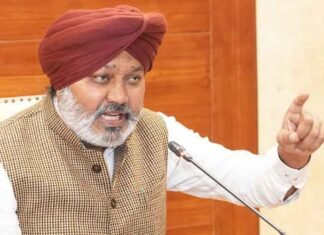
Participating in the debate on the state’s budget in the Punjab Vidhan Sabha, Congress legislator from Kapurthala, Rana Gurjeet Singh, today expressed serious concern over the low outlay (Rs. ₹15,377-cr) for the agriculture sector in the budget for financial year 2026-27 presented by the state government.
Rana Gurjeet Singh stated that although the budget mentions crop diversification, it appears to exist only in name and does not reflect the seriousness required to bring about a real change in the state’s cropping pattern. He emphasized that four years have passed since the AAP government assumed power in 2022, yet the state’s agriculture policy, which was promised at the time, has still not been released.
Highlighting the importance of the agricultural sector, he said that Punjab is an agrarian state and urgently needs a clear agriculture policy to provide direction to its farming community. “The agrarian sector drives the state’s economy, and the current situation shows that agriculture is in distress,” he told the house.
Rana Gurjeet Singh stressed the urgent need to conserve groundwater resources. For this, he urged the government to actively promote crop diversification by encouraging farmers to move beyond the traditional cultivation of paddy and wheat.
He suggested that maize should be promoted on a large scale, noting that Punjab grows superior crop varieties compared to North American countries, where genetically modified maize is widely cultivated.
He also pointed out that the state is facing an acute shortage of storage space for wheat and rice, as large quantities of grain from previous seasons are already lying in warehouses.
“A permanent solution to the storage crisis lies in crop diversification,” he said, warning that the problem will become more severe when the rabi wheat crop starts arriving in mandis from April 1. “The question remains—where will the government store such huge stocks?” he asked.
Offering his experience, Rana Gurjeet Singh urged the government to consider his suggestions on diversification, stating that he has been helping farmers cultivate cash crops such as sugar beet, maize, and is now working on cassava.
Calling for collective efforts, he said that leaders must rise above political differences to find a long-term solution for Punjab’s agrarian community.
He welcomed the increase in canal water usage for irrigation, which has reportedly reached 67 percent, and asked why the state cannot aim to raise it to 100 percent. He added that maize cultivation could help optimize canal water usage.
Rana Gurjeet Singh further emphasized that Punjab Agricultural University, Ludhiana, should introduce more crop varieties that support diversification while also helping conserve the environment.
 FOLLOW NOW