


New Delhi, November 23, 2026 (Yes Punjab News)
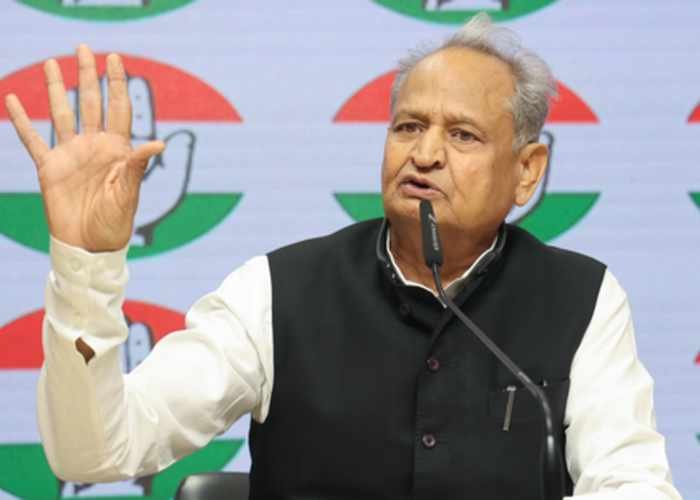
Former Rajasthan Chief Minister and senior Congress leader Ashok Gehlot has criticised the Election Commission’s handling of the Special Intensive Revision (SIR) of electoral rolls, saying the exercise could have been conducted without controversy had Chief Election Commissioner Gyanesh Kumar consulted all political parties beforehand.
In an interview with IANS, Gehlot said the Congress and other Opposition parties had no objection to updating electoral rolls but questioned the absence of wider consultations before the exercise began.
He argued that an all-party meeting could have helped the Election Commission address issues such as duplicate entries, names of deceased voters and people who had shifted from their registered addresses.
“If Gyanesh Kumar had convened an all-party meeting and discussed the issue, the Opposition could have given its suggestions. The SIR could have been conducted collectively, and there would have been no complaints,” Gehlot said.
His remarks come amid sustained Opposition criticism of the SIR process, particularly over concerns surrounding the identification and deletion of names from electoral rolls.
Gehlot also said that protecting democracy was the Opposition’s immediate challenge, accusing the government of pursuing major constitutional and electoral changes without adequately involving political parties.
Referring to delimitation, women’s reservation and the proposal for ‘One Nation, One Election’, he alleged that the government was not taking the Opposition into confidence on decisions that could significantly reshape the country’s political and electoral framework.
He expressed concern over proposals to increase the strength of the Lok Sabha to 850 seats and expand the number of seats in state legislatures, including an increase of around 51 per cent in the context of implementing women’s reservation.
Gehlot said such decisions required wider consultation, as Opposition parties could offer suggestions that might also find acceptance within the government.
Questioning the practice of holding separate discussions with individual political parties, he called for a comprehensive all-party meeting.
“The biggest principle of democracy is how you involve the Opposition in decision-making,” he said, adding that the government’s reluctance to hold broad consultations was creating suspicion.
Gehlot maintained that although the government had the numbers to take decisions in Parliament, meaningful consultation was essential on issues with far-reaching consequences for democracy and electoral representation.
 FOLLOW NOW