

New Delhi, November 15, 2026 (Yes Punjab News)
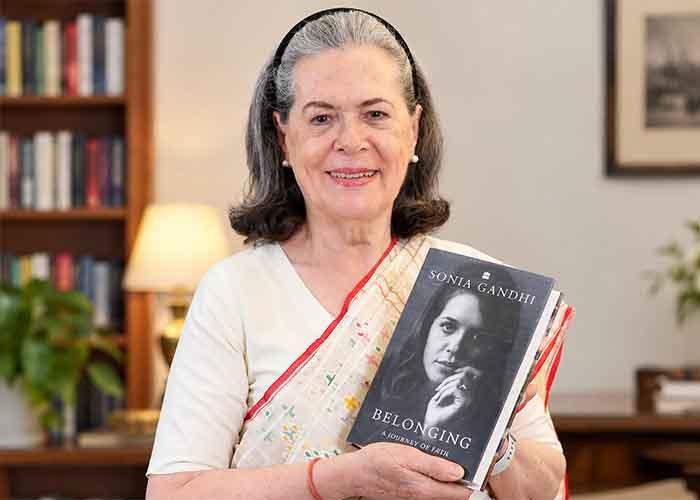
Sonia Gandhi’s recently published memoir, Belonging: A Journey of Love, has reopened several contentious debates surrounding the Gandhi family, the Congress party’s internal power structure and the functioning of the United Progressive Alliance (UPA) government. While the book offers glimpses into the family’s political and personal history, it also leaves several significant questions unanswered.
The memoir has attracted attention not only for its account of key political episodes but also for the timing of its release, as the Congress leadership continues to position Rahul Gandhi at the centre of its political narrative. Its revelations have prompted questions about the party’s leadership culture, the influence of the Gandhi family and the extent to which senior leaders were allowed to exercise independent political authority.
One of the most discussed passages concerns former President Pranab Mukherjee. Sonia Gandhi recalls a conversation with him in 2010, when he reportedly suggested that it might be time for a change at the top. She interpreted the remark as an indication of his long-standing ambition to become Prime Minister and described the suggestion as a shock.
The episode drew a sharp response from Mukherjee’s daughter, Sharmistha Mukherjee. Questioning why her father’s ambition should have surprised Sonia Gandhi, she pointed to his decades of political experience and service, arguing that his rise had been built on merit rather than dynastic privilege.
Her response revived a long-standing question about the Congress: does the party offer its senior leaders an equal opportunity to reach its highest positions, or does the Gandhi family retain the decisive say in leadership choices?
The memoir has also brought renewed attention to the controversy over Sonia Gandhi’s influence during the Manmohan Singh-led UPA government. Sonia has maintained that responsibilities were clearly divided, with Singh running the government while she concentrated on party affairs. She has rejected allegations that she interfered in official files, administrative decisions or appointments.
However, as Congress president and chairperson of the UPA, Sonia Gandhi occupied a central position in the ruling political establishment. Her role in the National Advisory Council and the party-government coordination mechanism contributed to the perception that political authority was divided between the Prime Minister’s Office and the Congress leadership.
There is an important distinction between exercising political influence and directly interfering in government administration. Nevertheless, questions about the extent of Sonia Gandhi’s authority during the UPA years remained among the most persistent criticisms of that government. Her account presents her version of the arrangement but is unlikely to end the debate.
The memoir also revisits two of the most difficult chapters in Congress history: the Emergency imposed by Indira Gandhi in 1975 and the anti-Sikh violence of 1984 following her assassination.
Sonia describes the 1984 violence as a tragic episode and acknowledges the failure to deliver timely justice. Her account has attracted criticism over how it addresses the responsibility of the Congress leadership and the role of her husband, Rajiv Gandhi, who became Prime Minister after Indira Gandhi’s assassination.
Her treatment of the Emergency has also drawn attention, particularly the emphasis placed on Sanjay Gandhi’s role in its excesses. The memoir further touches upon the strained relationship between Sonia and her sister-in-law, Maneka Gandhi, offering a glimpse into the personal divisions within a family that has remained central to Indian politics.
Political memoirs are inevitably personal accounts, and no author can be expected to present a comprehensive indictment of their own family or political organisation. Yet, when the subject is a family that has exercised enormous influence over India’s political trajectory, its account of history invites wider public scrutiny.
Several contentious issues remain outside the memoir’s detailed examination. These include the Bofors controversy involving Ottavio Quattrocchi, allegations of corruption during the UPA years, questions surrounding Sonia Gandhi’s voter registration, and political controversies relating to the Babri Masjid, Batla House encounter and 2002 Gujarat riots.
The memoir also discusses Kashmir’s cultural traditions but does not adequately address the displacement and suffering of Kashmiri Pandits, who were forced to leave the Valley in large numbers during the early 1990s. That omission is likely to disappoint readers who expected a broader reflection on the region’s troubled history.
The larger political questions surrounding Congress remain equally significant. The party has frequently invoked its democratic traditions and institutional legacy, but concerns over internal democracy, leadership succession and the continuing influence of the Gandhi family have persisted.
Ultimately, Belonging: A Journey of Love offers Sonia Gandhi’s perspective on events that shaped both her family and the Congress party. But it is only one account of a much larger political history. Other participants in those events may offer very different recollections.
The memoir has opened some doors into the Gandhi family’s political world, but it has not answered every question. In some respects, its carefully guided account may leave readers with even more questions about the people, decisions and power arrangements that shaped the Congress era.
 FOLLOW NOW