
Dhaka, Nov 7, 2026 (Yes Punjab News)
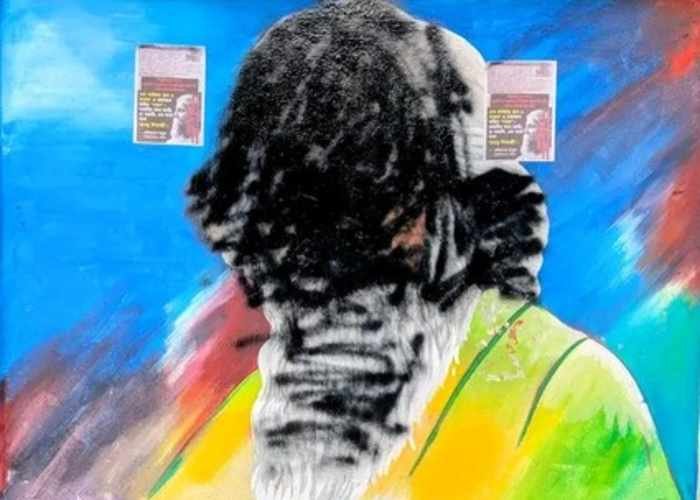
A mural of Nobel laureate Rabindranath Tagore on the boundary wall of Khulna Railway Station in Bangladesh has been defaced with black ink, triggering condemnation from local residents, cultural activists and officials.
Khulna Sadar Police Station Officer-in-Charge Lokman Hossain confirmed that police received information about the incident on Friday afternoon and had launched an investigation.
He said identifying those responsible could be difficult as businesses across the road were closed on Friday, making it unclear when the vandalism took place.
The murals were reportedly commissioned by Khulna City Corporation (KCC) ahead of Prime Minister Tarique Rahman’s scheduled visit to the city. The wall along Old Jessore Road featured portraits of prominent personalities, including Tagore, Kazi Nazrul Islam, Fakir Lalon Shah, artist SM Sultan, poet Michael Madhusudan Dutt, former Prime Minister Khaleda Zia and former President Ziaur Rahman.
The artwork also depicted the 2024 July uprising, the Sundarbans, the historic Sixty Dome Mosque and the jute industry. Tagore’s portrait was reportedly the only one found defaced.
KCC Administrator Nazrul Islam Manju condemned the act, saying it reflected the narrow-mindedness and mentality of those responsible.
Shariful Islam Salim, a cultural activist and general secretary of Nattyalok, suspected the involvement of an organised group. He warned that similar incidents could target other prominent cultural figures and urged authorities to identify and prosecute those responsible.
Salim described Tagore as an inseparable part of Bangladesh’s cultural identity, saying his literature and philosophy had inspired generations to uphold free thought, secularism and human dignity.
The latest incident follows the defacement of a Tagore graffiti mural outside the Bangladesh Shilpakala Academy in Dhaka nearly a month ago.
Last month, at least 37 prominent Bangladeshi citizens expressed concern over the earlier incident, warning that attacks on cultural symbols could embolden religious extremists and aggravate communal tensions.
They also recalled campaigns by Pakistani rulers in the 1960s that portrayed Tagore as anti-Muslim, stressing that language, literature, art and culture were a shared human heritage that should not be divided along religious or ideological lines.
 FOLLOW NOW