
SAS Nagar, March 27, 2026(Yes Punjab News)
The annual census of birds in the wetlands of Punjab was successfully conducted during January 2026 in accordance with the Asian Waterbird Census (AWC) protocols.
Divulging the details, Chief Wildlife Warden, Punjab, Sh. Basanta Rajkumar, IFS, informed that the census covered major wetlands including Harike Wildlife Sanctuary, Nangal Wildlife Sanctuary, Keshopur Wetlands, Ranjit Sagar Wetlands, Ropar Wetlands and Kanjli Wetlands.
He further stated that the census was carried out by the Forest Department in collaboration with premier institutions and organizations such as the Bombay Natural History Society (BNHS), Wildlife Institute of India (WII), Indian Institute of Science Education and Research (IISER), WWF-India, Punjab Agricultural University (PAU), Guru Nanak Dev University (GNDU), Panjab University (PU), along with bird clubs and local bird watchers.
Sharing the key findings, Sh. Rajkumar informed that the total number of birds recorded this year stands at 71,129, as compared to 77,772 recorded in 2025, showing a marginal decline. However, the number of species has increased significantly from 278 last year to 304 this year, which is an encouraging trend.
He attributed the marginal decline in bird numbers to the impact of the floods that affected parts of Punjab last year, particularly Ranjit Sagar, Harike and Keshopur wetlands. He added that wetlands like Ropar, Kanjli and Nangal, which were relatively less affected, have shown an increase in bird population.
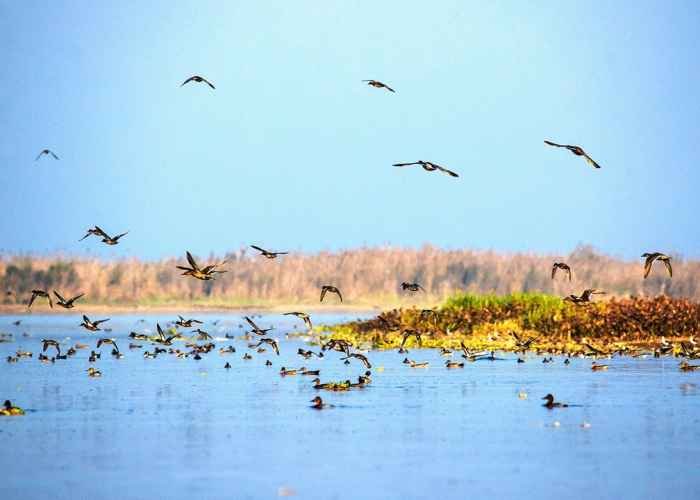
Highlighting Punjab’s ecological significance, he said that the presence of long-distance migratory birds such as Graylag Goose, Bar-headed Goose, Gadwall, Northern Shoveler and Common Pochard reaffirms the State’s importance in the Central Asian Flyway.
He also informed that a significant congregation of 441 Common Cranes was recorded at Keshopur Wetlands. Additionally, the sighting of 11 Black-necked Grebes at Nangal is considered rare and noteworthy for the region.
It is pertinent to mention that Harike, Ropar, Kanjli, Keshopur and Nangal are designated as wetlands of international importance (Ramsar sites). Despite having less than 7% forest and wildlife area, Punjab has the third-highest number of Ramsar sites in the country.
 FOLLOW NOW