
New Delhi, November 13, 2026 (Yes Punjab News)
Congress Parliamentary Party Chairperson Sonia Gandhi’s memoir, Belonging: A Journey of Love, has drawn attention for its account of internal party discussions, particularly her reaction to former President Pranab Mukherjee’s apparent ambition to become Prime Minister.
Sonia Gandhi wrote that Mukherjee had suggested “that perhaps it was time for a change at the top”, which she understood as a hint of his long-held desire for the Prime Minister’s post. She also recalled his frustration over serious differences with then Finance Minister P. Chidambaram.
“Over the years he (Pranab Mukherjee) held virtually all the important portfolios in previous Congress governments, but deep down he felt his seniority and experience made him a natural candidate for the Prime Ministership,” she wrote.
Mukherjee’s daughter, Sharmistha Mukherjee, has responded to the account in a three-paragraph statement on X. However, the former President had himself acknowledged his Prime Ministerial aspirations in his autobiography and conversations, while also discussing what he considered limitations to his prospects.
In his writings, Mukherjee said he had thought that if Sonia Gandhi selected Manmohan Singh for the President’s office, she might choose him as Prime Minister. He also mentioned hearing a rumour that she had given the possibility serious consideration.
Mukherjee further recalled being reluctant to join the Manmohan Singh-led government and informing Sonia Gandhi of his position. She, however, insisted that he join, saying his role would be important.
In conversations, Mukherjee had also spoken about the importance of a Prime Minister being able to communicate with people in a widely spoken language. Acknowledging that his Hindi was “inadequate”, he considered it a limitation, along with his relatively limited experience as a Lok Sabha member. He had served five terms in the Rajya Sabha but was elected to the Lok Sabha only twice.
The account also draws a parallel with former Congress leader K. Kamaraj, who wielded considerable influence in the party but did not become Prime Minister. Accounts of the period suggest that his limited command of Hindi and English was among the reasons he considered himself unsuitable for the top post after the deaths of Jawaharlal Nehru in 1964 and Lal Bahadur Shastri in 1966.
Kamaraj was nevertheless regarded as an influential figure in the selection of both Shastri and Indira Gandhi as Prime Ministers. Mukherjee, too, held considerable influence within the Congress despite never occupying its top organisational post or becoming Prime Minister.
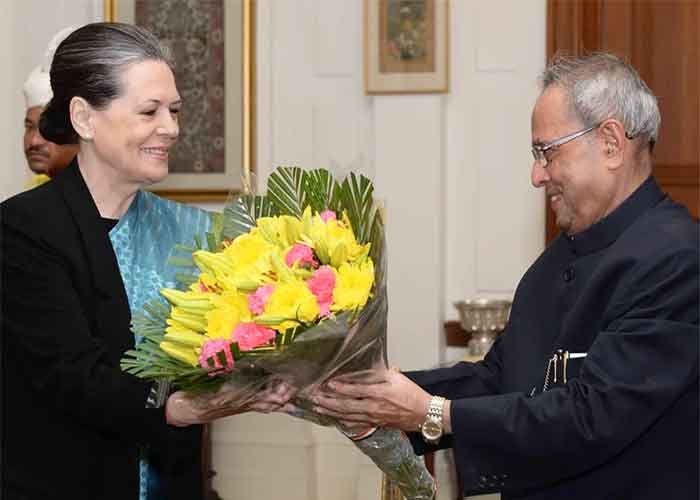
Sonia Gandhi also recalled Mukherjee’s eventual elevation to the Presidency in 2012 as the UPA candidate. “Our party did nominate him (Pranab Mukherjee) in 2012 as the UPA candidate for the President, the highest office in our Republic, and he was elected. I often called on him, mostly just to converse with the erudite and knowledgeable politician that he always remained,” she wrote.
Mukherjee had once been asked whether he saw himself becoming President of India. After pausing, he reportedly replied, “Perhaps”. His own accounts of his political ambitions and perceived limitations suggest that the possibility of becoming Prime Minister was not an unspoken aspiration.
 FOLLOW NOW