


New Delhi, November 13, 2026 (Yes Punjab News)
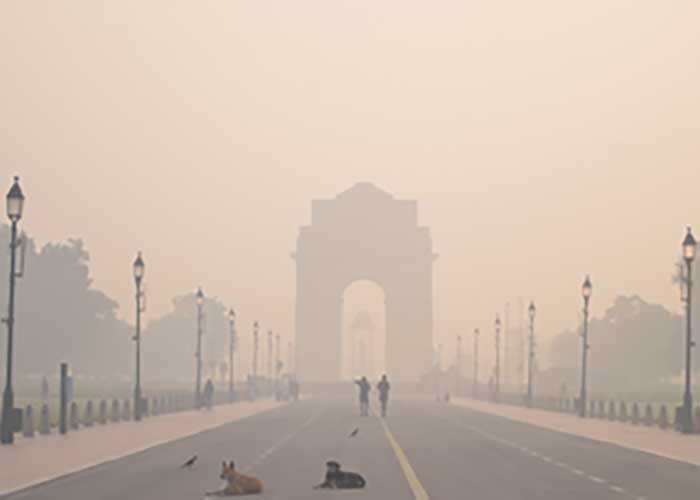
Delhi continued to grapple with hazardous air pollution on Friday, with the average Air Quality Index (AQI) standing at 419 in the ‘severe’ category at 8:40 a.m. A thick layer of smoky haze persisted over the national capital, reducing visibility and raising concerns over public health.
According to Central Pollution Control Board (CPCB) data, 33 of Delhi’s 58 air quality monitoring stations recorded ‘severe’ pollution levels. Several locations reported AQI readings above 450, with IIT Delhi registering 488, Chandni Chowk 479, North Campus of Delhi University 478 and Pusa 469.
Punjabi Bagh recorded an AQI of 456, Burari Crossing 456, while NIH Narela reported 445. Other locations also recorded high pollution levels, including Talkatora Garden at 436, Aya Nagar at 433 and Chhawla at 425.
The pollution crisis extended across the National Capital Region (NCR). Noida recorded an AQI of 474 at 8:05 a.m., also falling in the ‘severe’ category. Gurugram, Ghaziabad and Greater Noida reported ‘very poor’ air quality, with readings of 352, 369 and 351, respectively.
Under CPCB classification, AQI readings between 401 and 500 fall in the ‘severe’ category, while levels between 301 and 400 are considered ‘very poor’.
Data from AQI.in indicated that 86 of the world’s 100 most polluted cities on Friday were in India.
The India Meteorological Department (IMD) has forecast that Delhi’s air quality is likely to fluctuate between ‘very poor’ and ‘severe’ until November 16. Improved wind conditions could offer some relief thereafter.
Winter pollution in Delhi is driven by a combination of factors, including vehicular and industrial emissions, stubble burning in Punjab and Haryana, firecracker pollution, falling temperatures and low wind speeds.
The Commission for Air Quality Management (CAQM) had invoked Stage III restrictions under the Graded Response Action Plan (GRAP) across Delhi-NCR on November 6 as a precautionary measure amid worsening pollution.
Meanwhile, the maximum temperature in Delhi is expected to remain between 27 and 30 degrees Celsius, while minimum temperatures are likely to range from 14 to 17 degrees Celsius until November 15.
 FOLLOW NOW