
New Delhi, October 6, 2026 (Yes Punjab News)
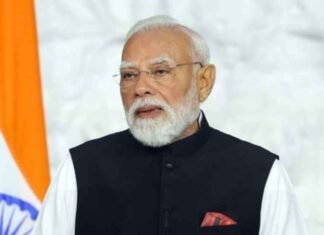
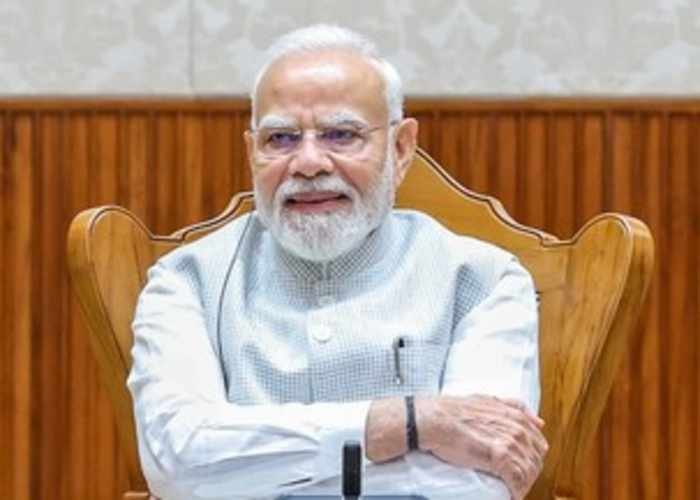
Prime Minister Narendra Modi has completed 25 years in executive office, a political journey that began with his appointment as Gujarat Chief Minister in 2001 and continued with his tenure as Prime Minister from 2014. His long stint in governance has been marked by centralised decision-making, an emphasis on implementation and a direct style of political communication.
Modi’s journey into politics began in modest surroundings. As a young boy, he helped at his family’s tea stall while pursuing his education. At 17, he left home and travelled across India for nearly two years before joining the Rashtriya Swayamsevak Sangh (RSS) in Ahmedabad.
He subsequently took on increasing organisational responsibilities within the RSS and later the BJP in Gujarat. The Emergency period also became part of his formative political years. According to the BJP’s Gujarat account, Modi worked underground during the period of the then Prime Minister Indira Gandhi’s Emergency, helping organise resistance to the government crackdown.
From 1987, his organisational work in the Gujarat BJP helped establish him as an important party strategist. Following the BJP’s victory in Gujarat in 1995, he moved to New Delhi as the party’s National Secretary, with responsibility for several northern states. In 1998, he became National General Secretary (Organisation), one of the BJP’s key organisational positions.
In October 2001, Modi was chosen to replace Keshubhai Patel as Gujarat Chief Minister. The state was recovering from the devastating Bhuj earthquake and facing political and administrative challenges. Modi remained Chief Minister until 2014, when he moved to national politics after leading the BJP to victory in the Lok Sabha elections.
One of the defining elements of the Modi era has been an emphasis on governance through measurable delivery. His political narrative has frequently focused on implementation of welfare schemes, infrastructure projects and administrative reforms rather than policy announcements alone.
Technology and digital governance have also become central to public administration during his tenure. Direct Benefit Transfer mechanisms and digital identity systems have expanded significantly, while digital payments have transformed the way government benefits and financial transactions are delivered.
The Gujarat years also shaped what became known as the “Gujarat model”, with emphasis on infrastructure, industrial investment, irrigation and administrative reforms. At the national level, the government has sought to extend aspects of this approach through infrastructure spending, manufacturing initiatives and reforms including the Goods and Services Tax and the Insolvency and Bankruptcy Code.
India’s economic and social indicators have also undergone significant changes during this period. The World Bank has reported a sharp decline in extreme poverty between 2011-12 and 2022-23, alongside improvements in infrastructure and access to basic services. The International Monetary Fund has continued to project strong growth for India, supported by domestic demand and economic resilience.
Communication has been another distinctive feature of Modi’s political style. Through public rallies, social media, radio programme Mann Ki Baat and highly personalised campaigns, he has sought to maintain a direct connection with voters while reducing reliance on traditional political intermediaries.
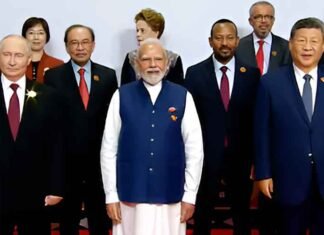
On the international stage, the Modi government has pursued a more visible diplomatic profile for India, strengthening engagement with major global powers while positioning the country as an important voice of the Global South.
Supporters credit Modi’s centralised and decisive style with enabling large-scale reforms and development initiatives, while critics have raised concerns about the concentration of decision-making and aspects of his governance and political approach.
After 25 years in executive office, Modi’s tenure has become a significant chapter in India’s contemporary political history, spanning major economic, technological, welfare, administrative and foreign-policy shifts.
 FOLLOW NOW