Home Blog Page 737

Kerala’s ‘CM puzzle’ turns daily soap as Congress leaders urge patience

Shashi Tharoor BJP MP and Actor

Thiruvananthapuram, March 26, 2026

Even as senior Congress leader Shashi Tharoor sought to pour cold water on the issue, the Chief Ministerial debate in Kerala refuses to die down, and has turned speculation into a daily spectacle.

“There is no need now for a discussion on the Chief Minister’s post,” Tharoor said on Thursday, making it clear that the decision will rest with the party high command after the Assembly polls conclude.

He sought to downplay the UDF-CM candidate issue, stressing that the United Democratic Front is in compact with the people. He added that Sabareenathan would “hit a sixer” in Nemom.

Nemom is the only seat the BJP won in 2016, but lost in 2021. This time, state BJP President Rajeev Chandrasekhar is making an all-out attempt to ensure the BJP opens its account in the April 9 Assembly polls.

Yet outside party circles, the narrative has taken on a life of its own.

In Kerala, Congress’ Chief Ministerial question has morphed into something of a political soap opera, complete with suspense, daily twists and dramatic interpretations.

Every remark, pause, or carefully calibrated response by leaders such as V.D. Satheesan, Ramesh Chennithala, K. Sudhakaran and K. Muraleedharan is dissected endlessly, often acquiring meanings far beyond the original intent.

On Wednesday, a passing reference by veteran leader P.J. Kurien was enough to trigger a full-blown frenzy.

What might have been a casual aside quickly escalated into “breaking news”, panel debates and competing interpretations, underlining how even a hint of leadership can spiral into headline material.

Within the UDF, however, the message remains consistent. P. K. Kunhalikutty on Thursday asserted there is no discord on the issue, noting that the Congress party will decide the Chief Minister after the elections and that the Muslim League will back the chosen candidate.

For now, while Congress leaders insist there is no immediate question to answer, the suspense is alive, and the ‘CM puzzle’ remains the state’s most-watched political show.

The CPI(M), though, is claiming victory will be theirs, and CM will also come from their front, but things don’t appear as easy. Never in the history of the cadre-based party have leaders jumped ship to fight elections. This time, six senior leaders (including three former legislators) and the personal assistant to veteran former Chief Minister V.S. Achuthanandan have left and are contesting against their old party.(Agency)

All fuel outlets operating normally, rapid rollout of PNG connections underway: Centre

fuel

New Delhi, March 26, 2026

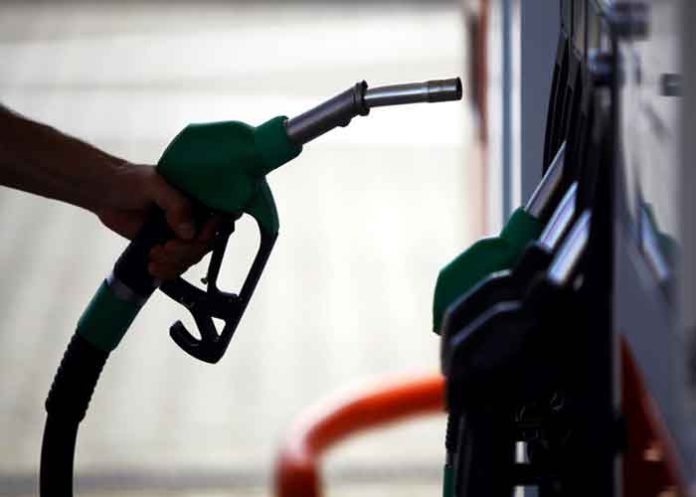
All retail outlets are operating normally with sufficient petrol and diesel stocks to meet national demand, according to the government, while a rapid rollout of PNG connections is currently underway across the country.

All refineries are operating at a high capacity with adequate crude inventories. While panic buying did occur in some areas due to rumours, the government has confirmed that all retail outlets are operating normally.

Moreover, the government is maintaining 100 per cent supply for domestic PNG and CNG transport. Supply to industrial and commercial consumers connected to the grid is being sustained at approximately 80 per cent of average consumption to ensure their economic continuity and India’s progress.

Meanwhile, the government has notified the Natural Gas and Petroleum Products Distribution Order, 2026. This creates a streamlined, time-bound framework for nationwide pipeline expansion, aiming to accelerate PNG network growth and bypass land access delays.

A single-day record of 9,046 new PNG connections was achieved across over 110 geographical areas. To support this, entities like IGL and GAIL are offering new incentives, while the DDA in Delhi has permitted 24/7 pipeline laying and waived road restoration charges.

In the meantime, the Petroleum and Explosive Safety Organisation (PESO) has been advised to dispose of CGD applications within 10 days, while the PNGRB has directed that connections for residential schools, hostels, and community kitchens be prioritised and completed within five days.

The overall commercial LPG allocation to States/UTs has increased to 50 per cent. This additional supply is prioritised for essential sectors, including restaurants, dhabas, hotels, and 5kg FTL cylinders for migrant labourers.

The Centre has offered an additional 10 per cent allocation of commercial LPG to States and Union Territories, specifically linked to their progress in transitioning consumers from LPG to Piped Natural Gas (PNG).

Importantly, under the Essential Commodities Act, authorities conducted over 2,700 raids in a single day, seizing 2,000 cylinders. To date, more than 650 FIRs have been registered and 155 individuals arrested for malpractices.

To ease LPG demand, an additional 48,000 KL of kerosene has been allocated to the States. Furthermore, the Union Ministry of Coal has ordered increased allotments to small and medium consumers to provide alternative energy options.

Meanwhile, the Union Cabinet, chaired by Prime Minister Narendra Modi, has approved the continuation of the Immigration, Visa, Foreigners Registration and Tracking (IVFRT) Scheme beyond March 31, 2026, for a period of five years with a budget outlay of Rs 1,800 crore.

Also, a hundred new airports will be developed in challenge mode at an average cost of Rs 100 crore per airport and 200 modern helipads will be developed under the Modified UDAN scheme.(Agency)

Oil prices jump as Iran says no direct talks with US to end war

crude Qatar Energy Minister warns oil could touch $150

Mumbai, March 26, 2026

Global oil prices jumped to cross $100 per barrel on Thursday after Iran said it was not engaged in direct negotiations with the US to end the war.

Brent crude futures rose 1.21 per cent to $103.46 per barrel while US West Texas Intermediate (WTI) crude jumped 1.35 per cent to $91.54 per barrel, as Middle East tensions continued to escalate.

According to Iranian Foreign Minister Abbas Araghchi, exchanges between Tehran and Washington through intermediaries should not be interpreted as negotiations. Tehran was also likely to reject a US-backed ceasefire proposal.

Earlier, international crude oil prices witnessed a sharp decline on Wednesday amid growing hopes of a ceasefire in the West Asia region.

According to experts, the recent correction in crude prices could offer some relief to India’s macroeconomic indicators, including inflation and the Current Account Deficit (CAD), even as technical indicators suggest key support levels are being tested.

For India, every $10 per barrel movement in crude typically impacts the CAD by 0.3–0.5 percentage points of the GDP and raises CPI inflation by 20–30 basis points, depending on pass-through.

Meanwhile, Iran has announced that it will not impose restrictions on vessels belonging to five “friendly” countries, including India, allowing them to pass through the strategically crucial Strait of Hormuz even as access remains limited for others.

Along with India, ships from Russia, China, Pakistan and Iraq have been granted safe passage through the key maritime chokepoint despite the ongoing conflict in the region.

At the same time, he indicated that vessels linked to countries seen as adversaries or those involved in the ongoing conflict would not be allowed passage. He said ships from the United States, Israel and certain Gulf nations playing a role in the current crisis would not be given clearance to transit through the strait.(Agency)

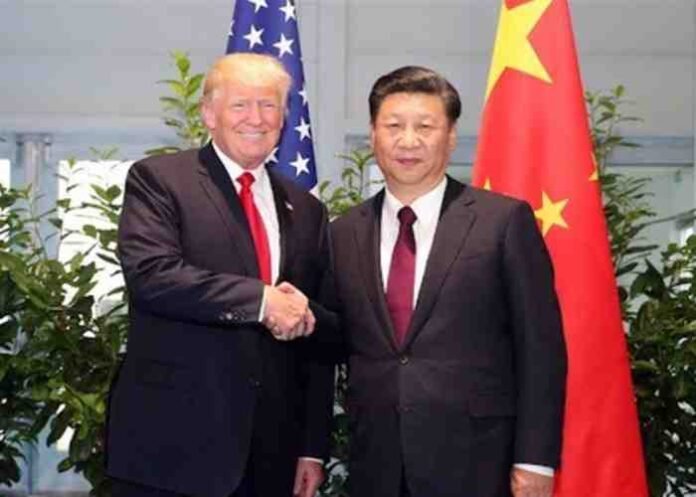
Look very much forward to spending time with Prez Xi: Trump on ‘monumental’ China visit

Donal Trump & Xi Jinping

Washington, March 26, 2026

Announcing plans for a high-stakes diplomatic engagement, US President Donald Trump has said that his rescheduled meeting with Chinese President Xi Jinping will take place in Beijing on May 14–15, calling it a “Monumental Event” and signalling renewed top-level engagement between the two powers.

Trump, in a social media post on Wednesday (local time), said: “My meeting with the Highly Respected President of China, President Xi Jinping… will take place in Beijing on May 14th and 15th… I look very much forward to spending time with President Xi in what will be, I am sure, a Monumental Event.”

The White House described the visit as long-awaited and now back on track after being postponed due to ongoing US military operations in Iran.

“President Trump’s meeting and long-awaited meeting with President Xi in China will now take place in Beijing on May 14th and 15th,” White House Press Secretary Karoline Leavitt said during a regular briefing.

She added that First Lady Melania Trump will accompany the President, and that a reciprocal visit by the Chinese leadership is planned later this year.

“First lady Melania and President Trump will also host President Xi and Madame Peng for a reciprocal visit in Washington, DC, at a later date to be announced this year,” Leavitt said.

Trump also underscored that preparations for both visits are already underway.

“Our Representatives are finalising preparations for these Historic Visits,” he said in the post.

The White House indicated that the rescheduling followed direct communication between the two leaders, with Beijing accommodating Washington’s request to delay the trip amid active combat operations.

“There was a discussion about the rescheduling of the meeting between the president and President Xi,” Leavitt said. “President Xi understood that it’s very important for the president to be here throughout these combat operations right now.”

Officials made clear that the timing of the China visit was not contingent on the conclusion of the Iran conflict.

“No,” Leavitt said when asked whether ending the war was a precondition for the meeting.

At the same time, the administration has suggested that military objectives in Iran are progressing quickly, with earlier estimates placing the operation’s timeline at four to six weeks.

Leavitt said the President remains focused on both fronts — managing the military campaign and preparing for a major diplomatic engagement.

“We do look forward… I know the President looks forward to going to China on May 14th and 15th,” she said, adding that further logistical details will be shared with the media.

The planned summit comes at a time of complex ties between Washington and Beijing, with both countries navigating tensions over trade, security and global influence, even as they maintain channels for dialogue at the leadership level.

For India and the wider Indo-Pacific, such engagements are closely watched, given their implications for regional balance, economic flows and strategic competition.

The United States and China have long been locked in a relationship marked by rivalry and interdependence, spanning trade disputes, technology restrictions and military posturing. Leadership-level meetings have often served as key opportunities to stabilise ties and signal intent to the global community.(Agency)

US senators raise concerns over illegal online sale of abortion pills, flag India link

Washington, March 26, 2026

A group of US senators have urged federal regulators to act against illegal online sales of abortion pills, flagging links to overseas supply chains, including India.

In a letter to Food and Drug Administration (FDA) Commissioner Martin Makary on Wednesday, the lawmakers called for “immediate action” to stop “misbranded and unapproved versions of the chemical abortion drugs, mifepristone and misoprostol” entering the US market.

They said the “illegal sale of these drugs harms women and undermines the FDA’s core mission to protect American consumers.”

The senators warned that easy online access without medical supervision “poses serious risks to women’s health and increases the risk of forced and coerced abortions.”

The letter draws attention to global supply chains. It said drugs sold by foreign websites “often come from a variety of manufacturers in India.”

Lawmakers said the scale of the online market is growing fast. One provider sent 43,259 packages to 30 US states in a year. Another estimate said “as many as 1,00,000 packages” were shipped into the US in 2023.

The senators identified four main channels. These include US-based telehealth clinics, foreign clinics, informal networks, and online pharmacies. Many, they said, operate without prescriptions or proper oversight.

They said some websites falsely claim to sell “FDA-approved” drugs. In reality, they ship unapproved versions from overseas manufacturers.

The letter also raised safety concerns. Some platforms advise users not to tell doctors they took the drugs.

The lawmakers urged the FDA to step up enforcement. They called for warning letters, action against website domains, and stronger coordination with customs and postal authorities to intercept shipments.

They also asked for criminal investigations. The letter cited a 2020 case where a US resident was prosecuted for selling abortion pills sourced from India without prescriptions.

The senators said the FDA must “fully leverage its authorities” and prioritise the issue.

The letter was led by Senator Bill Cassidy. It was signed by Senators Steve Daines, James Lankford, Cindy Hyde-Smith, and Lindsey Graham.

They have asked the FDA to respond with details of enforcement steps by April 8.

Medication abortion is widely used in the US. It typically involves mifepristone followed by misoprostol under regulated conditions.(Agency)

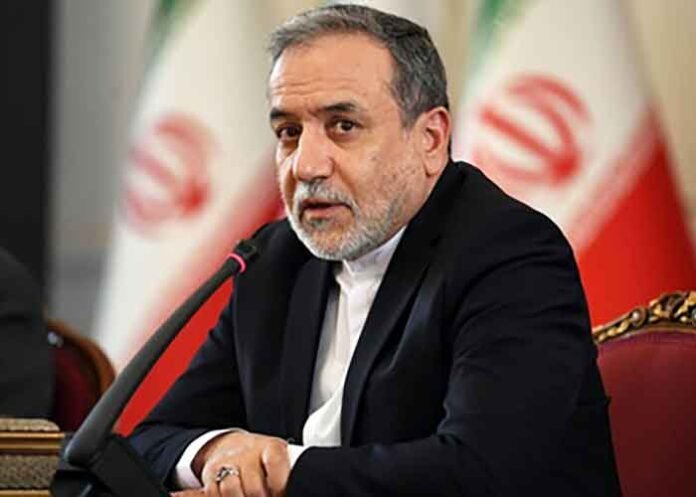
‘We allowed India to pass through Hormuz’: Iran says 5 ‘friendly’ nations get safe passage

Seyyed Seyed Abbas Araghchi Iran Foreign Minister

Tehran, March 26, 2026

As the conflict in West Asia continues to escalate, Iran has announced that it will not impose restrictions on vessels belonging to five “friendly” countries, including India, allowing them to pass through the strategically crucial Strait of Hormuz even as access remains limited for others.

Along with India, ships from Russia, China, Pakistan and Iraq have been granted safe passage through the key maritime chokepoint despite the ongoing conflict in the region.

In an interview with Iranian state television, Foreign Minister Abbas Araghchi clarified that the Strait of Hormuz has not been completely shut and that certain countries with which Iran maintains friendly relations have been exempted from restrictions.

“There is no reason to allow the enemy to pass through the strait. We have permitted certain countries that we consider friendly to pass through; we allowed China, Russia, India, Iraq, and Pakistan to transit,” Araghchi was quoted as saying by Iran’s official news agency.

At the same time, he indicated that vessels linked to countries seen as adversaries or those involved in the ongoing conflict would not be allowed passage. He said ships from the United States, Israel and certain Gulf nations playing a role in the current crisis would not be given clearance to transit through the strait.

Araghchi also expressed satisfaction over Iran’s control over the vital waterway, stating that the country has demonstrated its authority in the region after decades.

He noted that when Iran initially announced a partial blockade of the Strait of Hormuz, many observers had dismissed it as a bluff. However, he said that subsequent developments have underscored Iran’s capability to enforce its position and assert control over one of the world’s most critical energy transit routes.(Agency)

Trump says Iran ‘wants deal’, cites gains

Donald-Trump

Washington, March 26, 2026

US President Donald Trump has said Iran is seeking a deal with Washington but is hesitant to publicly acknowledge it, even as he claimed major military gains against Tehran.

Speaking at a House Republican dinner on Wednesday (local time), Trump said ongoing pressure from the US had forced Iran into negotiations.

“They are negotiating, by the way, and they wanna make a deal so badly, but they’re afraid to say it,” Trump said.

He suggested Iranian leaders fear internal consequences for pursuing diplomacy. “They figure they’ll be killed by their own people,” he added.

Trump portrayed recent US actions as decisive in weakening Iran’s capabilities. “We knocked out their navy, we knocked out everything,” he said.

He also pointed to strikes targeting Iran’s nuclear programme, saying, “We obliterated the site… and we saved it there too.”

The President argued that these actions prevented Iran from acquiring a nuclear weapon. “Iran would’ve had a nuclear weapon within two weeks to four weeks,” he said.

Trump described the broader outcome as a strategic success for the United States. “The war essentially ended a few days after we went in,” he said.

He reiterated that stopping Iran’s nuclear ambitions was the central objective of US policy. “We had to cut out the cancer… The cancer was Iran with a nuclear weapon,” Trump said.

Trump also defended his earlier decision to exit a previous nuclear agreement, saying it prevented Iran from advancing its programme. “If I didn’t terminate it, that weapon would’ve been used three years ago,” he said.

While emphasising military pressure, Trump indicated that diplomacy remains active, suggesting that talks are underway even if not publicly acknowledged by Tehran. He did not provide details of the negotiations or a potential framework for a deal.

The US has long maintained that preventing Iran from acquiring nuclear weapons is a core national security objective. Previous administrations have pursued a combination of sanctions, negotiations and, at times, military deterrence to address Tehran’s nuclear programme.(Agency)

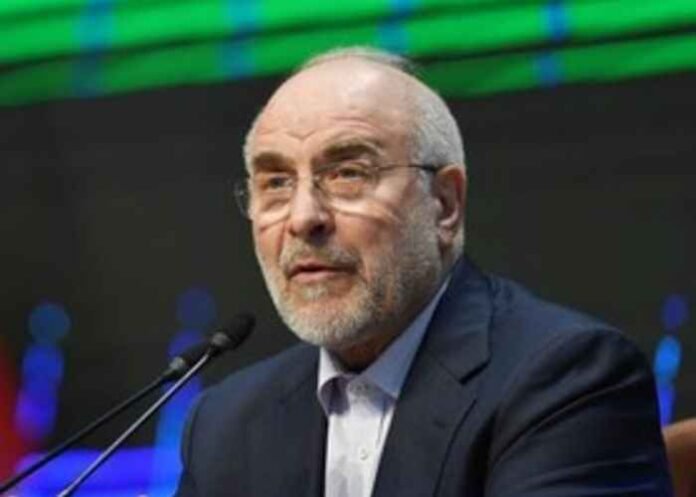
Intelligence suggests enemies preparing to occupy Iranian island: Parliament speaker

Mohammad Bagher Ghalibaf Iran Parliament Speaker

Tehran, March 26, 2026

Iran’s Parliament Speaker Mohammad Bagher Ghalibaf has said that certain data demonstrate that the “enemies” are preparing for an operation to occupy an Iranian island with the support of a regional state.

“If they take any step forward, all of the vital infrastructure of that regional country will come under (Iran’s) unrelenting attacks without any restriction,” Ghalibaf made the remarks in a post on social media platform X.

In a separate post earlier in the day, Ghalibaf said Iran is closely monitoring all US movements in the region, especially its troop deployments.

“What the generals have broken, the soldiers can’t fix; instead, they will fall victim to (Israeli Prime Minister Benjamin) Netanyahu’s delusions,” he said, warning, “Do not test our resolve to defend our land.”

Ghalibaf’s remarks came amid reports that the Pentagon is expected to send thousands of soldiers from the US Army’s elite 82nd Airborne Division to the Middle East.

Meanwhile, the US has said that it is intensifying efforts to secure the Strait of Hormuz and stabilise global oil flows as its military campaign against Iran continues, with the White House saying operations are focused on protecting energy routes critical to the global economy.

White House Press Secretary Karoline Leavitt told reporters that US forces are targeting Iran’s ability to threaten shipping through the strategic waterway, a vital transit point for global energy supplies.

“Our military also remains laser focused on eliminating the regime’s threat to the free flow of energy through the Strait of Hormuz,” she said.

As part of that effort, US forces struck Iranian military infrastructure along the coastline of the strait.

On February 28, Israel and the United States launched joint attacks on Tehran and several other Iranian cities, killing Iran’s Supreme Leader Ali Khamenei, along with senior military commanders and civilians. Iran responded by launching waves of missile and drone strikes targeting Israel and US bases and assets in the Middle East. (Agency)

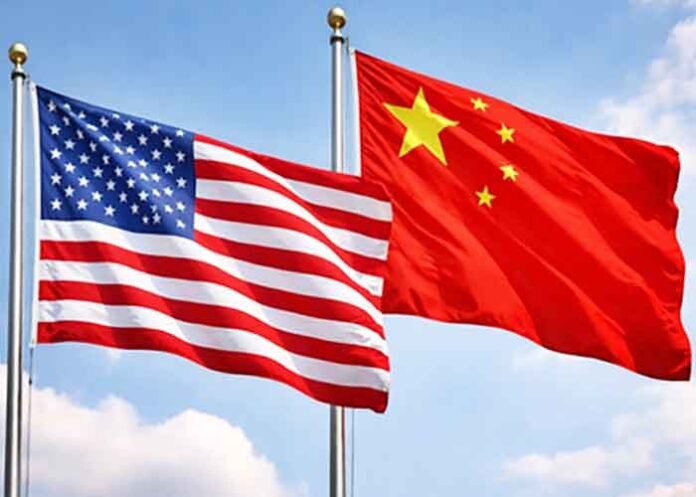
US officials, lawmakers warn of China edge in space shift

China USA America Flags

Washington, March 26, 2026

US lawmakers and officials have warned of risks in the transition from the International Space Station (ISS) to commercial space platforms, as China expands its presence in low Earth orbit.

House Science Committee Chairman Brian Babin on Wednesday (local time) said, “The International Space Station… is a remarkable accomplishment that demonstrates the ingenuity of the American space program.”

He stated the ISS has supported human spaceflight and research for more than 25 years. But he noted the station is ageing and the next phase must be handled carefully.

Subcommittee Chairman Mike Haridopolos stressed the need for competition with China. “America must lead in low Earth orbit,” he said.

He said space leadership is not only about deep space missions. It also depends on the strength in low Earth orbit.

Safety concerns were raised by Charles J. Precourt, Member of the Aerospace Safety Advisory Panel.

“The ISS is operating in the highest-risk phase of its lifecycle,” Precourt said.

He said ageing systems and wear are increasing risks.

“Continued safe operation is achievable, but it is not assured without sustained engineering rigour, disciplined risk management, and adequate resourcing,” he said.

Precourt also warned about the transition.

“There is a credible risk of a gap in US human spaceflight capability in low Earth orbit,” he said.

He said such a gap could affect research and future missions.

Industry leaders pointed to strong demand for space-based work.

David Cavossa, President of the Commercial Space Federation, said, “The global value… is already estimated at $570 billion and projected to grow to $1.8 trillion by 2035.”

He said private research on the ISS has grown fast.

Cavossa urged policy clarity. “NASA should proceed with the CLD procurement and provide industry with certainty of its acquisition strategy, requirements, and procurement timeline,” he said.

He warned that delays could hurt investment and slow new stations.

NASA said it is preparing for the shift.

Joel R. Montalbano, Acting Associate Administrator for Space Operations, said, “NASA’s strategy will spur private sector initiative and a commercial pathway to replace the International Space Station by 2030.”

He added NASA aims to be “one of many customers in a robust commercial marketplace in LEO.”

Montalbano said the ISS has supported major research in science and human health.

Lawmakers stated that avoiding a gap in human presence in orbit is critical.

Babin warned that after decades of continuous presence, any gap would be significant.

The ISS was completed in 2011 after years of delays. It has hosted nearly 200 American astronauts.

China launched its Tiangong space station in 2022. It has been continuously crewed since then.

US officials said the next few years will decide leadership in low Earth orbit.(Agency)

Iranian missile hits Dimona near Israeli nuclear site: Report

Iranian missile hits Dimona near Israeli nuclear site

Tel Aviv, March 26, 202

A missile fired from Iran has evaded Israel’s air defence systems and struck the city of Dimona, near which Israel’s main nuclear facility and reactor are located, state-owned Kan TV reported.

Air raid sirens in the area sounded in the morning and early afternoon on Wednesday (local time), warning of incoming missile attacks, according to the Home Front Command. The Israeli military did not officially confirm whether the missile was intercepted.

The Magen David Adom ambulance service reported no injuries.

Kan reported that the missile struck Dimona, located about 13 km northwest of the nuclear site in the Negev Desert, without elaborating on whether there was damage, reports Xinhua news agency.

The Shimon Peres Negev Nuclear Research Centre, often referred to as the “Dimona reactor,” is one of Israel’s most heavily guarded sites.

Iran has repeatedly targeted the area since Saturday, when a missile attack injured 64 people in Dimona. Tehran said the attack was in retaliation for an Israeli strike on the Natanz nuclear facility.

Earlier on March 24, a missile fired from Iran struck Tel Aviv, injuring several people and damaging buildings and vehicles, Israeli authorities said.

Loud explosions were heard across the city, with eyewitnesses reporting large plumes of smoke rising from both northern and southern parts of the country’s commercial hub.

Israel’s Army Radio, citing security officials, reported that it was apparently a cluster-type missile containing several bomblets, each weighing about 100 kg, with the bomblets or their fragments impacting several sites.

At an impact site in northern Tel Aviv, a missile struck between buildings, “causing a powerful blast wave that heavily damaged three buildings,” Miki David, commander of the Tel Aviv district in the Home Front Command, told reporters at the scene. He said shelters in the buildings remained intact, and those inside were unharmed.

Images shared on social media showed that the impact left a crater.

In a statement, the Israeli military said search and rescue teams were operating at “several sites” in central Israel after impacts were reported.

The Magen David Adom ambulance service said six people were lightly injured and did not require hospital treatment.

Air raid sirens were activated seven times across Israel overnight and into Tuesday morning amid continued missile fire from Iran. The last missile attack activated sirens in southern Israel, including in Dimona, where Israel’s nuclear facility is located.

The strike came as the regional conflict entered its 25th day, with tensions remaining high despite U.S. President Donald Trump’s claim of ongoing negotiations, which Iran dismissed as “fake news.”(Agency)