Home Blog Page 736

Eyes that spy: ISI’s CCTV espionage ring driven by women, underage recruits

ISI-backed spy ring used CCTV Camera feeds for espionage in India

New Delhi, March 26, 2026

The busting of a spy ring in Ghaziabad has prompted the agencies to undertake an audit of the closed-circuit television (CCTV) feeds in various parts of the country. Officials say that the ISI has been relying heavily on CCTV cameras to get live feeds of sensitive locations.

The audit would cover most parts of Delhi and Mumbai, where it has been found that the ISI has been fishing for maximum information.

Gathering information using CCTV cameras has become the new norm for the ISI-backed spying networks in India.

Those, who were part of the network, were told to focus more on setting up CCTV cameras at sensitive locations such as public offices, railway stations and bus stands in different parts of the country. This has been done with the intention of gathering live feed so that attacks can be planned.

An Intelligence Bureau official said that this wipes out the need for a physical reconnaissance of the preferred target. In the Mumbai 26/11 attack case, it was found that David Headley had visited the city on various occasions and carried out a thorough reconnaissance of the targets.

The ISI wants to eliminate this risk and hence the CCTV cameras come in handy.

Investigations have found that such cameras were to be installed in nearly 60 places in various parts of the country.

These included locations in Delhi, Mumbai and Jammu and Kashmir. The brief was to find places where the security is normally lax. Army installations and other sensitive locations were not on the radar of this network. These places are hard to penetrate and hence it was decided to target railways stations, bus stands, crowded markets and government offices which are less sensitive in nature, an official said.

An investigating official said that the network is a complex one. The recruitment pattern is an interesting one, where the emphasis was more on women and minors.

Apart from this, the others to be recruited were in their early 20s. The official said that the recruiters had lured these persons with money before they were recruited. One of the accused, Meera was tasked with not just gathering information and setting up CCTV cameras, but also setting up an all-women wing for the ISI’s spying activities.

The police also picked up a 17-year old boy, who was part of a cell that was tasked with recruiting minors. Such recruits do not come under the radar easily and these persons are easy to coax. Further, the lure of money is what attracts such recruits. It is more about the money rather than ideology in such cases, another official explained.

During the probe it was also found that these persons had several social media accounts. It is the teenagers who handle the social media better and this is an added advantage. Hence, during the investigation it was found that the minors and other younger recruits had created several social media accounts. A preliminary assessment into these accounts found that they were not being used to pass on information, but to invite others to join the network.

Another official said that with this new tactic coming to light, it is very important to have a CCTV audit. There are challenges as the CCTV network is not centrally-controlled. Adding to the headache is the advent of the solar powered CCTV cameras, which do not require any effort to set up.

The ISI had instructed the accused persons to fix at least three solar powered CCTV cameras at the public places including the railway stations, so that they could get a detailed view of the place. This makes it easier for the ISI-backed elements to carry out a detailed reconnaissance of the place.

Further, during an attack, the ISI can also give live guidance to the terrorists by watching the CCTV camera feed on their mobiles.

Another official explained that the problem is that there are lakhs of CCTV cameras that have been installed. The police, railways, municipal bodies and private establishment have multiple cameras installed across the cities. To fix one in this mix by an ISI recruited spy does not normally grab the attention of the law enforcement agencies. This is the vulnerability that has been tapped on to carry out spying activities using CCTV cameras, the official also explained.

The audit would also look to give suggestions on how to make the CCTV cameras more secure. Currently the system is vulnerable due to the use of default passwords. Moreover the devices are extremely cheap and there is no background check while buying CCTV cameras. Moreover they are easily available online at low costs, which again makes the CCTV camera a deadly spying weapon.

The Union Government is tightening regulations relating to the CCTV systems. From April 1 onwards, the government is likely to allow the sale of only STQC-certified (Standardisation Testing and Quality Certification) cameras as they are less prone to hacking.

Further an integrated surveillance framework will be set up, which would include unique device registration, strict cybersecurity standards and unique device registration.(Agency)

Nokia appoints Samar Mittal, Vibha Mehra to lead India business from April 1

New Delhi, March 26, 2026

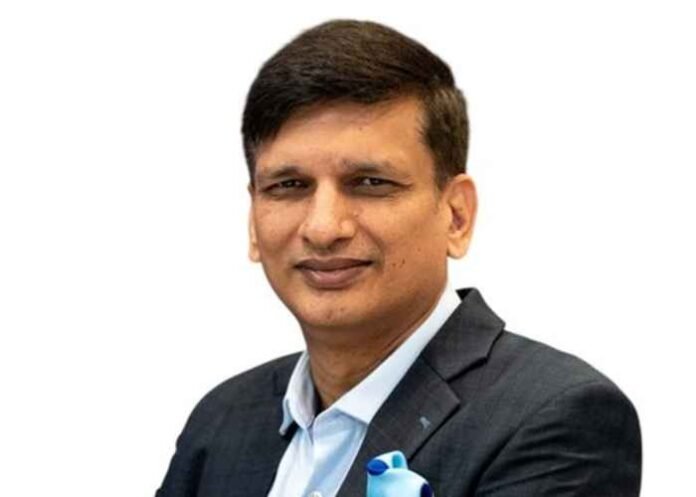
Nokia on Thursday announced key leadership changes in India, appointing Samar Mittal as India Country Business Leader and Vibha Mehra as India Country Manager, effective April 1.

The move is part of the company’s renewed strategy to strengthen its presence and sharpen its business focus in the country.

In his new role, Samar Mittal will lead Nokia’s business strategy in India, focusing on expanding the company’s partnerships with telecom operators, as well as players in artificial intelligence, cloud services, and critical enterprise sectors.

He will also work on identifying new growth opportunities and aligning Nokia’s offerings with the changing needs of the Indian market.

Vibha Mehra, on the other hand, will oversee Nokia’s overall presence in India. She will handle communications, government relations, and public engagement, while also guiding the company’s corporate social responsibility initiatives and internal people strategy.

Her role will be key in strengthening Nokia’s reputation as a trusted technology company in India.

Both leaders bring extensive experience to their new roles. Mittal has nearly three decades of experience in the telecom and IT sectors and has previously led Nokia’s Cloud and Network Services business in the Middle East and Africa.

Mehra has over 26 years of experience and has worked with companies like Microsoft, Intel and Tata Consultancy Services, most recently heading government relations for Nokia in the Asia Pacific region.

The company said both leaders will work closely to drive its strategy in India and support its goal of advancing connectivity and digital growth.

The new leadership structure reflects Nokia’s long-term commitment to India and its aim to play a bigger role in the country’s digital and technological development.

“This renewed leadership model reflects Nokia’s long-term commitment to India and its ambition to play a leading role in shaping a more digital, sustainable, and efficient future for the country,” the company stated.(Agency)

‘It was quite tough for me’: Dube on his secret train journey after T20 WC triumph

Iran airspace partially open, more flights coming to India from Gulf Cricketer

Chennai, March 26, 2026

Indian all-rounder Shivam Dube said on Thursday that his train journey back home after winning the T20 World Cup 2026 with his family was exciting but also quite tough, as he had to take extra precautions to avoid being recognised.

Dube had to take an unusual route to get back home from Ahmedabad after the historic win. Unlike most Indian cricketers who travel by chartered or private flights, he couldn’t find any available flights from Ahmedabad to Mumbai, as they were fully booked. So, he decided to travel by train in a 3rd AC coach. Even though there was a risk of being recognised by fans, he felt it was the quickest option.

In a video shared by Chennai Super Kings (CSK) on X, Dube explained how he managed to avoid attention.

“It was quite tough. We took the train around 5 a.m., and there were many people. But since it was right after the World Cup, no one expected me to be there. I went to the top berth and slept for some time. We slept around 5:30 and woke up at 10:30,” he said.

Dube also shared that he had travelled by train in a similar way last year during a BPCL tournament in Baroda.

“I had done this before as well, wearing a mask. Last year, before the IPL, I travelled by train from a BPCL tournament in Baroda because I wanted to reach home early. I was sleeping on my berth, and there were a few friends with me,” he added.

Sanju Samson, who was also part of the World Cup-winning team, will join Dube at Chennai Super Kings for the first time. Dube said Samson had asked him about the atmosphere in Chennai, and he replied, “You’ll love it. It will feel like home. There’s no pressure—you can just focus on your practice and training.”

Dube is expected to play an important role for CSK in IPL 2026. The five-time champions will begin their campaign on March 30 against the Rajasthan Royals at Barsapara Stadium in Guwahati.(Agency)

Uncertainty persists over Asian Games gold medalist Swapna Barman’s Trinamool candidacy

Kolkata, March 26, 2026

Uncertainty continues to cloud the candidature of Asian Games gold-medallist and Trinamool Congress nominee Swapna Barman from the Rajganj Assembly constituency in West Bengal’s Jalpaiguri district, following fresh complications linked to a pending disciplinary case against her.

The court had earlier directed her to admit her misconduct and submit a letter to the Railways to that effect. However, it was learnt on Thursday that instead of doing so, Swapna submitted a letter of resignation, thereby creating a new layer of complications.

It has come to light that Swapna joined the Trinamool Congress on February 27 without first resigning from her position as a Railways official. Subsequently, the party nominated her as its candidate for the Rajganj Assembly constituency. On March 9, the Railways initiated a disciplinary inquiry against her, alleging a breach of discipline for participating in political activities while still in service without having tendered her resignation.

She eventually submitted her resignation on March 16. However, as a departmental inquiry was already underway against her, the Railways declined to accept her resignation. In protest against this decision, Swapna moved the Jalpaiguri Circuit Bench of the Calcutta High Court. The hearing for this case took place on Wednesday before the bench of Justice Gourang Kanth.

During the hearing, the Railways informed the court that a departmental inquiry was indeed pending against Swapna Barman, which was the reason she had not been issued a clearance certificate, mandatory for contesting Assembly elections. However, the Railways stated that if Swapna were to admit her misconduct and waive any claims to post-retirement benefits or entitlements, they would issue her the necessary clearance in due course. After hearing arguments from both sides, the Justice directed Swapna to submit a letter to the Railways admitting her misconduct by 5 p.m. on Wednesday.

Swapna Barman subsequently submitted a letter to the Railways. However, reports suggest that the Railways were not satisfied with the contents of that letter. As a result, the Deputy Solicitor General, representing the Railways, brought the matter to the attention of the Justice. The Justice then directed Swapna to submit a fresh letter to the Railways, explicitly admitting her misconduct once again.

Swapna was employed as a Social Welfare Officer within the Alipurduar Division of the Railways. Deputy Solicitor General Sudipto Majumdar told local media persons, “Swapna Barman did submit a letter to the Railways; however, as that letter did not align with the specific directives issued by the court, we brought the matter up for mention again. The issue was thus brought to the attention of the Honourable Justice. The Justice has once again directed Swapna Barman to submit a fresh letter to the Railways, explicitly admitting her misconduct.”(Agency)

Food poisoning hits multiple schools in Japan’s Osaka, affecting over 600

Tokyo, March 26, 2026

More than 600 students and staff members at multiple schools in Kumatori Town, Osaka have reported symptoms of food poisoning, public broadcaster NHK reported Thursday.

Students and staff members at eight elementary and junior high schools in the town have successively developed symptoms, including diarrhoea and vomiting, since last Thursday. As of Tuesday, the total number of those affected reached 633, according to the report.

The local health centre detected norovirus in some of the affected students. The same virus was also found in employees of a company that supplied bread for school lunches to all elementary and junior high schools in the town, Xinhua news agency reported.

Based on these findings, the public health centre determined that the outbreak was caused by food poisoning from bread served in school lunches and imposed a five-day business suspension on the related manufacturer.

Food poisoning, a type of foodborne illness, is a sickness people get from something they ate or drank. The causes are germs or other harmful bacteria or contaminants in the food or drink.

Symptoms of food poisoning often include upset stomach, loose stools and vomiting. Symptoms most often start within hours or days of eating the food.

Most people with food poisoning have mild illness and get better without treatment. But sometimes food poisoning causes serious illness or complications.

Symptoms of food poisoning, a type of foodborne illness, vary depending on what causes the illness. They may begin within hours or weeks, depending on the cause.

Common symptoms are: Upset stomach, vomiting, loose stools, sometimes bloody, stomach pain and cramps, and fever.

Infections that spread through food poisoning are contagious. When you’re infected, you can spread germs through tiny particles of vomit or poop. These particles can linger on surfaces or on your fingers. They can transfer to another person if they touch those surfaces, or if you touch their food. Food poisoning infections can spread fast in close quarters. They often spread in schools and cruise ships.(Agency)

‘Gratifying to see my Rs 450 cr investment grow to Rs 16,500 cr’: Mallya on RCB’s record breaking sale

Vijay-Mallya

New Delhi, March 26, 2026

Former owner of Royal Challengers Bengaluru (RCB) Vijay Mallya reacted to the franchise’s record-breaking sale after a consortium, led by Aditya Birla Group, completed the acquisition of the franchise for Rs 16,660 crore and said it’s gratifying to see his Rs 450 crore investment has grown exponentially over the years”.

Bolt Ventures (Bolt) and Blackstone’s perpetual private equity strategy (BXPE, Blackstone) are the other members of the consortium that have jointly bought the franchise, making RCB the costliest franchise in the history of the Indian Premier League (IPL).

“I would like to heartily congratulate the new owners of RCB. I wish them the very best and Godspeed with the most valuable IPL franchise. When I bought the franchise in 2008 for Rs 450 crores, most people laughed at me and criticised my investment as a vanity project. Behind my much-touted madness was building the Royal Challenge brand and hence I named the franchise RCB,” Mallya shared in an X post.

“Immensely gratifying to see my Rs 450 crore investment grow to Rs 16,500 crores. RCB will always remain a part of my DNA with indelible memories including picking the young Virat Kohli who is now amongst the best in the World. To all RCB fans who came on board during my stewardship and beyond, a grateful thank you and please continue to support RCB the Lion of Bengaluru. Namaskara,” he added.

Under the new ownership structure, Aryaman Vikram Birla, Director at the Aditya Birla Group, will serve as Chairman, while Satyan Gajwani of Times Internet Limited will take on the role of Vice Chairman. The consortium also includes David Blitzer, founder of Bolt Ventures, and Viral Patel, CEO of BXPE.

RCB is the first and only franchise to hold the IPL and WPL titles at the same time. The men’s won their maiden IPL title in 2025, while the women followed suit to win their second WPL title in February 2026.(Agency)

Never opposed Ram Temple; donated for construction, says Digvijaya Singh in Ayodhya

Congress Digvijaya-Singh-questions

Ayodhya, March 26, 2026

Former Madhya Pradesh Chief Minister and senior Congress leader Digvijaya Singh arrived in Ayodhya on Thursday to offer prayers at the Ram Janmabhoomi Temple, asserting that he had never opposed the construction and had instead donated to the temple trust.

He reached Maharshi Valmiki International Airport earlier in the day and spoke to reporters upon arrival.

“On the auspicious occasion of Ram Navami, I extend my best wishes to everyone. May Lord Ram’s blessings be upon all. I will also visit Hanumangarhi and Ramlala to offer prayers,” Singh said.

The Congress party has never come out in support of the Ram Temple construction, and it had also decided to decline the invitation to the January 2024 consecration ceremony, which it had described as a “political project” driven by electoral considerations.

The party had also maintained that the temple was incomplete at the time and that the event had taken on a partisan character rather than remaining purely religious.

Responding to questions on this issue, Singh clarified his personal position, stating, “I never opposed it; that is incorrect… I had contributed through donations. I had donated Rs 1,10,000 for the temple… I am not here for politics.”

The visit has triggered a fresh round of political exchanges between the BJP and the Congress party, with leaders from both sides engaging in sharp remarks over the timing and intent of the trip.

The BJP has criticised Singh, stating that the Congress leadership had been invited to the Ram Temple consecration ceremony earlier, but he had chosen not to attend.

BJP MLA from Bhopal Rameshwar Sharma, who often targets Digvijaya Singh on Lord Ram, took a jibe at the former CM. ​

“I would request him during his visit to the Ram temple to please pay homage to the martyrs who faced bullets in 1992,” he had said, adding that had the country’s political leadership grasped this reality sooner, the Ram Temple in Ayodhya would have been built many years ago.​

He further said, “As you offer your prayers today to the very Ram Lalla whom your party once dismissed as a mythical figure, acknowledge and accept that Ram Lalla is not a figment of imagination, but a living reality.”

Responding to the criticism, Congress leaders defended Singh’s position and dismissed the remarks as politically motivated. Party spokesperson Jitendra Mishra said that Singh’s faith should not be questioned, noting his contribution towards the temple’s construction.(Agency)

China’s grip on key minerals sparks US alarm; lawmakers demand swift supply-chain fixes

Washington, March 25, 2026

Top American lawmakers and experts have warned that the country’s heavy reliance on foreign critical minerals, especially those from China, poses a direct threat to national security, and called for urgent steps to build resilient domestic supply chains.

At a House subcommittee hearing on Wednesday, Congressman Paul Gosar said the “very security of our nation relies heavily on a steady input” of minerals essential for defence systems, electronics and advanced technologies. He pointed to copper, rare earths and lithium as key inputs for fighter jets, missiles and batteries.

Gosar warned that the US remains heavily reliant on imports. “We import half of our supply of 20 of the 60 minerals… and we are entirely reliant on the importation of 13,” he said, adding that China dominates global processing and refining capacity.

Lawmakers from both parties agreed that the supply chain vulnerability has strategic implications. Representative Jared Huffman said the issue was not just about resources but governance, alleging that billions in federal investments lacked transparency and oversight.

Expert witnesses told the panel that China has effectively “weaponised” mineral supply chains. Gracelin Baskaran said the key question was no longer whether China controls critical minerals, but how quickly the US can build alternative supply chains.

“The question is what the United States does about it,” she said, calling for coordinated industrial policy and stronger alliances to secure supply.

Geologist Simon Jowitt said the US has “huge unrealised mineral potential” but remains underexplored due to limited geoscientific data and slow permitting. He stressed that exploration is the foundation of any supply chain and can deliver significant economic returns.

Jowitt also underscored the need for a full domestic ecosystem. “There’s no point in just having mineral deposits without having an entirety of a supply chain,” he said, arguing that processing and refining must accompany mining to ensure security.

National security expert Abigail Hunter highlighted structural challenges, noting that supply chains take years to build while disruptions can occur “overnight”. She said China’s control over processing creates a “choke point” that allows it to influence global markets rapidly.

“Capacity must be built in advance,” Hunter said, warning that relying on imports during crises could leave US defence systems vulnerable.

At the same time, watchdog groups raised concerns about government investment strategies. Faith Williams said federal equity stakes in mining firms could create conflicts of interest and reduce transparency.

“Corruption or the appearance thereof is bad for business,” she said, cautioning that unclear rules could distort markets and increase costs for taxpayers.

Despite political divisions, there was broad agreement that critical minerals underpin both economic growth and military capability. Lawmakers cited their role in everything from semiconductors and smartphones to advanced weapons systems.

The hearing also highlighted the economic stakes. Mining contributes billions to the US GDP and supports nearly two million jobs, with wages significantly above the national average.

Experts said solutions would require a combination of domestic production, allied cooperation and demand-side policies. Baskaran urged creating a “market of 2.6 billion consumers” among US allies to counterbalance China’s dominance.

The issue has gained urgency amid rising geopolitical tensions and growing demand for minerals driven by clean energy, defence modernisation and digital infrastructure, placing supply chain resilience at the centre of US strategic planning.(Agency)

J&K Crime Branch carries out searches in Covid period procurement fraud case

Indian-army-and-jammu-police

Srinagar, March 26, 2026

The Jammu and Kashmir Crime Branch said on Thursday that it was conducting house searches in connection with a Covid period fraud case in which huge amounts were siphoned off.

A Crime Branch statement said that the Economic Offences Wing (EOW), Kashmir, of the Crime Branch, J&K, conducted house searches at three different locations in the districts of Srinagar and Budgam in connection with FIR No. 11/2026 registered under Sections 420, 467, 468, 471, 120-B IPC, read with Section 66-D of the IT Act.

The case was initiated on the basis of a written complaint submitted by M/s Sanjay Trading Company, Najafgarh, New Delhi, through its proprietor, Sanjay Kumar Sahu.

The complainant alleged that “Emad Muzafar Makdoomi, alias Imran Shah, son of Muzaffar Iqbal Maqdoomi, a resident of House No. 09, Bismillah Colony, Peerbagh, Srinagar, and Vikar Ahmad Bhat, son of Ghulam Ahmad Bhat, a resident of L.D Colony near Fire & Emergency, Sanatnagar, Srinagar, dishonestly induced the firm on the pretext of procuring medical supplies during the Covid-19 pandemic”.

A preliminary probe revealed that the accused persons, through deceitful means, fraudulently obtained huge amounts, including funds from the office of the Deputy Commissioner, Anantnag.

They also attempted to siphon off crores of rupees from the Government Medical College, Srinagar. The accused individuals impersonated government officials, posing as delegates and OSD (Supplies), and issued fake allotment orders of various departments and institutions.

They further created fake email IDs of the complainant firm and opened fraudulent bank accounts in its name to divert payments.

On the basis of these findings, a formal case has been registered, and the investigation has been set into motion.

“The house searches being conducted are aimed at securing further evidence, including digital records and financial documents. Further investigation is underway,” the Crime Branch officials said.(Agency)

Two Ugandan women detained in Mumbai as crackdown on illegal foreign nationals intensifies

Mumbai, March 26, 2026

In a joint operation conducted by the police and the Anti-Terrorism Cell (ATC) in Mumbai’s Vakola area, two Ugandan women have been taken into custody for allegedly residing in India without valid documentation.

The arrested women have been identified as Nakayondo Rose (37) and Kemigisa Proscovia (26).

According to police officials, both women had been living in Mumbai’s Kalina area for the past several years. However, they neither possessed valid visas nor the necessary legal documents required to stay in the country. Acting on specific intelligence inputs indicating that the duo had been residing in India for an extended period without authorisation, the police carried out a targeted raid.

During the operation, both women were detained, and subsequent interrogation revealed that they had continued to stay in India even after the expiry of their permitted duration. Following this, the police initiated legal proceedings against them under the provisions of the Foreigners Act.

Officials further stated that the deportation process for both individuals has been set in motion. Authorities are currently coordinating with the relevant government departments as well as the concerned embassy to complete the necessary formalities.

The action forms part of a broader nationwide effort by Indian authorities to identify and deport foreign nationals residing illegally in the country. Law enforcement agencies have intensified surveillance, verification drives, and intelligence-gathering operations to curb such violations.

Earlier, on March 6, five Nigerian nationals found to be staying illegally in India were deported, officials said. The move was part of an ongoing crackdown led by Delhi Police in the national capital. According to officials, teams from various police stations and specialised units regularly collect intelligence on foreign nationals suspected of residing or moving within the city without valid documentation.

Police authorities have emphasised that illegal overstaying places additional pressure on local resources and infrastructure, prompting stricter enforcement of immigration laws. In February alone, five Nigerian nationals were apprehended for overstaying without valid visas.

In a similar operation on February 26, six Bangladeshi nationals were deported from Goa after being found living without valid travel or immigration documents. The deportation was carried out through a coordinated effort between the Foreigners Regional Registration Office (FRRO), Goa, and the Border Security Force (BSF).

Officials confirmed that due procedures were followed, with an escort team from FRRO Goa handing over the individuals to the BSF, which subsequently facilitated their deportation to Bangladesh.

Additionally, on February 25, Versova Police in Mumbai conducted a major operation against illegal immigration, arresting 25 Bangladeshi nationals from the Andheri West Yari Road area. Among those detained were 21 transgender persons, two women, and two men. Authorities have initiated the process to deport all individuals.

Police investigations revealed that many of these individuals had entered India illegally several years ago, often via Kolkata, before travelling through Delhi and Gujarat to Mumbai.(Agency)