




New Delhi, November 27, 2026 (Yes Punjab News)
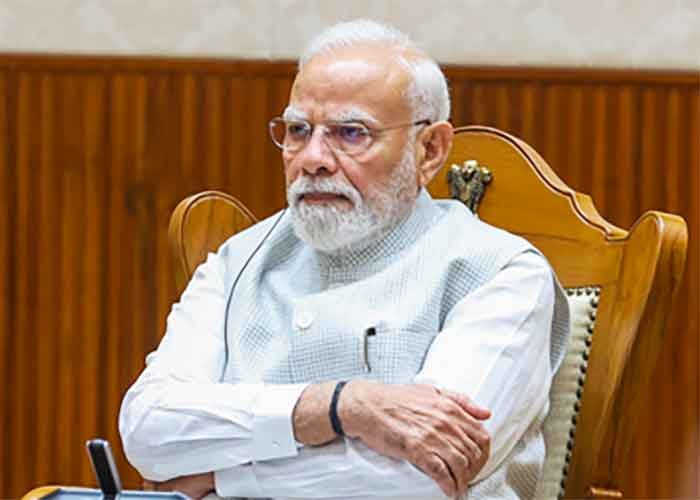
The Union Cabinet’s decision to clear amendments to the Constitution Amendment Bill linked to delimitation and the implementation of women’s reservation could improve the Modi government’s chances of securing the parliamentary support required to pass the legislation. The proposed changes seek to address concerns, particularly among southern states, that delimitation could reduce their relative influence in the Lok Sabha.
Leaders in Tamil Nadu, Kerala, Karnataka, Andhra Pradesh and Telangana have repeatedly argued that a population-based delimitation exercise would penalise states that successfully implemented population-control policies while benefiting those with higher population growth.
The government’s earlier attempt to pass the Constitution (131st Amendment) Bill failed in the Lok Sabha in April after it fell short of the special two-thirds majority required for a constitutional amendment. The Centre has since maintained that no state would be disadvantaged in the delimitation exercise. Union Home Minister Amit Shah had earlier offered to amend the Bill to provide for a uniform 50 per cent increase in seats.
With an assurance reportedly in place, the Dravida Munnetra Kazhagam (DMK) in Tamil Nadu, the Yuvajana Sramika Rythu Congress Party (YSRCP) in Andhra Pradesh and the Bharat Rashtra Samithi (BRS) in Telangana, among others, are expected to support the revised measure.
Other parties that may back the legislation include the Nationalist Congress Party–Sharadchandra Pawar (NCP-SCP), the Biju Janata Dal (BJD), the Jharkhand Mukti Morcha (JMM) and a breakaway group of Trinamool Congress members. Their support could be influenced by the Bill’s link to women’s empowerment and the proposed reservation.
The Lok Sabha has a sanctioned strength of 543 members, with three vacancies at present. The Bharatiya Janata Party (BJP) has 241 MPs, while its National Democratic Alliance (NDA) partners are estimated to contribute around 79 more. If all 540 members vote, the government would require 360 votes to pass the constitutional amendment. The required number would fall in case of absences or abstentions.
A group of 20 rebel Trinamool members has already announced an alliance with the ruling coalition. However, the Nationalist Citizens Party of India (NCPI), which they currently claim to represent, is yet to receive the Speaker’s recognition.
DMK leader M.K. Stalin on Friday reiterated his party’s demand on social media, saying, “the number of parliamentary constituencies is increased, under no circumstances should Tamil Nadu’s share fall below its current 7.18%!”
“A uniform increase across states meets that demand. The existing proportion of parliamentary representation among States, as determined on the basis of the 1971 Census and frozen earlier, must remain unchanged for another 25 years!” he added.
The proposed approach reportedly seeks to delink delimitation from an immediate census-based redistribution and ensure that no state’s proportional representation in the Lower House declines during the specified period.
The DMK, which has 22 Lok Sabha MPs, has also distanced itself from the Congress and the Opposition INDIA bloc. Meanwhile, NCP-SCP leader Supriya Sule has not committed her party’s support, saying a decision would be taken after examining the Bill. The party has eight other MPs who could potentially support the amendments.
With the possible backing of the NCP-SCP and the JMM, which has three Lok Sabha MPs, the projected support could reach 370, according to the assessment. The proposed safeguards on state representation, along with women’s reservation, could also encourage other parties to support the legislation.
In the Rajya Sabha, the ruling alliance is estimated to be 18 members short of the required numbers. The NDA currently has the support of 145 MPs in the 244-member House. The DMK, with eight MPs, the YSRCP with four, the BRS with three, the JMM with three, and NCP-SCP leader Sharad Pawar could collectively help bridge the gap.
Backing the revised package would allow state parties to claim credit for securing safeguards against a decline in their relative parliamentary representation. Opposition, on the other hand, could expose them to criticism for blocking both the expansion of Parliament and the long-pending implementation of 33 per cent reservation for women in legislatures.
With several state elections expected before the 2029 Lok Sabha polls, parties may be reluctant to face such criticism, particularly given women’s turnout and their growing electoral influence in recent elections.
 FOLLOW NOW