
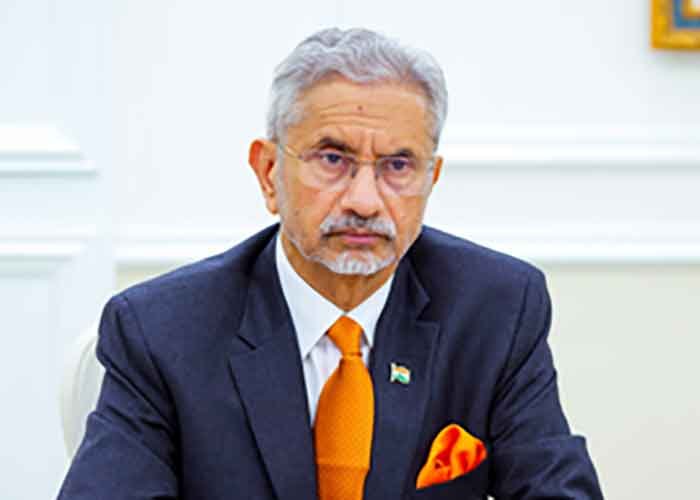
Atlanta, November 1, 2026 (Yes Punjab News)
India has urged the G20 to pursue diplomatic solutions to major conflicts and address disruptions to food, energy and supply chains, with External Affairs Minister S. Jaishankar outlining New Delhi’s engagement with Russia, Ukraine and European countries to protect civilian shipping and restore grain exports through the Black Sea.
Speaking to Indian reporters in Atlanta on Saturday after the G20 Foreign Ministers’ Meeting, Jaishankar said India was coordinating its efforts with the United States and advocating more geographically diversified production networks. He expressed hope that the G20 would find common ground ahead of its December summit.
India’s central message during the discussions was that conflicts were imposing costs far beyond the countries directly involved, particularly on the Global South. Diplomacy, secure supplies and reduced dependence on any single production centre were among its priorities.
“Endless wars must give way to end the war,” Jaishankar said.
Describing the Atlanta meeting as productive, open and animated, he said its three sessions focused on geopolitics, energy and food security, and supply chains. The first two sessions were held on Friday, while the supply chain discussion took place on Saturday.
On the geopolitical situation, Jaishankar said two major conflicts were having global ramifications. India had emphasised that there were no military solutions and that diplomatic pathways needed to be pursued.
He said India was actively engaged in these efforts and that other ministers had also commented publicly on its role.
Explaining New Delhi’s engagement over the Ukraine conflict, Jaishankar said India had been discussing three issues with Russia, Europe and Ukraine: protection of civilian ships and seafarers, restoration of grain exports, and preventing attacks on energy infrastructure.
“We’ve had discussions with Russia. We’ve had discussions with Europe,” he said.
The first priority was to prevent attacks on civilian vessels and their crews. The second was to restore grain flows from Russia and Ukraine, both major exporters to global markets.
Jaishankar said grain shipments through the Black Sea had fallen sharply, affecting the Global South in particular, as countries in the region accounted for a substantial share of global grain purchases.
He described protection of energy infrastructure as a more complicated issue because the parties had different interpretations of what it should cover.
“Non-attack on energy, non-attack on energy is probably the most complicated piece because it means different things to the different players,” he said.
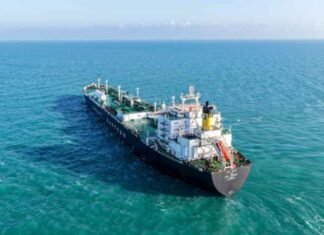
For some countries, energy infrastructure meant refineries, while for others it included electricity grids. Fuel-carrying ships raised additional concerns. India was trying to bring the parties together to address these differences, he added.
Jaishankar outlined contacts at several levels. Prime Minister Narendra Modi had discussed the matter with Russian President Vladimir Putin, while Jaishankar had travelled to Moscow and Kyiv. He also said he had discussed the issue again with Russian Foreign Minister Sergey Lavrov in Atlanta.
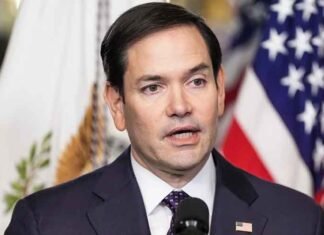
India remained in contact with Ukraine and was coordinating with Washington, which was pursuing its own peace mediation initiative. US Secretary of State Marco Rubio was broadly aware of India’s efforts, Jaishankar said, declining to disclose details of the negotiations.
On energy security more broadly, he said India had cautioned against distortions in energy markets and the politicisation of energy flows, warning that such developments harmed countries in the Global South most severely.
Food security was another major subject, with ministers discussing disruptions to grain shipments and the wider effects of fertiliser shortages.
Jaishankar linked fertiliser supply problems partly to the Black Sea and partly to the Gulf and Red Sea, while grain disruptions were more closely associated with the Black Sea. Ministers discussed possible ways to address these challenges.
On supply chains, India called for diversified manufacturing and production networks to reduce excessive dependence on a single geographical region.
Jaishankar cited the Covid pandemic as an example of the risks posed by concentrated supply networks, adding that conflicts and climate-related events could also disrupt them.
India also cautioned against the use of supply chains as instruments of pressure, arguing that multiple production centres were the best way to reduce such risks.
Alongside the formal sessions, Jaishankar held several bilateral discussions, including one-to-one meetings and engagements in smaller groups. He said there was broad appreciation of India’s ability to engage different sides in a polarised international environment and help bridge divisions by maintaining communication.
Asked about the absence of a consensus statement similar to the declaration adopted during India’s G20 presidency, Jaishankar said the grouping had not yet reached the leaders’ summit stage.
With the December summit still ahead, India hoped members would be able to reach common ground. An agreement was possible if efforts were made, he said.
He cited BRICS as an example, noting that key participants had agreed on a common statement despite differences in the context and membership. He expected efforts to build consensus within the G20 to intensify closer to December and said India would support the process.
The Quad foreign ministers also met in Atlanta on Saturday morning. It was their third meeting this year, following earlier discussions in New Delhi and Manila.
Jaishankar said the ministers believed they had made progress in the Quad’s work and hoped future engagements would help set directions and consider an expanded agenda.
Responding separately to a question about his earlier remarks concerning the United States, he said those comments had been made to a Munich Security Conference delegation in a different setting.
He noted that the earlier audience comprised analysts and policymakers, while the Atlanta gathering involved foreign ministers.
“So I think what you say depends on what the event is,” he said.
The G20 is a forum for international economic cooperation comprising major advanced and emerging economies, the European Union and the African Union. India hosted its leaders’ summit in New Delhi in 2023, when members adopted a consensus declaration.
The Quad comprises India, the United States, Japan and Australia. Its foreign ministers’ meetings review ongoing cooperation and discuss the grouping’s future direction.
 FOLLOW NOW