

New Delhi, November 16, 2026 (Yes Punjab News)
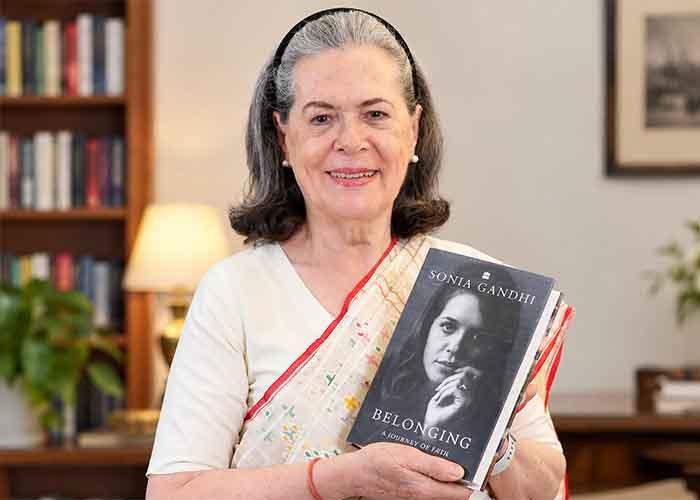
Congress Parliamentary Party Chairperson Sonia Gandhi’s memoir, Belonging: A Journey of Love, has brought renewed attention to the role of former West Bengal Chief Minister Siddhartha Shankar Ray in the discussions and consultations preceding the proclamation of the Emergency in June 1975.
Ray, who served as West Bengal Chief Minister from 1972 to 1977, was among Indira Gandhi’s trusted advisers at the time. His role in the legal and constitutional deliberations surrounding the Emergency has been discussed in several historical accounts, although his contribution has received less public attention than those of Indira Gandhi, Sanjay Gandhi and then President Fakhruddin Ali Ahmed.
In her memoir, Sonia Gandhi describes Ray as a “legal luminary” who, along with then Law Minister H.R. Gokhale, was consulting constitutional experts during the political crisis.
“One of Mrs Gandhi’s chief ministers, legal luminary Siddhartha Shankar Ray, and her law minister, H.R. Gokhale, were consulting with constitutional experts. They were unanimous in urging that the situation needed to be tackled firmly,” she writes. She also notes that Sanjay Gandhi joined the discussions.
Several accounts of the period have credited Ray with suggesting the use of Article 352 of the Constitution to proclaim a National Emergency on the ground of “internal disturbance”. Some narratives have also attributed to him a key role in advising Indira Gandhi on the constitutional route available to her following the Allahabad High Court verdict that invalidated her 1971 election.
Sonia Gandhi also provides a specific account of Indira Gandhi’s meeting with President Fakhruddin Ali Ahmed. She writes that her mother-in-law met the President in person on the afternoon of June 24, 1975, accompanied by Ray, and briefed him about the situation.
The memoir also challenges the later narrative that Ahmed signed the proclamation under coercion. Sonia describes him as a lawyer by profession who signed the proclamation willingly.
The Emergency was formally proclaimed on June 25, 1975, under Article 352 of the Constitution on the ground of internal disturbance. It remained in force until March 21, 1977. The constitutional provision at the time allowed an Emergency to be declared on grounds including internal disturbance; the 44th Constitutional Amendment later replaced that ground with armed rebellion.
Ray’s involvement in the process has been documented in earlier historical accounts as well. A confidential note dated January 8, 1975, attributed to him and cited in research on the Emergency, discussed preparations for possible emergency measures. Other accounts have described him as an adviser who helped Indira Gandhi examine the constitutional route under Article 352.
Ray later served as Governor of Punjab from 1986 to 1989. His role in the Emergency remains a subject of historical debate, with critics holding him responsible for helping provide the legal framework for the suspension of civil liberties, while others have emphasised that the decision was taken by the political leadership of the time.
Sonia Gandhi’s account adds a personal recollection of Ray’s presence alongside Indira Gandhi during the crucial consultations and the meeting with the President immediately before the proclamation. It places him among the key figures involved in the deliberations, rather than presenting him as a peripheral adviser.
 FOLLOW NOW