


New Delhi, 9 April, 2026
Apex business chamber FICCI on Thursday indicated that early signs of stress due to the West Asia conflict are visible across sectors, warranting proactive measures to mitigate immediate risks and build long-term resilience.
In a report titled West Asia Conflict: Implications for India and Imperatives for Industry and Government, FICCI suggested a two-pronged strategy for industry, focused on financial resilience and operational continuity. Firms are encouraged to secure additional funding lines and hedge currency risks to protect cash flows.
As part of the industry wishlist, the report urged the Government to consider the provision of emergency financing for micro, small, and medium enterprises and issuance of advisories to address force majeure-related risks in public procurement contracts, ensuring that businesses are not penalised for delays caused by factors beyond their control. The need for fast-tracking customs clearances, particularly for time-sensitive imports, is also considered important.
The report stated that the uncertainty surrounding the duration and escalation of the West Asia conflict makes it imperative for businesses to prepare for multiple scenarios, ranging from short-term disruptions to prolonged instability.
On the financial front, companies were advised to undertake scenario-based planning by developing a “Middle East Crisis” version of their budgets, with necessary actions to optimise sales, margins, and capital expenditure depending on the sector’s sensitivity to the crisis. Firms are encouraged to secure additional funding lines and hedge currency risks to protect cash flows.
At the same time, businesses must proactively assess the financial health and continuity risks of key suppliers and customers. Reviewing insurance coverage and strengthening cybersecurity protocols are also identified as critical components of risk management in an increasingly uncertain environment.
To address operational disruptions, the report outlined several short-term measures. These include prioritising demand and aligning production schedules with the availability of critical inputs, optimising logistics through shipment consolidation, and enhancing coordination with global shipping lines. Some companies have already established cross-functional “war rooms” to manage real-time supply shortages and ensure business continuity.
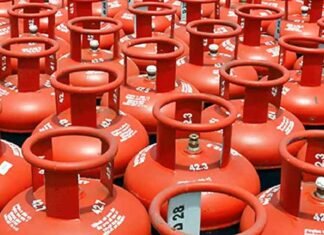
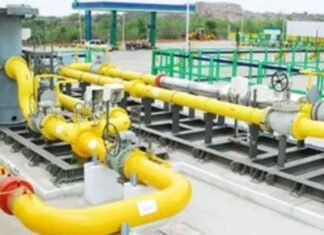
Flexibility and diversification of the energy mix are other key recommendations. Industry players are encouraged to explore multi-fuel options, including biofuels and electrification of processes, as well as increase reliance on alternative energy sources such as solar power, piped natural gas, and coke oven gas. In parallel, firms should adopt energy efficiency measures, including conducting energy audits, optimising equipment usage, and leveraging artificial intelligence-driven monitoring systems for operational efficiency.
Beyond immediate measures, the report underscored the importance of undertaking structural shifts by the industry to ensure long-term resilience.
It is important to ensure diversification of supply chains for critical inputs. Companies are encouraged to reduce dependence on specific geographies by expanding their global supplier base, developing domestic sourcing capabilities, or undertaking backward integration of critical components, wherever feasible.
The report also highlighted the need to accelerate the energy transition by increasing the share of renewable energy through captive generation and open access, and investing in green hydrogen.
Logistics resilience is another focus area. Businesses are encouraged to explore alternative trade routes, enhance the use of multimodal transport, and invest in digital technologies to achieve real-time supply chain visibility.(Agency)
 FOLLOW NOW