

New Delhi, November 12, 2026 (Yes Punjab News)
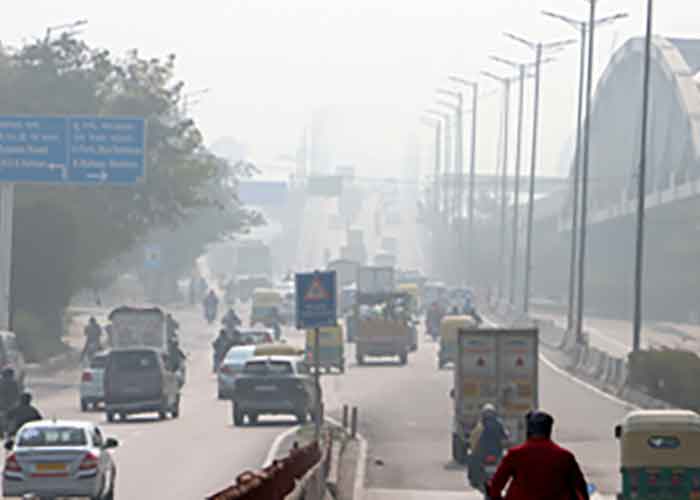
Farmer organisations have reiterated that stubble burning cannot be held solely responsible for Delhi-NCR’s annual pollution crisis, pointing instead to vehicular emissions and the growing number of vehicles on the capital’s roads.
Welcoming the Supreme Court’s recent observations on pollution, Bharatiya Kisan Sangh (BKS) General Secretary Mohini Mohan Mishra urged state governments to withdraw cases registered against farmers and return fines imposed on them with interest.
“The strong objection raised by the Supreme Court against blaming only farmers for pollution makes it clear that farmers are not the primary cause of pollution,” said Mishra, whose organisation is affiliated with the Rashtriya Swayamsevak Sangh (RSS).
He also called for controlling the number of cars owned by families, suggesting “family planning” for vehicles and urging authorities to focus on pollution caused by traffic.
The All India Kisan Sabha (AIKS), the peasant wing of the Communist Party of India, also criticised policies that it said penalised farmers. AIKS President Rajan Kshirsagar alleged that agriculture was being portrayed as a polluting activity while legislation was framed to support corporates. He reiterated that stubble burning was not the principal cause of pollution in Delhi and the National Capital Region.
The Supreme Court, while hearing the Delhi-NCR pollution matter, observed that stubble burning was only one of several contributors to poor air quality and questioned the practice of placing the entire blame on farmers. It directed the governments of Delhi, Haryana, Uttar Pradesh and Rajasthan to submit plans addressing vehicular movement, emission standards and measures to curb polluting vehicles.
The court also referred to the Covid-19 lockdown, when Delhi experienced significantly clearer skies despite stubble burning not having stopped entirely, indicating the role of other pollution sources.
A Centre for Science and Environment (CSE) analysis found that nitrogen dioxide levels peaked during evening rush hours and remained high until midnight, reflecting the impact of traffic congestion. Data also indicated that stubble burning contributed around 14 per cent of Delhi’s pollution on November 5, while transportation remained among the largest local sources of emissions.
The CSE has identified vehicular pollution, industrial emissions, construction dust, waste burning and adverse weather conditions as major contributors to Delhi’s multi-source pollution problem, with crop residue burning acting as an additional aggravating factor.
Earlier CSE reports this year estimated that 1,800 to 2,000 vehicles are added to Delhi’s roads every day. The capital’s registered vehicle count crossed 15.6 million in 2024-25, with private two-wheelers and cars accounting for a significant increase. The Economic Survey of Delhi 2025-26 also recorded an addition of 643,000 vehicles, the highest single-year increase in nine years.
Farmer organisations have maintained that reducing stubble burning remains necessary but stressed that solutions must be practical, incentive-based and equitable rather than relying on a single-point blame approach.
 FOLLOW NOW