





New Delhi, October 23, 2026 (Yes Punjab News)
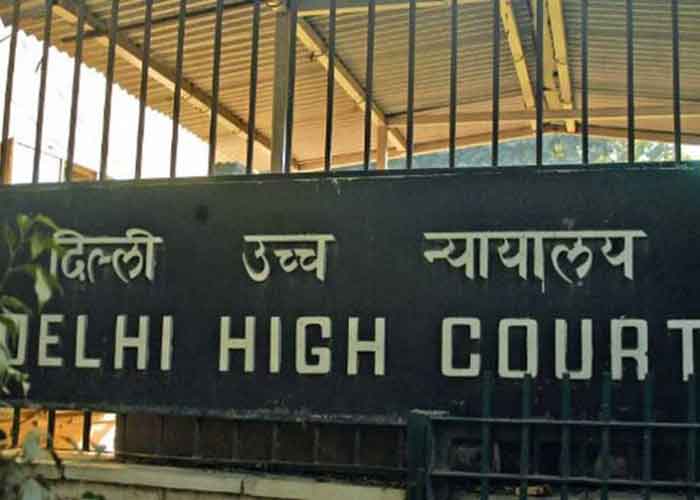
The Delhi High Court has dismissed the regular bail plea of Habib Ur Rahman, accused in an Official Secrets Act case involving the alleged possession and transmission of classified military documents to an official at the Pakistan High Commission, holding that the material on record prima facie linked him to the alleged chain of transmission.
A single-judge Bench of Justice Sanjeev Narula ruled that the seriousness of the charges, the sensitive nature of the documents allegedly procured and their intended destination weighed against granting bail at this stage. The order was passed on September 25.
“The gravity of the offence is an important consideration, but it does not relieve the Court of the duty to assess the case on its own facts. An allegation bearing upon national security calls for a close scrutiny; it does not place the matter beyond the Court’s bail jurisdiction,” the High Court observed.
Rahman was arrested on July 14, 2021, in connection with a case registered at the Crime Branch police station under Sections 3 and 9 of the Official Secrets Act, 1923, along with provisions of the Indian Penal Code relating to criminal breach of trust, destruction of evidence, theft, house trespass, criminal conspiracy and common intention.
According to the prosecution, Rahman was apprehended with copies of documents relating to military training, the operationalisation of the Armed Forces Special Operations Division (AFSOD), an intelligence summary and other military material marked confidential or restricted.
Army authorities subsequently verified the documents as genuine, classified and sensitive. The Crime Branch alleged that Rahman was not merely a recipient but acted as an intermediary between co-accused Naik Clerk Paramjeet Kumar and Rana Muhammad Qasim Zia, described as an official of the Pakistan High Commission.
Opposing the bail plea, the prosecution relied on the recovery and authentication of the classified documents, financial transactions cited in the chargesheet, mobile phone records, call detail records and the statement of Rahman’s employee, Mohd. Arif. The employee allegedly delivered documents to the Pakistan High Commission on Rahman’s instructions.
The prosecution also referred to subscriber details of a SIM card allegedly obtained in the employee’s name, with Rahman’s number provided as the alternate contact. It further cited Rahman’s alleged access to the Army establishment through business dealings and his association with co-accused Paramjeet Kumar.
Seeking bail, Rahman’s counsel argued that he had undergone more than three years and four months of actual custody, the investigation had been completed and the evidence was largely documentary and already in the possession of the prosecution or the court.
His counsel also pointed out that Rahman had remained on interim bail from April 2024 until surrendering on February 6, 2026, without any allegation that he had absconded, approached a witness or tampered with evidence.
The defence further submitted that only four witnesses had been examined and that the trial was unlikely to conclude soon, making continued detention punitive.
The High Court noted that the latest nominal roll recorded three years, four months and 13 days of actual custody as of September 18, 2026. It acknowledged that Rahman’s compliance with interim bail conditions and the absence of any alleged misuse of liberty weighed in his favour, but held that these factors did not outweigh its prima facie assessment of the prosecution material.
Referring to Supreme Court judgments recognising the right to bail in cases involving prolonged incarceration and delayed trials, the High Court observed that the seriousness of a charge could not justify detention for an indefinite period when the trial was unlikely to conclude within a reasonable time.
“The custody undergone is substantial; at this stage, however, it does not outweigh the prima facie assessment of the record noticed above,” the order stated.
The court also examined Rahman’s medical condition. According to the latest medical report, he was wheelchair-dependent, required assistance with daily activities and suffered from post-traumatic paraplegia, left upper limb paresis, neurogenic bladder and other ailments.
The report stated that he was receiving treatment and follow-up care at Safdarjung Hospital, Dr BSA Hospital, G.B. Pant Hospital and other specialist departments. His general medical condition was described as sick.
However, the High Court observed that the report did not establish that the prescribed treatment could not be provided in custody or that continued incarceration was medically incompatible with his condition.
“The medical record, therefore, does not by itself justify release on regular bail at this stage,” the order said.
While dismissing the bail application, Justice Narula directed the trial court to give the case due priority and endeavour to record the prosecution evidence expeditiously. He also said unnecessary adjournments should not be granted to either side.
The court further directed the jail superintendent to ensure that all investigations, specialist consultations, physiotherapy and other prescribed treatment were provided without avoidable delay. Any treatment unavailable in jail must be arranged at an appropriate government hospital.
The High Court clarified that its observations were limited to the bail application and should not be treated as an expression of opinion on the merits of the prosecution’s case.
 FOLLOW NOW