




Chandigarh, November 24, 2026 (Yes Punjab News)
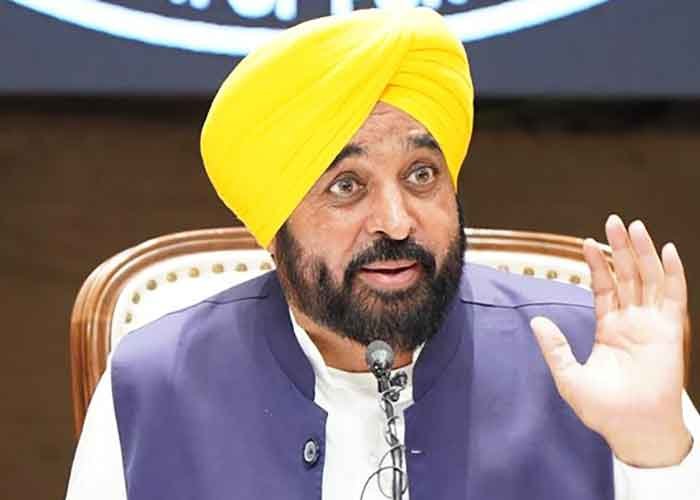
Punjab Chief Minister Bhagwant Singh Mann on Tuesday launched a sharp attack on the renewed BJP-Shiromani Akali Dal (Badal) alliance, describing it as a ‘Thag Jod’ (alliance of deceivers) formed to protect political families and regain power rather than serve Punjab’s interests.
Accusing the two parties of repeatedly changing their positions for political convenience, Mann recalled that the Badal family had initially supported the Centre’s three farm laws before turning against them when the farmers’ movement gained widespread support. He also said the alliance would be remembered for the deaths of 750 farmers during the agitation against the laws.
Taking to X, Mann said, “The BJP-Akali Dal alliance is not for Punjab but a ‘Thag Jod’ formed to protect their political families and save their chairs. Those who criticised each other over the three farm laws, Punjab’s water rights, Chandigarh and Sikh institutions until yesterday have now reunited out of their greed for power. All traditional political leaders who engaged in ‘Noora Kushti’ among themselves for 20 years are now sharing the same stage. But the people of Punjab can never forget the drug menace and incidents of sacrilege during the 2007-2017 Akali-BJP government. The Aam Aadmi Party’s alliance is exclusively with Punjab’s 3.25 crore people. Free electricity, canal water, Mohalla Clinics, Schools of Eminence and government jobs without bribery define our positive politics. The people of Punjab will never accept this ‘Thag Jod’.”
Addressing the people of Punjab, the Chief Minister said the BJP and Akali Dal had entered into an alliance after repeatedly criticising each other. He said the parties appeared to believe that people would forget their past positions, but Punjabis remembered their political conduct.
Referring to the farm laws, Mann said the Badal family had initially praised the legislation and claimed it would bring significant benefits to Punjab’s agriculture. However, when the farmers’ movement gained international support, the Akali Dal changed its position. He said Harsimrat Kaur Badal resigned from the Union Cabinet and the party began describing the BJP as anti-farmer, presenting its exit from the alliance as a sacrifice. Mann alleged that the two parties had merely pretended to separate to mislead the public.
Questioning the Akali Dal’s decision to reunite with the BJP, Mann cited several contentious issues involving Punjab’s interests. He alleged that the BJP had sought control over Panjab University, including changes to its Syndicate and the appointment of RSS members. He also referred to the proposal for a separate Legislative Assembly in Chandigarh, the status of Chandigarh as Punjab’s capital, the appointment of members to the Bhakra Beas Management Board (BBMB), and the distribution of Punjab’s water to Haryana and Rajasthan.
The Chief Minister claimed that the Punjab government had fought against these moves to protect the state’s interests. He said he had personally visited the Nangal Dam and also raised the issue of Punjab’s tableau being excluded from Republic Day and Independence Day parades in Delhi.
Mann further recalled Sukhbir Singh Badal’s earlier statements accusing the BJP and RSS of taking control of Sikh institutions. He referred to the management committees of Takht Sri Hazur Sahib in Maharashtra and Sri Patna Sahib, as well as the separate Delhi Sikh Gurdwara Management Committee and Haryana Sikh Gurdwara Management Committee.
Referring to a historic Hukamnama issued against Sukhbir Badal on December 2, Mann said the issues had been acknowledged at the time. He alleged that Sukhbir Badal had accused the Singh Sahiban and Jathedars of acting at the BJP’s behest, but was now entering into an alliance with the same party.
Reminding people of the 2007-2017 Akali-BJP government, Mann said the state had witnessed the spread of the ‘chitta’ drug menace and incidents of sacrilege, including those in 2015, during that period. He questioned how the two parties could now claim to be committed to Punjab’s welfare after repeatedly breaking and restoring their alliance.
He also questioned the BJP’s stated target of eliminating drugs from Punjab by December 31, 2029. Referring to BJP leaders sharing a political platform with Akali leader Bikram Singh Majithia, Mann alleged that there was a contradiction between the BJP’s statements on drug eradication and its political choices.
The Chief Minister also named several leaders expected to share the platform under the renewed alliance, including Captain Amarinder Singh, Sunil Jakhar, Kewal Dhillon, Manpreet Badal, Ravneet Singh Bittu, Sukhbir Badal, Balwinder Singh Bhundar, Daljit Singh Cheema, Amit Shah, Tarun Chugh and Ashwani Kumar. He questioned how the leaders could claim to offer a roadmap for Punjab after coming together despite their different political backgrounds.
Contrasting the alliance with his government’s work, Mann said the AAP’s partnership was with Punjab’s 3.25 crore people, including farmers, women, youth and ordinary families. He said nearly 90 per cent of households were benefiting from free electricity, while farmers were receiving daytime power for agriculture and canal water for irrigation.
He also highlighted Mohalla Clinics and health cards offering coverage of up to Rs 10 lakh, along with the government’s education initiatives through Schools of Eminence. Mann claimed that more than 78,000 government jobs had been provided without bribery or recommendations, describing the recruitment process as transparent.
“Our alliance is with the young people for whom we have created employment opportunities. We have provided more than 78,000 government jobs without taking even a single rupee in bribes. No cash, no recommendation. Our alliance is with those young people who have secured government jobs through a transparent recruitment process,” he said.
Mann added that children studying in Schools of Eminence were clearing NEET and other competitive examinations. He said the AAP’s alliance extended to their parents and every ordinary family in the state.
The Chief Minister said the BJP and Akali Dal were trying to recover their lost political ground through their reunion. He claimed that neither party was in a position to win the number of seats it had expected independently and that their renewed partnership was an attempt to improve their electoral prospects.
Referring to Punjab’s political history, Mann said the Congress and the Akali-BJP alliance had governed the state for much of the 20 years preceding the AAP government. He argued that these parties had sufficient opportunities to work for Punjab but had failed to deliver a lasting roadmap for the state’s development.
Describing AAP as a party representing ordinary people, poor families, employees and youth, Mann said his government would take its schemes and achievements to every household. He reiterated that the party believed in positive politics and would not divide people on religious or caste lines.
Calling on Punjabis not to trust the renewed alliance, Mann alleged that the traditional political parties had maintained an understanding despite their public disagreements. He described their past political rivalry as ‘Noora Kushti’, claiming that their apparent differences had concealed an arrangement to protect each other’s political interests.
He said AAP would continue to stand with the people of Punjab and raise its voice in support of the state’s rights and interests.
 FOLLOW NOW