




Islamabad, October 16, 2026 (Yes Punjab News)
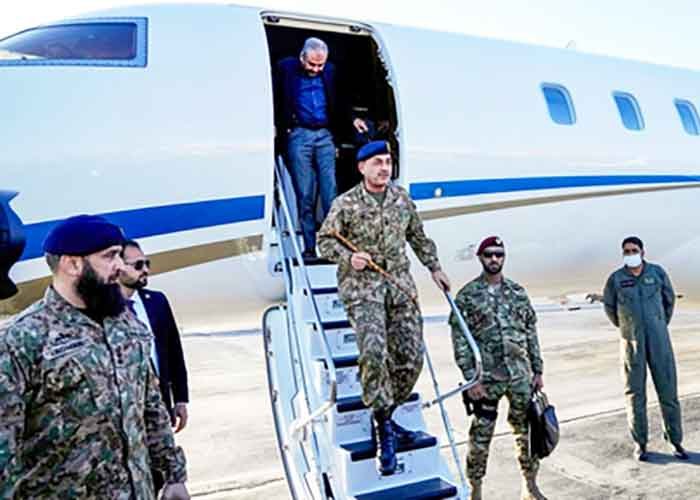
Pakistan’s political landscape remains dominated by the confrontation between Army Chief Asim Munir and jailed former Prime Minister Imran Khan. With Khan behind bars, hundreds of his party members facing legal action and the Pakistan Tehreek-e-Insaf (PTI) operating under sustained pressure, the military establishment led by Munir has expanded its influence over the country’s political affairs. Constitutional changes backed by the government of Prime Minister Shehbaz Sharif have further intensified concerns about the concentration of power within the military leadership.
For Khan and his supporters, the confrontation is not merely a political or institutional dispute. They have alleged that Munir is using his authority to settle personal scores with the former prime minister, whose tenure in office was marked by a breakdown in relations with the military establishment. Although claims of personal animosity remain contested, the history of their relationship has become central to the wider debate over the military’s role in Pakistan’s political system.
The roots of the dispute can be traced to 2019, when Khan was prime minister and Munir served as Director-General of the Inter-Services Intelligence (ISI). Munir held the post for approximately eight months before being replaced by Lieutenant General Faiz Hameed, making his tenure one of the shortest in the agency’s history.
The reasons behind the change were not publicly established. Subsequent accounts alleged that Munir had raised concerns about Khan’s wife, Bushra Bibi, and alleged corruption involving people close to her. Khan later rejected this account, denying that Munir had presented him with evidence of corruption or that the officer had been removed for raising such concerns. PTI also alleged that Munir subsequently attempted to contact Bushra Bibi to discuss his removal from the intelligence post.
The lack of a definitive public explanation has allowed competing interpretations of the episode to persist. For some, it was a routine personnel decision within the military establishment; for others, it became an early indication of a possible personal rift between Khan and Munir. The episode subsequently acquired greater political significance as relations between Khan and the military deteriorated.
During Khan’s final months in office, his relationship with the military leadership under then-Army Chief General Qamar Javed Bajwa came under increasing strain. Disagreements over senior appointments, the direction of the government and foreign policy contributed to the breakdown of an alliance widely believed to have helped Khan consolidate power following the 2018 general election.
Khan was removed from office in April 2022 through a parliamentary vote of no confidence, becoming Pakistan’s first prime minister to lose office through that mechanism. His party alleged that the military establishment had supported the move behind the scenes, while the opposition maintained that parliament had exercised its constitutional authority to remove a government that had lost its majority.
Khan also alleged that a conspiracy involving the United States and Pakistan’s military establishment, with backing from Saudi Arabia, had led to his removal. These claims remained disputed. The no-confidence vote itself was a parliamentary process, but the broader circumstances surrounding his departure intensified the political confrontation between Khan and the establishment.
Munir was appointed army chief in November 2022, several months after Khan’s removal. The former prime minister increasingly positioned himself as a challenger to the military’s influence over civilian politics, turning the dispute into a wider campaign over the balance of power between elected representatives and the armed forces.
The confrontation escalated dramatically on May 9, 2023, when Khan’s arrest triggered protests across Pakistan. Demonstrators attacked military installations and other state property, including the residence of a senior military commander in Lahore. The authorities subsequently launched a broad crackdown on PTI leaders and supporters, with hundreds facing legal proceedings. Some individuals were tried in military courts, drawing criticism over due process and the jurisdiction of military tribunals over civilians.
Khan was arrested again in August 2023 and remained imprisoned amid multiple cases, including allegations involving corruption and national security. His legal troubles included cases related to state gifts, a classified diplomatic cable and his marriage. Several convictions in these cases were subsequently suspended or overturned.
In January 2025, Khan was sentenced to 14 years in prison in the Al-Qadir Trust corruption case. Prosecutors alleged that Khan and Bushra Bibi had received land from a property developer in connection with a favour involving funds returned to Pakistan from Britain. Khan and his supporters have maintained that the cases against him are politically motivated, while the authorities have pursued them through the judicial system.
The accumulation of cases, prolonged incarceration and restrictions affecting PTI have reinforced concerns among Khan’s supporters that legal proceedings are intertwined with a broader political struggle. At the same time, the controversy reflects a longstanding feature of Pakistan’s political system: the military has repeatedly exercised substantial influence over civilian governments and the country’s political direction.
Khan’s own rise to power was accompanied by a close relationship with the establishment, according to widely held assessments of Pakistan’s political landscape. His subsequent confrontation with the military illustrates the vulnerability of civilian leaders when alliances with powerful institutions collapse and political autonomy comes into conflict with institutional interests.
Munir’s growing authority has added another dimension to the dispute. Constitutional changes backed by the Shehbaz Sharif government have altered the structure and terms of senior military appointments, prompting concerns about the concentration of authority within the armed forces.
The changes described in the debate include extending the tenure of service chiefs from three years to five years, with provisions allowing for a further term, as well as abolishing the office of Chairman of the Joint Chiefs of Staff Committee and creating the position of Chief of Defence Forces. Under the new arrangement, the army chief also holds the CDF position, consolidating senior command responsibilities under one office.
Critics argue that these changes strengthen the military leadership at a time when the civilian political opposition is under sustained pressure. The government and its supporters, however, have defended their political and constitutional positions within Pakistan’s existing system. The broader question is whether the changes will further weaken civilian oversight and parliamentary accountability.
The Munir-Khan confrontation has consequently grown beyond a dispute between two powerful individuals. The 2019 ISI leadership change, Khan’s removal from office in 2022, the violence and crackdown following his arrest in May 2023, and the continuing legal proceedings against him have contributed to a climate in which allegations of personal retaliation remain prominent.
Whether personal animosity has directly shaped Munir’s actions towards Khan remains difficult to establish conclusively. Nevertheless, the concentration of military power, the continued pressure on the PTI and the contested use of legal mechanisms have raised fundamental questions about democratic governance in Pakistan.
The country’s long-term political stability will depend on strengthening civilian supremacy, safeguarding judicial independence and ensuring that legal accountability is applied fairly rather than used as a tool for political retaliation. Without effective institutional checks and a meaningful space for political opposition, Pakistan risks prolonging a power struggle that continues to undermine public confidence in its democratic institutions.
 FOLLOW NOW