




New Delhi, October 12, 2026 (Yes Punjab News)
Pakistan Army chief Field Marshal Asim Munir faces a delicate strategic dilemma as Islamabad weighs its defence commitments to Saudi Arabia against the risks of becoming directly involved in the escalating conflict with Yemen’s Houthi movement. Reports suggest Pakistan has confirmed the deployment of forces to Saudi Arabia under the Makkah Joint Defence Agreement, while the Houthis have reportedly warned Islamabad against military involvement on Riyadh’s behalf, threatening “severe retaliation”.
The situation has revived concerns about how limited military engagements can develop into prolonged and costly wars. Conflicts that begin as restricted deployments, proxy campaigns or demonstrations of military strength have repeatedly expanded beyond their original objectives, imposing heavy military, economic and diplomatic costs.
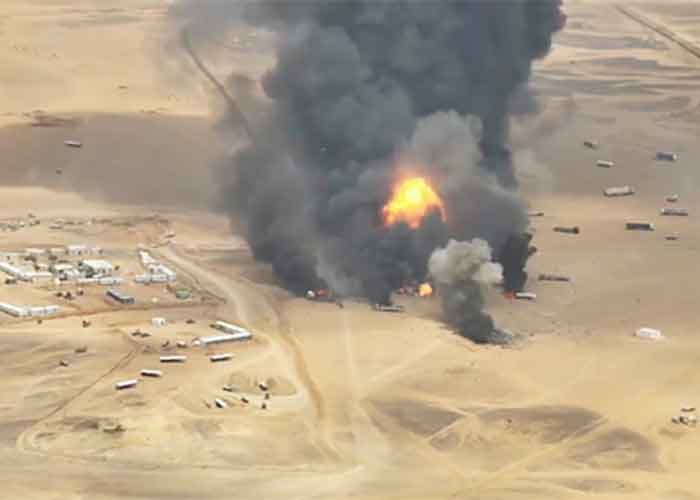
The conflict involving the Houthis and Saudi Arabia has intensified, with raids and missile attacks increasingly threatening Saudi territory, energy infrastructure and key Red Sea shipping routes. Against this backdrop, Pakistan’s potential military role has become a sensitive regional issue.
Munir had reportedly been weighing the consequences of direct confrontation. Saudi Arabia remains a longstanding strategic and economic partner of Pakistan, while neighbouring Iran retains influence with the Houthis. Islamabad is therefore attempting to preserve its commitments to Riyadh without damaging its working relationship with Tehran or exposing Pakistani personnel and assets to additional risks.
According to reports, Munir has pursued diplomatic engagement with Iran, urging Tehran to use its influence to restrain the Houthis and reduce threats to Saudi energy facilities and shipping routes. The approach reflects Pakistan’s effort to manage the crisis through diplomacy while avoiding a broader regional confrontation.
History offers several examples of conflicts that expanded far beyond their initial expectations.
The Korean War, which began in June 1950, was initially expected to be a rapid military campaign. However, the conflict drew in the United States, China, the then Soviet Union and other parties. What was anticipated to be a swift offensive developed into a three-year war that caused millions of casualties.
The Vietnam War followed a similarly incremental trajectory. It evolved from advisory missions, limited deployments and restricted military commitments into one of the largest conflicts of the Cold War era. US policymakers reportedly believed that gradual escalation would preserve strategic flexibility. Instead, each additional commitment created pressure for further involvement, eventually making withdrawal politically and militarily costly.
Afghanistan has also demonstrated the risks associated with prolonged military engagement. The Soviet Union’s decade-long occupation during the 1980s and the US-led military presence from 2001 to 2021, launched as part of the war on terror, both ended after substantial losses of life and financial resources. The experience of the British Raj had likewise illustrated that capturing Kabul did not guarantee the ability to govern the country.
More recently, the Russia-Ukraine war and the US-Iran conflict have been cited as examples of how expectations of a relatively short campaign can give way to prolonged hostilities, with serious military, economic and diplomatic consequences.
These historical precedents may be relevant as Islamabad assesses the implications of a possible military role in the current crisis. Analysts note that Pakistan must balance its defence commitments to Riyadh with the need to maintain stable working ties with neighbouring Iran.
Pakistan Defence Minister Khawaja Asif has described Islamabad’s role as one of “supporting”, largely involving reconnaissance and similar assistance. However, analysts have questioned whether such support can remain separate from direct participation in hostilities and how long Pakistan could avoid being drawn into the fighting if the conflict intensifies.
Past conflicts show that limited commitments do not necessarily remain limited. A deployment intended to reassure an ally can turn into a combat mission, while air defence assistance may lead to retaliatory action. Such retaliation, in turn, can trigger a wider counter-offensive.
In this context, the reported Houthi warning is seen as raising the potential cost of Pakistani intervention and adding pressure on Islamabad to reconsider the threshold between diplomatic support and military participation envisaged under the Makkah agreement.
For Pakistan, the decision carries several implications. A direct military role could strain relations with Tehran, expose Pakistani personnel and assets to attack, and create domestic political complications. At the same time, limiting its involvement could test its defence commitments to Saudi Arabia.
The challenge for Munir and Islamabad is to navigate these competing interests without allowing a commitment intended to support an ally to become the starting point of a wider regional war.
 FOLLOW NOW