


New Delhi, July 15, 2026
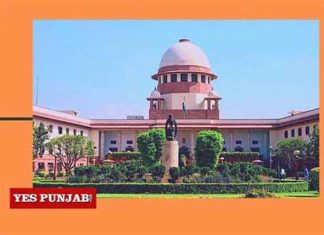
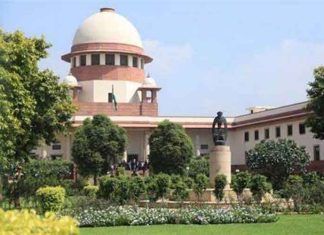
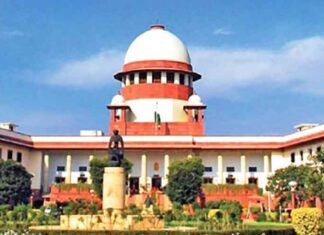
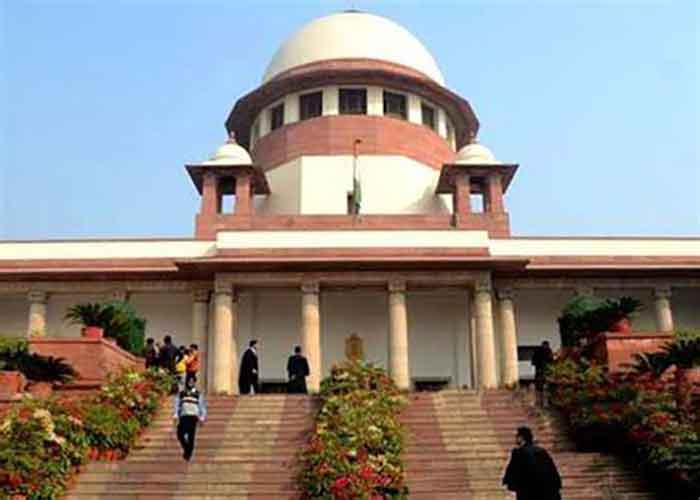
The Supreme Court on Wednesday dismissed a public interest litigation (PIL) seeking action over alleged derogatory remarks made against Prophet Muhammad in a viral social media video.
A bench of Justices P.S. Narasimha and Alok Aradhe declined to entertain the plea under Article 32 of the Constitution, holding that such matters cannot be directly brought before the apex court without first availing the remedies available under law.
During the hearing, the Justice Narasimha-led Bench remarked that the filing of such petitions appeared to be aimed at sensationalising the issue and asked the petitioner’s counsel whether he was aware of the Information Technology Rules, indicating that an existing legal framework was available to address such grievances.
“We understand. These Article 32 petitions are to serve something else,” the apex court orally remarked.
It ultimately dismissed the PIL, observing that in matters of this nature, the petitioner should first exhaust the remedies available under law, including approaching the police authorities and following the prescribed legal procedure.
The petition, filed under Article 32 of the Constitution by advocate-on-record Ansar Ahmad Chaudhari, had sought directions to the authorities to identify, remove and delete from social media platforms videos and posts allegedly containing defamatory and offensive remarks against Prophet Muhammad. It had also sought directions to the Centre to frame and implement guidelines regulating the publication and dissemination of content on digital and social media platforms that is deliberately derogatory, offensive or insulting towards revered religious figures, including Prophet Muhammad and Bhagwan Shri Ram.
Further, the plea had sought safeguards to prevent the alleged misuse of online platforms for outraging religious sentiments and promoting communal disharmony.
According to the petition, the grievance arose from a viral podcast clip in which respondent Nazia Elahi Khan allegedly made remarks concerning Prophet Muhammad that, according to the petitioner, were derogatory and had deeply hurt the religious sentiments of Muslims. The plea contended that the remarks were made during a recorded podcast and that the interviewer, despite having the opportunity to edit or remove the allegedly objectionable portion, published the podcast in its entirety, thereby facilitating its wider dissemination.
It argued that while freedom of speech is a fundamental right, it is subject to reasonable restrictions and does not extend to making deliberately offensive remarks against revered religious figures capable of disturbing public order and communal harmony.
The petition had arrayed, among others, the Union Ministry of Home Affairs, the Ministry of Electronics and Information Technology (MeitY), YouTube, Facebook, X and Nazia Elahi Khan as respondents.
Earlier, on July 7, the Supreme Court had declined an urgent hearing on the PIL, with a Bench of Justices Ahsanuddin Amanullah and Sheel Nagu advising the petitioner to first approach the police authorities instead of directly invoking the apex court’s jurisdiction.
At that stage, Justice Amanullah had observed: “The police are there. Have faith in our system. We are only the apex; we are here to monitor,” while stressing that if the legal process failed, the petitioner could then approach the Supreme Court. According to the list of dates annexed to the petition, an FIR in connection with the alleged remarks was registered in Mumbai on June 23, following which the PIL was instituted before the apex court on July 2.(Agency)
 FOLLOW NOW