

Washington, DC, March 27, 2026(Yes Punjab News)
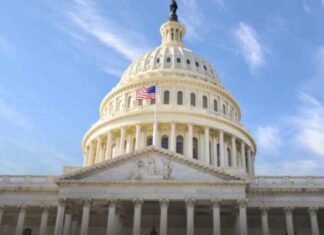
The Pentagon is tightening restrictions on religious beard waivers, requiring stricter proof of service members’ sincerely held beliefs and mandating reevaluation of existing accommodations. This move by the U.S. Department of War could potentially roll back civil rights advances that allow service members of diverse faiths to serve the country without compromising their religious identity.
UNITED SIKHS has been at the forefront of landmark litigation and sustained advocacy that reshaped military policy, securing these protections for Sikh service members through both courtroom victories and legislative engagements. The organization has consistently pressed for systemic change, asserting that “religious freedom is a cornerstone of our democracy.”
UNITED SIKHS drew on the precedent it helped set in Iknoor Singh v. McHugh (2015), where the court found that denying a Sikh Reserve Officers’ Training Corps (ROTC) student the right to wear a beard and turban “substantially burdened his religious exercise” under the Religious Freedom Restoration Act.
UNITED SIKHS also celebrated a historic breakthrough in Singh v. Carter (2017), when the court upheld the rights of Captain Simratpal Singh, a decorated officer and Bronze Star recipient, to maintain a beard and turban while serving on active duty.
Together, these victories cemented legal principles and established binding precedent that religious freedom and military readiness are not mutually exclusive and Sikh identity and military excellence are fully compatible. Courts made clear that burdens on Sikh service members’ faith must be justified by a compelling government interest and pursued through the least restrictive means.
Yet the Pentagon’s recent announcement raises serious concerns that the United States may be stepping backward on longstanding civil rights protections.
“Requiring service members to formally attest in writing that they hold sincere religious beliefs imposes an undue burden without compelling government interest. Requiring affidavits to demonstrate religious devotion is not the least restrictive method,” added Gurvinder Singh, UNITED SIKHS International Humanitarian Aid Director.
For Sikhs, religious devotion is already plainly obvious through the articles of faith they wear daily. These are known as the Five Ks: Kesh (unshorn hair), Kara (steel bracelet), Kirpan (ceremonial blade), Kanga (wooden comb), and Kachera (cotton undergarment), all of which clearly signal a service member’s Sikh religious vocation. Imposing additional requirements, such as sworn statements, when that devotion is plainly evident risks serving as a pretext for infringing upon religious exercise.
The military has already granted tens of thousands of beard exemptions for medical reasons, proving that operational readiness is not compromised by facial hair. National security depends on the strength of its people.
Sikh Americans have a rich history of service in the U.S. military, despite facing challenges rooted in their religious commitments. Sikh immigrants first arrived in the U.S. in the late 1800s, predominantly working in industries like railroads and agriculture. While their participation in the military was initially limited, during World War I and II, Sikhs expressed patriotism by offering to serve, despite discriminatory policies that often prevented them from joining.
Following World War II, in 1948, the U.S. military desegregated, paving the way for greater participation by minority groups, including Sikhs, though full religious accommodations were not yet granted.
Between the 1940s and 2000s, Sikh soldiers like Chand Singh, who served in the Korean War, began to serve with limited accommodations for their religious practices. Advocates such as Harpreet Singh began challenging restrictive grooming policies that forced Sikh soldiers to choose between military service and religious observance. In this time, Bhupinder Singh became one of the first Sikh Americans to join the U.S. Army while maintaining his turban and beard. Captain Simratpal Singh, became the first Sikh officer to serve while wearing a turban and beard, and Major Kamaljeet Singh Kalsi, paved the way for future generations ensuring that Sikh Americans, both men and women, can serve while honoring their faith.
Legal battles set the stage for policy changes and by 2017, following cases like Iknoor v. McHugh, and UNITED SIKHS’ continued relentless advocacy, the U.S. Army and other law enforcement across the country officially updated grooming policies to allow Sikh soldiers to wear turbans and maintain beards while in uniform.
“By embracing diversity and respecting religious freedom, the U.S. military gains access to a broader pool of skills, cultural insight, and moral credibility,” stated Gurvinder.
UNITED SIKHS calls on policymakers, military leaders, and members of Congress to uphold the hard-won precedent that ensures that Sikh service members, and all Americans of faith, can serve with honor, dignity, and full equality.
UNITED SIKHS invites supporters like you to stand with us in safeguarding religious liberty in uniform.
 FOLLOW NOW