




A rejoinder to Rajiv Tuli’s “CVC’s Accountability Gap” (Yes Punjab, 21 November 2026)
Rajiv Tuli deserves credit for putting in print a question usually asked only in whispers in government offices: who holds the powerful to account? His piece is measured and careful with figures. He is right that a high disposal rate is not the same as accountability, and right that not every bad decision is a corrupt one. On that much there is no quarrel.
The quarrel is with the remedy. Mr Tuli finds an accountability gap at the Central Vigilance Commission and prescribes more monitoring, more tracking and more teeth. Thirty-seven years inside the system lead me to a different view. India’s problem is not too few watchdogs. It is too many, watching one another, while the hand that holds the leash stays out of the picture.
A Crowded Kennel
Count who can knock on an IAS officer’s door today: the CVC, but only while the officer serves the Union; the CBI; the Lokpal, for Group A officers; and, since most IAS officers spend most of their careers with their States, the State Vigilance Bureau and the State Lokayukta (in Punjab, the Lokpal of Punjab). Add departmental inquiries, audit paras, the Enforcement Directorate and the courts. The Romans asked who would guard the guards. India has answered by appointing more guards.
What the Lokpal Bought Us
The Lokpal, the latest “additional layer”, is the best test of whether adding layers works. Born of a mass movement in 2011, it was enacted in 2013 and set up only in 2019. In all that time it has ordered preliminary inquiries in 289 cases and granted sanction for prosecution in just seven. Its own prosecution wing was constituted only in June 2025, twelve years after the law was passed. ThePrint’s analysis of its orders found that the few it did sanction mostly concerned small fish, such as bank officials. The mountain laboured and brought forth a mouse.
The Leash Is Held Elsewhere
Here lies the real gap. Since 2018, neither the CBI nor a State Vigilance Bureau can even begin an inquiry into a decision taken in the course of official duty without prior approval. That approval must come from the authority competent to remove the officer: the Central Government for an IAS officer serving the Union, the State Government for one serving a State. In short, the political executive. Sanction to prosecute later comes from the same quarter. The CVC advises; the minister decides.
Related Posts

The Supreme Court itself is divided on this provision. In January 2026 a two-judge bench split, Justice B.V. Nagarathna holding it unconstitutional and Justice K.V. Viswanathan upholding it to protect honest officers, and the question now awaits a larger bench. No new layer at the CVC can close a gap that the political executive controls.
The Process Is the Punishment
In Indian administration, initiative and success are seldom, if ever, rewarded. An error of judgement, a mistake made in good faith, is punished.
Hindsight is always 20/20. A file two or three decades old can be reopened, a decision taken in the fog of the moment can be second-guessed, and motives can be imputed long after any sense of limitation has passed. Criminal breach of trust and misappropriation are charged even where the loss to the exchequer is notional. Until 2018, the law itself made it an offence to confer a pecuniary advantage on anyone “without any public interest”, with no bribe and no corrupt motive required. Then come years of hearings. Even if the officer is acquitted at the end, the process has been the punishment.
Punishment Without a Penalty
The criminal process is only the visible part. Below it lies a quieter armoury. “Vigilance clearance”, a phrase as elastic as any in the service rules, can cost an officer a promotion or central empanelment on the strength of a pending complaint. Let a show cause notice for a minor penalty issue, or, God forbid, a charge sheet for a major one, and the officer’s promotion goes into a sealed cover while the proceedings drag on. Withholding of promotion is itself a penalty listed in the disciplinary rules, to be imposed only after due process. The sealed cover imposes it without any finding at all. And this is before one counts transfers, which an officer learns to take in stride.
We then ask, with a straight face, why IAS officers do not take decisions.
The Coal Lesson
Take the coal-block allocations. H.C. Gupta was Coal Secretary from 2005 to 2008, an officer known in the service for his competence and integrity. He became the first public servant convicted in the coal cases. Further convictions followed, and his appeals are still pending in the Delhi High Court while he remains on bail.
Yet for much of that period the coal portfolio was held by the Prime Minister himself, Dr Manmohan Singh. The CBI never charge-sheeted him or any senior official of the Prime Minister’s Office, and none of them faced even a departmental proceeding. When a trial court summoned him in 2015, the Supreme Court stayed the summons. The trial court found that the Secretary had misled the Prime Minister. The system, it seems, looks for culprits down, rarely up.
This is not a plea for impunity. Corruption must be pursued without fear or favour. But accountability that flows only downward is not accountability; it is selection.
Balance in Reality, Not in the Books
The answer is not another watchdog. It is a few disciplines the State already has the power to impose on itself:
- decide every request for prior approval within the statutory time, with written reasons, and publish the outcomes;
- protect decisions taken in good faith and recorded with reasons;
- bring a sense of limitation to the reopening of decades-old files;
- stop the sealed cover from doing the work of a finding;
- make accountability run up the chain as surely as it runs down.
Mr Tuli ends by observing that India’s anti-corruption architecture is stronger on paper than in its results. True, and equally true of the balance between protecting the honest officer and pursuing the corrupt one. That balance must exist in reality, not merely in the books of theory.
Chandigarh, 21 November 2026
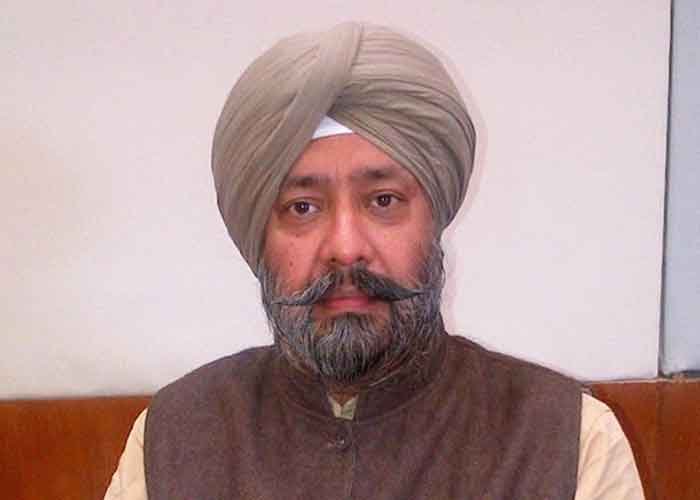
About the author. KBS Sidhu, IAS (Retd.), superannuated in July 2021 as Special Chief Secretary, Government of Punjab. He is Founder-Editor of The KBS Chronicle (kbssidhu.substack.com) and Convener of the Shiromani Punjab Forum.
 FOLLOW NOW