

New Delhi, October 4, 2026 (Yes Punjab News)
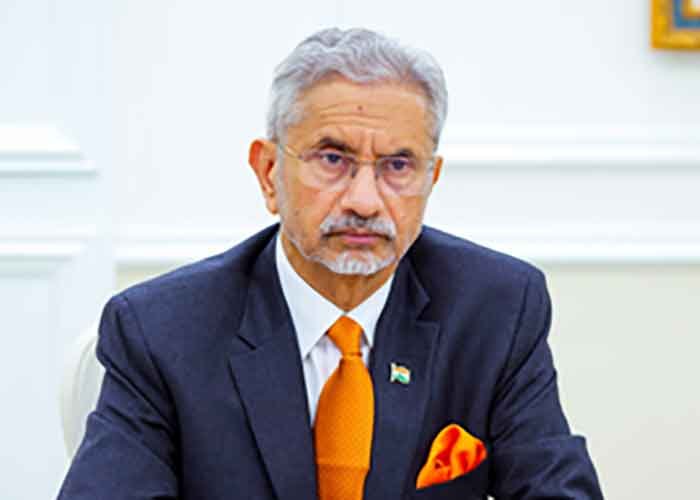
External Affairs Minister S. Jaishankar has described the evolving US-China rivalry as a “Goldilocks” scenario, arguing that countries need to navigate a middle path rather than allowing tensions to become either too intense or overly accommodating.
“In the context of a US-China rivalry, I think we are looking at what is often called a Goldilocks scenario: You don’t want it to be too hot; you don’t want it to be too good. You want it somewhere in between, at the right temperature,” Jaishankar said while addressing the Munich Security Conference.
The External Affairs Minister said the changing global order was also forcing emerging and middle powers to reconsider how they manage their economic and security relationships.
He said many such countries were focusing on diversification and de-risking, including strengthening supply chains, creating new arrangements and pursuing cooperation based on specific areas of common interest.
Jaishankar argued that countries no longer need complete alignment of interests to cooperate.
“Having an identity of views or a very strong congruence of interest is too high a bar today,” he said, adding that a sufficient number of areas of convergence could provide the basis for cooperation.
According to Jaishankar, this process of diversification, de-risking and hedging is gradually contributing to the emergence of a new global architecture.
He said emerging and middle powers would naturally strengthen cooperation among themselves where their interests did not directly clash, while also maintaining relationships with both the United States and China.
Jaishankar further highlighted the growing relevance of what he described as a “third way”, suggesting that more countries would increasingly seek to avoid being locked into one side of major geopolitical rivalries.
In an increasingly interdependent world, he said, complete disengagement was not practical. Instead, countries were likely to pursue “multi-alignment” by maintaining relationships with different major powers even when those relationships were difficult to reconcile.
“It’s a sort of strategy of advancing by hedging,” Jaishankar said.
He also linked this emerging approach to the future of multilateralism, noting that the existing multilateral system was already under pressure.
“The main multilateral body, the United Nations, is very visibly gridlocked,” he said, pointing to the challenges facing traditional mechanisms of international cooperation.
 FOLLOW NOW