
New Delhi, April 2, 2026
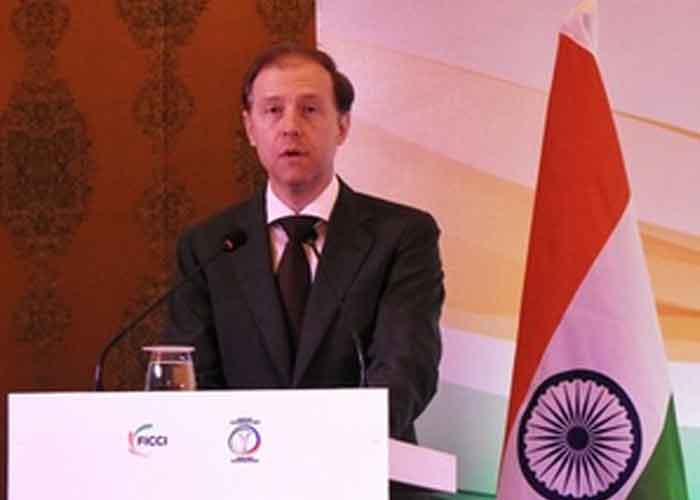
Russia’s First Deputy Prime Minister Denis Manturov arrived in New Delhi early on Thursday for high-level discussions covering defence, energy, trade and a range of other bilateral issues.
In a post on X, the Ministry of External Affairs said, “A warm welcome to Mr Denis Manturov, First Deputy Chairman of the Russian Federation and co- Chair of the India-Russia Intergovernmental Commission on Trade, Economic, Scientific, Technological & Cultural Cooperation, to New Delhi.”
“During the visit, he will hold consultations with External Affairs Minister Dr S. Jaishankar and engage in other bilateral meetings,” the Ministry added.
According to officials, the visit is expected to focus significantly on strengthening bilateral relations, particularly in the areas of security and defence cooperation. Developments related to the ongoing West Asia conflict are also likely to feature prominently in the discussions.
As per the MEA, Manturov is scheduled to meet National Security Advisor Ajit Doval, External Affairs Minister S. Jaishankar, and Finance Minister Nirmala Sitharaman during his visit.
Discussions are expected to centre around cooperation in key sectors, including defence, security, energy and trade. Notably, following a month-long waiver on US sanctions, Russia has once again emerged as the largest supplier of crude oil to India in recent weeks.
Ahead of the visit, Foreign Secretary Vikram Misri and Russian Deputy Foreign Minister Andrey Rudenko co-chaired foreign office consultations in New Delhi on March 30, where both sides reviewed the current state of bilateral ties and exchanged views on regional and global developments.
The two sides also evaluated progress made in implementing decisions taken during the India-Russia Summit held in New Delhi last December, which had largely focused on boosting economic cooperation between the two countries.
Manturov’s engagements in India are also expected to address the broader economic impact of the West Asia conflict, particularly in terms of disruptions to global energy supplies and their implications for both nations.(Agency)
 FOLLOW NOW