Home Blog Page 755

Pentagon calls cybersecurity, digital networks a war weapon

Washington, March 25, 2026

The Pentagon declared cybersecurity and digital networks as central to modern warfare, telling lawmakers that its “digital backbone” is now a “weapon system” critical to how US forces fight, decide, and win future conflicts.

At a Senate Armed Services cyber subcommittee hearing, Department of Defence Chief Information Officer Kirsten Davies said the US military is undertaking a sweeping overhaul of its enterprise IT and cybersecurity systems to gain an operational edge.

“Our focus is to enable data supremacy and decision dominance on the contested battlefields of today and tomorrow at the speed and scale our warfighters deserve,” Davies said.

Chairman Mike Rounds underscored the urgency, warning that outdated systems and slow processes were now a strategic risk. He said the ability to “orient, decide and act more quickly than the enemy will likely decide the outcome of the next major war”.

Davies outlined a four-pillar transformation strategy aimed at modernising networks, accelerating software delivery, strengthening cybersecurity, and building a skilled workforce.

Under the first pillar, she said the Pentagon is upgrading its core infrastructure, including undersea cables, fibre networks and satellite communications, while expanding 5G use and modernising data centres. “This foundation supports every warfighting system and our global installations,” she said.

The second pillar focuses on shifting away from legacy software systems. Davies said the department is “shifting from slow legacy software development to modern agile delivery” and working to standardise data architectures to speed up decision-making.

On cybersecurity, she said the Pentagon is moving away from “checklist driven compliance” to a more dynamic, risk-based model with continuous monitoring and automation. “We will drive risk reduction rather than burdensome paperwork,” she said.

Lt Gen Paul Stanton, who heads the Defense Information Systems Agency and the Department of Defence Cyber Defence Command, said the network itself must function as a warfighting system.

“We must get the right data to the right place at the right time, such that our commanders make better and faster decisions than our enemies,” he said.

Stanton said the military is already operating under real-world stress conditions. “We are at war and we’re executing Operation Epic Fury currently,” he said, describing how teams monitor networks in real time, reroute traffic and rapidly deploy new solutions when systems are disrupted.

He stressed that redundancy is built into the system to ensure resilience. “We’re never single threaded on any capability as we enter into the fight,” he said, noting that the Pentagon relies on a mix of terrestrial, undersea and satellite communications.

Lawmakers raised concerns about the Pentagon’s ageing infrastructure and growing technical debt. Rounds said years of underinvestment had created “a technical debt problem of historic proportions” that adversaries are exploiting.

Davies acknowledged the challenge, saying the overhaul aims to “reduce technical debt” and eliminate inefficiencies while accelerating modernisation.

The hearing also highlighted tensions over supply chain risks and artificial intelligence. Senator Jack Reed pressed the department over its decision to designate Anthropic as a supply chain risk and order its removal from DoW systems within 180 days.

Davies said the matter is under litigation and declined to provide details in open session, but confirmed the system remains in use during the transition period. She said the Pentagon has designed its data architecture to work with multiple AI systems to maintain flexibility.

Lawmakers also pushed for reforms in software approval processes and cloud computing. Davies said the department is working to streamline its “authority to operate” framework and expand its Joint Warfighting Cloud Capability into a more integrated marketplace to improve visibility and security.

For the Pentagon, the shift reflects a broader change in how wars are fought. Military leaders increasingly view networks, data and software as decisive tools that link sensors, commanders and weapons across the battlefield.

Officials warned that delays in modernisation could hand an advantage to adversaries who are already exploiting vulnerabilities in US systems.(Agency)

Man charged after 20 kg of heroin found in luggage at Sydney Airport

Arrest Chain

Sydney, March 25, 2026

Australian police have charged a man over an alleged attempt to smuggle 20 kg of heroin into the country from Thailand.

The Australian Border Force (ABF) and Australian Federal Police (AFP) said on Wednesday that the 26-year-old man from the state of New South Wales was selected for a baggage examination on arrival at Sydney Airport on a flight from Bangkok on January 24.

During the examination, ABF officers located 34 vacuum-sealed bags containing a combined 20 kg of heroin.

According to authorities, the heroin had an estimated value of 10 million Australian dollars ($7 million) and could have supplied 100,000 street deals.

The case was turned over to AFP officers, who arrested the 26-year-old and charged him with one count of importing a commercial quantity of a border-controlled drug, which carries a maximum penalty of life imprisonment.

AFP Detective Superintendent Morgen Blunden said that the attempted importation highlights the determination of organized crime groups to exploit international travel pathways for profit, Xinhua news agency reported.

Earlier on December 8, Australian authorities had charged a New Zealand national after 21 kg of heroin was located hidden in luggage at Sydney Airport.

The AFP and ABF had said in a joint statement that the 21-year-old man from New Zealand had been selected for a baggage examination on arrival at Sydney Airport on a flight from Thailand.

During the examination, ABF officers had allegedly located 21 vacuum-sealed bags containing a white powdered substance. Subsequent testing returned a positive result for heroin, which had an estimated total weight of 21 kg.

AFP officers had seized the packages and charged the man with one count of importing a commercial quantity of a border-controlled drug. At the time, authorities had noted that if convicted, he faced a maximum penalty of life imprisonment.

According to authorities, the seized volume of heroin had an estimated value of over 10 million Australian dollars ($6.6 million) and could have supplied around 100,000 street-level deals.(Agency)

US Army launches drone marketplace

Washington, March 25, 2026

The US Army has launched a digital marketplace to speed up drone purchases and expand access to advanced unmanned systems for its forces and allies.

The platform will allow Army units, government partners, and allied nations to compare and buy vetted drone systems. Officials said it will reduce delays and deliver technology to soldiers faster.

The marketplace was developed with Amazon Web Services and the Army Enterprise Cloud Management Agency. It includes tools for comparing systems, collecting feedback, and placing orders.

“The UAS Marketplace is a prime example of how the Army is transforming its acquisition processes to be more agile, competitive, and effective,” said Brent G. Ingraham, the Army Acquisition Executive.

“By lowering barriers to entry and partnering with a wider range of industrial innovators, we are building a more resilient and responsive defense industrial base, which is essential for equipping our force and deterring our adversaries,” he said.

Officials said the platform marks a shift from traditional procurement methods. It aims to create a more competitive and transparent system and expand the supplier base.

Maj. Gen. Clair Gill said the platform reflects a change in approach.

“The success of this marketplace directly demonstrates the power of the Portfolio Acquisition Executive construct to deliver tailored capability faster and more efficiently,” Gill said.

“It represents a pivotal shift in our acquisition mindset and is a cornerstone of Army Aviation’s modernization strategy,” he added.

Rodney Davis said the system responds to field requirements.

“The UAS Marketplace is a direct response to the evolving needs of our Soldiers on the ground,” Davis said.

“By creating a dynamic and competitive environment, we are not just buying drones; we are delivering versatile and advanced aerial capabilities that will give our formations a decisive edge in multi-domain operations,” he said.

Officials said the platform is built for speed and scale.

“The UAS Marketplace is a transformative approach to acquisition,” said Col. Danielle Medaglia.

“By fostering competition and innovation, we are ensuring that Soldiers have access to the most advanced technologies to meet their mission requirements. This strategy is about delivering capability at scale and at speed,” she said.

The Army will also use the marketplace to support allies and partners. It aims to streamline foreign military sales and strengthen defence ties.

The platform will be displayed at the Association of the United States Army Global Force Symposium in Huntsville, Alabama. A separate showcase is planned in April.

Drones have become central to modern warfare. They are used for surveillance, targeting and combat roles. Recent conflicts have shown their growing importance on the battlefield.

The US military is pushing to modernise procurement systems. It is focusing on speed and flexibility. The new marketplace is part of that effort to maintain a technological edge.(Agency)

Two killed as bus carrying 25 overturns in Delhi’s Karol Bagh

New Delhi, March 25, 2026

At least two people lost their lives, and several others sustained injuries after a bus carrying around 25 passengers overturned in central Delhi’s Karol Bagh area in the early hours of Wednesday, officials said.

The Delhi Fire Services confirmed the fatalities, while multiple rescue teams were rushed to the spot to assist those trapped in the bus.

The incident occurred at around 1 a.m. near Jhandewalan Metro Station when the bus, which was travelling from Jaipur in Rajasthan towards Delhi, reportedly lost control and overturned under the metro line.

Eyewitnesses recounted that two children and a woman were trapped beneath the overturned vehicle immediately after the crash. They were later rescued by emergency responders and shifted to a nearby hospital for treatment.

Several other passengers who sustained injuries in the accident were also admitted to hospitals, where they are currently undergoing treatment, officials said.

Visuals from the scene showed extensive damage to the bus, with shattered glass, broken seats and detached wheels scattered around the overturned vehicle. Fire officials said that at least two fire tenders were deployed to carry out rescue operations, which began soon after the incident was reported.

Soon after receiving information, teams from the police and fire brigade reached the site and launched a coordinated rescue operation.

A crane was later used to lift the overturned bus, allowing rescuers to check for any remaining trapped passengers.

Authorities said that the injured were immediately transported to hospitals, and the families of both the deceased and the injured have been informed about the incident.

Preliminary findings suggest that overspeeding may have led to the accident. Officials said the driver appears to have lost control of the vehicle while passing under the metro corridor in Karol Bagh, causing the bus to overturn.

Police further said that the bodies of the deceased have been sent to the mortuary for post-mortem examination, after which they will be handed over to their respective families.(Agency)

45 nations join Melania’s tech alliance

Washington, March 25, 2026

First Lady Melania Trump launched a new global coalition bringing together 45 countries and major technology companies, calling for a coordinated push to expand access to education and technology for children worldwide.

Addressing the inaugural “Fostering the Future Together” summit at the US Department of State, she said, “As people we dream. As leaders we progress. As nations we will build. Beginning today, let’s accelerate our new global alliance—this bond—to positively impact the progress of our children.”

The two-day summit brings together international leaders, first spouses, and major tech firms to collaborate on expanding educational tools and strengthening protections for children in digital environments.

“Our coalition’s mission is to empower children by providing greater access to technology and education. This is a historic moment in time,” the First Lady said.

In her address, the First Lady outlined a roadmap focused on creating innovative learning programmes, advocating supportive education policies, sponsoring tech-focused legislation, and building partnerships between governments and the private sector.

“Our shared vision prioritises children above political philosophy, geographical borders, and local prejudices,” she said, urging members to commit to “hosting a regional meeting, conduct a research study, advance new partnerships, collaborate with another member nation.”

The summit is structured around four key areas: EdTech tools, artificial intelligence in education, online safety and digital literacy.

She also highlighted the participation of major American technology companies, underscoring the role of industry in shaping the initiative. “Never before have so many tech visionaries stood before such a large global audience of leaders in the State Department and the White House over a two-day period,” she said.

She cited companies including OpenAI, Palantir, xAI, Google, Meta, Adobe, Microsoft and Zoom, calling the gathering “unprecedented.”

“This room is filled with extraordinary human capital. Leaders, harness it to elevate your children, to empower your people, and to accelerate your economies,” she said.

The coalition’s platform, she added, would act as a “capability multiplier,” anchored in artificial intelligence, education and global leadership.

“Our key driver: to cultivate the skills young people need to be successful in this rapidly evolving world,” Trump said, stressing the need for “concrete initiatives that equip young people with the skills and knowledge they need.”

The First Lady said the summit marks “only the beginning” of a broader global effort. “Together, let’s invest, expand access, and create opportunities for education and technology,” she said.

Day one of the summit marks the first large in-person gathering of the coalition since its launch during the United Nations General Assembly in September 2025. The discussions will continue at the White House on Wednesday.

The initiative reflects growing global focus on digital education and safe online environments for children, as governments and companies grapple with the rapid expansion of artificial intelligence and digital platforms in classrooms.

In recent years, policymakers across countries have pushed for stronger safeguards for children online, while also expanding access to digital learning tools. The involvement of major technology firms signals an increasing reliance on public-private partnerships to scale education solutions globally.(Agency)

‘Sponsoring terror, crushing rights in PoJK’: Kashmiri activist Javed Beigh red-flags Pakistan’s nefarious record

Srinagar, March 24, 2026

Javed Beigh, a prominent human rights defender and Kashmiri activist from Jammu and Kashmir’s Budgam, highlighted multiple terror incidents and grave human rights violations during the 61st session of the United Nations Human Rights Council (UNHRC) in Geneva.

Speaking to IANS, Beigh said his speech touched on three major areas of concern, including terror attacks in Pahalgam and Delhi, systemic violations in Pakistan-Occupied Jammu and Kashmir (PoJK), and atrocities in Pakistan’s Khyber Pakhtunkhwa region.

Addressing the recent Pahalgam terror attack, the Kashmiri activist detailed how Lashkar-e-Taiba carried out the assault, targeting innocent civilians based on their religious identity.

He also revisited the November Delhi blast of last year, noting that some children from Kashmir had been radicalised through various channels by handlers operating across the border — a fact he emphasised as well-established.

He strongly held the Pakistani establishment responsible, saying that The Resistance Front (TRF) had claimed responsibility for orchestrating terror activities.

He added that Pakistan must stop sponsoring terrorism other it would face global isolation soon.

Turning to PoJK, Beigh highlighted the severe human rights violations in the region, including the suppression of public protests and crushing of genuine civilian demands by the local administration and military authorities.

He said the people faced widespread governance issues, lack of basic rights, and large-scale violations of human rights, which he has officially registered with the UNHRC.

He noted that the population in PoJK was protesting against increased tariffs and rising prices of essential commodities such as food and other necessities, yet their grievances were met with state oppression.

Beigh also drew attention to atrocities in Khyber Pakhtunkhwa, where he reported airstrikes by the Pakistan Army on civilian villages, resulting in around 30 deaths.

He expressed grave concern over attacks on innocent populations and the continued targeting of civilians in conflict zones.

Highlighting broader human rights concerns, Beigh spoke of the suicide attack on a Shia imambada in Islamabad, where more than 100 people were killed, underscoring the systematic exploitation of minority communities in Pakistan.

He detailed the abduction and forced conversion of young girls, who were then married off to men two to four times their age, as an example of entrenched religious persecution.

Meanwhile, Islamic scholar Maulana Bisharat Hussain Sakafi from Dhingla village in Poonch, who addressed the UN Human Rights Council via video conference, condemned Pakistan-backed cross-border terrorism that claimed more than 100 civilian lives in Poonch between 2021 and 2023.

He said that such killings contravene Islamic teachings, calling it a “murder of humanity” disguised under the banner of jihad.

He urged the Human Rights Council to take cognisance of these atrocities and hold Pakistan accountable for acts that violate both human rights and Islamic principles.

Through their addresses, both Beigh and Sakafi called for urgent international attention and action to counter terrorism, radicalisation, and human rights abuses, urging the global community to protect vulnerable populations and uphold fundamental freedoms.(Agency)

Oil markets volatile amid conflict fears, diplomacy hopes

Crude oil prices surge over 7 pc as Israel-Iran war escalates port ONGC

Washington, March 25, 2026

Oil markets swung sharply as investors weighed fears of a prolonged Middle East conflict against signs of possible diplomatic progress, with prices briefly topping $100 before retreating.

Wall Street struggled for direction. Crude rose, bonds sold off, and stocks fell as conflicting signals emerged from Washington and the region, according to reporting by The Wall Street Journal.

Front-month Brent crude climbed 4.6 per cent to $104.49 a barrel, while West Texas Intermediate rose 4.8 per cent to $92.35, the Journal reported.

The gains came after reports that the Pentagon was deploying a combat brigade to the Middle East, even as President Donald Trump signalled that peace talks with Iran were progressing.

Investors were left searching for direction as markets reacted to both escalation risks and diplomatic signals.

Analysts warned that sustained high oil prices could act as a drag on growth. “The longer oil stays higher, it’s almost like an automatic governor on the economy,” said David Lundgren, a portfolio manager and chief market strategist at Little Harbor Advisors.

The volatility extended across asset classes. The Nasdaq fell 0.8 per cent, the S&P 500 dipped 0.4 per cent, and the Dow Jones Industrial Average slipped slightly, while Treasury yields climbed.

Market participants also flagged the risk of a broader economic shock. An oil-price surge “is going to be a stagflationary shock to the economy,” said Qian Wang of Vanguard.

At the same time, traders bet that prices could rise further. Wagers on Brent reaching $110 a barrel were among the most popular positions, reflecting expectations that supply disruptions could persist.

Yet sentiment shifted later in the day as signs of diplomacy emerged. Oil prices fell in early trade on “signs of progress in a resolution to the Middle East conflict,” with analysts pointing to “pledges for peace in the region continue with the aid of Pakistan, Qatar and others,” according to The Wall Street Journal.

Trump also insisted his administration was in talks with Iran and referred to an oil- and gas-related “present” from Tehran, the Journal reported.

Despite these signals, economists cautioned that any relief in energy prices would be slow. “Prices rise like a rocket, fall like a feather,” said Mark Zandi, chief economist at Moody’s Analytics, as reported by The New York Times.

Even if the conflict ends quickly, it could take “six to eight weeks for oil production and shipments to normalize,” analysts told the Times, with prices likely to settle above pre-war levels.

Industry executives echoed the uncertainty. “We don’t have any idea where the price is going to go,” said Mike Sommers of the American Petroleum Institute, according to the Times.

There are also structural constraints. Gasoline prices remain elevated near $4 a gallon, and a drop in crude would take time to filter through refining and distribution systems, according to a CNN analysis.

Markets remain highly sensitive to developments around the Strait of Hormuz, a critical chokepoint for global oil flows. Disruptions there have amplified price swings and heightened geopolitical risk. (Agency)

US sends Iran 15-point war end plan

Donald Trump US President 2

Washington, March 25, 2026

The United States has sent Iran a sweeping 15-point plan to end the war and dismantle its nuclear programme, media reports said, as President Donald Trump claimed Tehran “would like to make a deal.”

The proposal, sent through intermediaries, outlines a broad framework to halt hostilities, curb Iran’s nuclear ambitions, and reshape its regional posture, according to officials cited by The Wall Street Journal.

The document calls for Iran to dismantle its three main nuclear facilities, end any enrichment of nuclear material on its soil, and suspend its ballistic missile programme. It also seeks to curb Tehran’s support for proxy groups and ensure the full reopening of the Strait of Hormuz, the report said.

The plan includes a one-month ceasefire and demands that Iran commit to never pursuing a nuclear weapon. It requires Tehran to halt enrichment activities and hand over all enriched material to the International Atomic Energy Agency under an agreed timetable.

It also calls for taking the Natanz, Isfahan, and Fordow nuclear facilities out of service and destroying them, while granting the UN nuclear watchdog full access to information inside Iran.

On the regional front, the proposal pushes Iran to abandon its proxy strategy and halt funding and arming of such groups. It also includes provisions to keep the Strait of Hormuz open as a free maritime passage.

Missile issues would be addressed at a later stage, with limits on quantity and range. The plan further proposes restricting Iran’s military capabilities to self-defence purposes only.

In return, Iran would see all nuclear-related sanctions lifted. The United States would also support the development of a civilian nuclear programme in Bushehr to generate electricity, while monitoring it, officials told the publication.

The proposal also includes abolishing the “snapback” mechanism that allows for the automatic reimposition of sanctions.

The framework broadly reflects earlier demands made during the Trump administration before the war began on February 28, according to The Wall Street Journal.

The plan has been delivered through intermediaries, with Pakistan emerging as a key conduit in the diplomatic effort, alongside Turkey and Egypt, which are pushing to arrange talks between US and Iranian officials, according to reports by The Wall Street Journal and The New York Times.

Despite the diplomatic push, both sides remain far apart, with Iran continuing attacks across the region, including strikes on Israel, Kuwait, Bahrain, and Saudi Arabia, the reports said.

President Trump struck an optimistic tone on Tuesday, saying Iran was ready to negotiate. “They’d like to make a deal,” he told reporters during an Oval Office event. “They’ve agreed they will never have a nuclear weapon.”

He also said talks were underway. “We’re talking to the right leaders, and they want to make a deal so badly,” Trump said, according to The Washington Post.

The diplomatic effort comes amid continued military escalation and economic pressure linked to the conflict, now in its fourth week, The New York Times reported.(Agency)

Gujarat second state to pass UCC Bill; CM Patel calls move ‘historic’

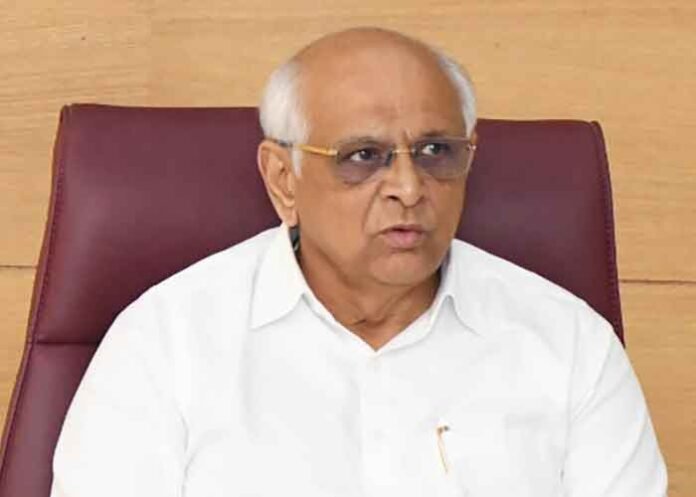
Bhupendra Patel Gujarat CM 1

Gandhinagar, March 24, 2026

Gujarat Chief Minister Bhupendra Patel on Tuesday termed the passage of the Uniform Civil Code (UCC) Bill 2026 by the state Assembly a “historic moment” for Gujarat and the country.

The passage followed a debate lasting more than seven and a half hours, which ended with the legislation approved by a majority.

“I extend my congratulations to all public representatives of the state and all citizens on the passage of the Uniform Civil Code Bill. This is a historic moment for Gujarat and the country,” Patel said in the House, adding that Gujarat had become the second state in India (after Uttarakhand) to implement the UCC.

He said the law would provide a uniform legal framework across religions and communities for matters of marriage, divorce, inheritance, and adoption.

“It will ensure that women of all religions and communities receive equal rights, thereby strengthening their dignity and security,” he said.

Addressing concerns over cultural implications, Patel said, “This Bill is not to erase any culture, and tribal culture will not be harmed.”

He added that all aspects had been discussed in detail before bringing the legislation, and that it includes provisions for justice for women and children.

As he introduced the Bill, members of the Treasury benches raised slogans in support.

“The state’s geographical and cultural diversity had been taken into account to ensure that no community faces injustice,” he noted.

A high-level committee, chaired by retired Supreme Court judge Ranjana Desai, conducted a detailed study and submitted its final report to the government on March 17, following extensive consultations and public outreach across districts.

During the debate, Deputy Chief Minister Harsh Sanghavi said the committee had received nearly 20 lakh suggestions from the public through post, email, web portals and in-person consultations.

“49 per cent of the responses, or about 9.72 lakh, were received via email, and 5.5 per cent, or about 1.09 lakh, through the web portal,” he said.

He added that a majority supported uniform provisions, including 81 per cent in favour of common marriage laws, 79 per cent in favour of uniform divorce rules, 83 per cent in favour of equal property rights and maintenance provisions, and 86 per cent in favour of mandatory registration of divorce.

The Bill makes it compulsory to register marriages within 60 days, with a penalty of up to Rs 10,000 for failure to comply.

It also prescribes punishment of up to seven years’ imprisonment in cases where a marriage is carried out through coercion, intimidation or fraud, as well as in instances of bigamy, with mandatory registration aimed at ensuring legal recognition, safeguarding the rights of women and children, and preventing fraudulent unions through accurate marital status records.

In matters of divorce, the legislation mandates that only divorces granted through a court and duly registered will be considered valid, with violations attracting a penalty of up to three years’ imprisonment.

It also guarantees women the unconditional right to remarry following a legally recognised divorce, while establishing a uniform set of grounds and procedures across communities to ensure gender equality, simplify legal processes and reduce disputes.

The proposed Code introduces uniform maintenance provisions applicable to all religions and provides equal inheritance rights, granting sons and daughters the same legal standing across communities, thereby strengthening women’s financial security and promoting a more equitable social structure.

Additionally, the Bill regulates live-in relationships by making their registration mandatory, with failure to comply attracting a fine of up to Rs 10,000 or imprisonment of up to 3 months.

In cases where individuals entering such relationships are between 18 and 21 years of age, their parents will be informed.

The legislation also provides penalties in cases involving coercion, intimidation or fraud, applies provisions of the Protection of Children from Sexual Offences (POCSO) Act in cases involving minors, and penalises individuals entering into live-in relationships despite being legally married.

Clarifying exemptions, Patel said certain customary practices in minority communities, including marriages among specific relatives, would not be affected by the law, while Scheduled Tribes have been kept outside the ambit of the code in line with the committee’s recommendations to protect their traditional customs.(Agency)

Consortium led by Aditya Birla Group acquires RCB for Rs 16,660 crore

Royal Challengers Bengaluru RCB Logo

Mumbai, March 24, 2026

A consortium led by Aditya Birla Group and the Times Internet Limited has acquired the defending Indian Premier League (IPL) and Women’s Premier League champions Royal Challengers Bengaluru (RCB) for INR 16,660 crore, the owners of the franchise informed regulatory bodies on Tuesday.

United Spirits Ltd, the owners of the franchise, made this disclosure in mandatory regulatory filings with the Bombay Stock Exchange and the National Stock Exchange of India on Tuesday.

Bolt Ventures (Bolt) and Blackstone’s perpetual private equity strategy (BXPE, Blackstone) are the other members of the consortium that have jointly bought the Royal Challengers Bengaluru, one of the eight original franchises of the IPL that was formed ahead of the inaugural edition in 2008.

The decision to sell off its 100% equity stake in Royal Challengers Sports Private Limited was approved by the board of United Spirits Limited, owned by Diageo India, a subsidiary of the UK-based Diageo plc. This decision was taken by its board in a meeting on Tuesday.

“We wish to inform you that the board of directors of United Spirits Limited at its meeting held today, i.e., March 24, 2026, has inter alia approved the sale of 14,690 equity shares of Royal Challengers Sports Private Limited (“RCSPL”), a wholly owned subsidiary of USL, for an aggregate consideration of INR 166.6 bn, subject to adjustments and other conditions set out in the Share Purchase Agreement (SPA) dated March 24, 2026 executed by and amongst USL, RCSPL, and Bolt IPL Holdings LLC; Aelius Investments Pte Ltd; Asia Investment Topco II Pte. Ltd.; Times Internet Limited; and Metropolitan Media Company Limited (the “Proposed Transaction” and such parties, the “Parties”),” the company said in its statement to the regulatory bodies.

“Upon completion of the Proposed Transaction in accordance with the SPA (which is subject to customary conditions including the receipt of all requisite approvals as required to give effect to the Proposed Transaction, including from the Competition Commission of India and the Board of Control for Cricket in India), USL will cease to hold any shareholding in RCSPL and consequently RCSPL will cease to be a subsidiary of USL,” the company said.

According to reports, under the new ownership structure, Aryaman Vikram Birla, Director at the Aditya Birla Group, will serve as Chairman, while Satyan Gajwani of Times Internet Limited will take on the role of Vice Chairman. The consortium also includes David Blitzer, founder of Bolt Ventures, and Viral Patel, CEO of BXPE.

Diageo plc had put RCB on the block as per a decision taken by its board in November 2025, with many suitors expressing interest in taking over the franchise. Those included Adar Poonawalla of Serum Institute of India. But in the end, the company got into a one-to-one negotiation, which eventually resulted in its accepting the offer by this consortium.

RCB is the first and only franchise to hold the IPL and WPL titles at the same time. RCB men won their maiden IPL title in 2025, while the women followed suit to win their second WPL title in February 2026.

The RCB franchise was won in the original team auction by United Spirits Limited, then controlled by the erstwhile liquor baron Vijay Mallya. The Diageo plc acquired the RCB franchise when it took over United Spirits from Mallya.(Agency)