Monday, February 23, 2026
Home Blog Page 180

Mamata, only Indian CM who moved SC to avoid paying DA to her govt employees: Bhupendra Yadav

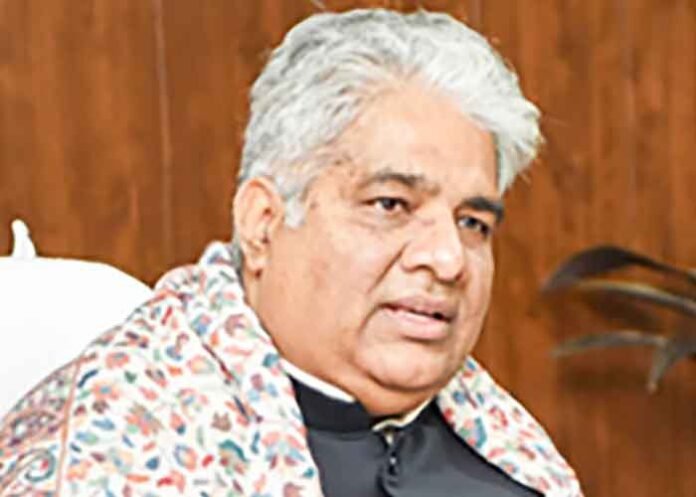
Bhupender Yadav Union Minister

Kolkata, Feb 11, 2026
Union Minister of Environment, Forest and Climate Change, Bhupendra Yadav, on Wednesday said Mamata Banerjee is the only Indian Chief Minister who moved the Supreme Court against her state government employees to avoid paying dearness allowance at par with the central government employees and arrears accrued on it over years.

“Mamata Banerjee is the only Indian Chief Minister who has approached the Apex Court against her own government employees. She had alleged that so many people were killed because of the special intensive revision exercise.

But in reality, no one was killed because of that revision exercise. On the contrary, several state government employees died out of frustration after being denied their legitimate dearness allowance dues,” Yadav said while interacting with the media persons here on Wednesday afternoon.

Also present at the press conference was the leader of the opposition in the West Bengal Assembly, Suvendu Adhikari.

He ridiculed the Chief Minister for avoiding media queries on the Supreme Court order on dearness allowance arrears to West Bengal government employees, claiming that the matter was sub-judice.

“I want to remind the Chief Minister that the matter is no longer sub-judice since the Supreme Court had already given a clear order in the matter last week.

The Supreme Court had given clear instructions to the West Bengal government on the payment of dearness allowance arrears to the state government since that payment was part of their legitimate right. The Chief Minister had violated the Supreme Court order again and again. If this time, she does that again, there are legal provisions against it,” the leader of the opposition in the state Assembly said.

The Supreme Court’s verdict on February 5 directed the West Bengal government to pay dearness allowance arrears to the state government employees and pensioners for the period between 2008 and 2019, and also 25 per cent of that amount by March 31 this year.

The payments are expected to cost the state exchequer a little over Rs 10,000 crore immediately and Rs 42,000 crore in the long run.(Agency)

INDIA bloc would’ve gone to US as equals, not be equated with Pak, says Rahul Gandhi in LS

Rahul Gandhi Congress LoP

New Delhi, Feb 11, 2026
Leader of Opposition in the Lok Sabha Rahul Gandhi on Wednesday said that if an INDIA bloc government had negotiated an agreement with the US, it would have ensured an arrangement on “equal” terms and would not have allowed India to be treated “equal to Pakistan”, asserting that it would have taken every possible step to safeguard India’s energy security and farmers.

Participating in the discussion on the Union Budget, Gandhi sought what he described as “creative freedom” during his speech and used analogies from martial arts to explain political strategy and negotiations.

“The foundation of martial arts starts with the grip. Without the grip, nothing happens. First comes the grip, then the second grip, and then it leads to the choke. The choke focuses on the neck and secures control… At one point, you can see it in the opponent’s eyes, and he knows that he has lost the game, and then he taps and surrenders… Grip, choke and tap… grip is seen in martial arts, but not in politics,” he said.

Referring to the Economic Survey, Gandhi said it highlighted two major global developments shaping the current geopolitical environment. “I was looking at the economic survey, and I found two points there. First, that you are living in a world of intensifying geopolitical conflict, which means that the dominance of the US is being challenged by the Chinese, Russians and other forces.”

“Second, that we are living in a world of energy and financial weaponisation. The main thing they are saying here is that we are moving from a world of stability to instability. The Prime Minister and, shockingly, the NSA stated that the era of war is over. In fact, we are moving into an era of war,” he said.

Highlighting ongoing global conflicts, Gandhi added, “You can see war is there in Ukraine, war was there in Gaza, war is there in the Middle East, threat of war is there in Iran. We had Operation Sindoor. So we are moving into a world of instability.”

The Congress leader said he agreed with the Economic Survey’s observation that the dominance of the US dollar is being challenged. “The LoP said that he agreed to the Economic Survey’s point that the US dollar is being ‘challenged’ and so is the ‘US supremacy’. We are moving from one superpower to something that we cannot predict — maybe two superpowers or multiple powers — which is an unpredictable world. I agree with that,” he said.

Gandhi also warned about the potential impact of artificial intelligence and the importance of data in the global technology landscape. “Everyone talks about AI, but talking about AI is like talking about the internal combustion engine without talking about petrol. The petrol for AI is data. If you have AI and you don’t have data, you are nothing,” he said.

“Which are the two biggest pools of data on the planet? The Indian and the Chinese pools. They also have 1.4 billion people; we have a bigger population than them, we allow more freedom, we allow our people to do more dynamic things, so we have, in fact, the more interesting data,” he added.

He said India must recognise its strengths in a rapidly changing global environment. “What you need is to move into a dangerous world; we have to understand our strengths; the central strength of our country is our people,” he said.

“The second strength… Food and our farmers. Food is abundant today. Third, energy, fuel and petrol… These are the three things that need to be protected in the turbulent times,” Gandhi said.

He added that while the Union Budget appears to recognise these areas, it does not adequately address them.

Gandhi said the Budget “recognises” these aspects, but there is “nothing in the Budget that looks into these issues”.

Speaking about the India-US interim trade agreement, Gandhi said, “In parallel to the Budget, we have made a deal with the United States. One thing I would like to make clear is something that is not well understood — In a context between the US and China, the single most valuable asset is Indian data.”

“If the Americans want to remain a superpower and if the Americans want to protect their dollar, the key to that is Indian data. Why? Because the Chinese have a data pool of 1.4 billion people,” he said, adding that the combined data pool of the United States, Africa and Europe does not match China’s.

Explaining India’s negotiating position, Gandhi said, “If India is going to the table, what we put on the table is our people. Their wisdom, what they do, their likes, dislikes, their imagination, and their fears. This has suddenly, in the 21st century, got value. In the 20th century, it had no value.”

Highlighting the strategic importance of population, Gandhi said, “I remember so many people saying that population is a weight, population is a disaster. No, population is the biggest asset you can have. It’s a strength. But it’s only a strength if you recognise that data is important.”

Drawing a comparison with how the “INDIA Alliance” would have handled negotiations with US President Donald Trump, Gandhi said, “We would have said, President Trump, the most important thing in this equation is the Indian data. You want to protect your dollar. We are your friends, we can protect your dollar, but you need to understand that the biggest asset to protect your dollar is with the Indian people. Second thing we would have said that President Trump, you need to understand that you are going to talk to us as an equal, not as servants.”

He further said that he would have told the US leadership, “Our energy security is our energy security, and we are going to protect it,” and added, “We understand that you need to protect your farmers, but we will also protect our farmers.”

“We would go there as equals, we would not be made equal to Pakistan,” Gandhi said.

He also stated that an INDIA bloc government would have responded to Pakistan Field Marshal Asim Munir’s meeting with the US President.

Gandhi further alleged that the trade arrangement could limit India’s strategic autonomy in energy procurement.

“The US will now decide where we will buy our oil from and not our Prime Minister, and if India buys oil from a country that the US does not approve of, then they will punish us with tariffs,” he said.

Continuing his criticism, Gandhi added, “You’ve weaponised energy, and you don’t have any solutions to overcome this.”(Agency)

Ritu Tawde elected unopposed as Mumbai Mayor, Sanjay Ghadi as Deputy Mayor

Ritu Tawde BJP

Mumbai, Feb 11, 2026
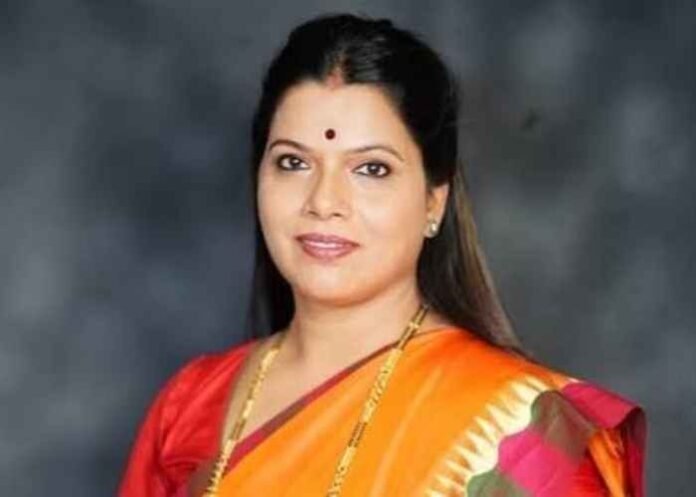
BJP corporator Ritu Tawde and Shiv Sena (Shinde faction) corporator Sanjay Ghadi were on Wednesday elected unopposed as the Mayor and Deputy Mayor of the Brihanmumbai Municipal Corporation (BMC), respectively.

The Shiv Sena (UBT), Congress and other opposition parties did not field their candidates, paving the way for unanimous election. The development brings to an end nearly four years of administrator rule in the civic body and signals a significant shift in Mumbai’s political landscape.

Chief Minister Devendra Fadnavis and Deputy Chief Minister Eknath Shinde extended their congratulations, promising a transparent and people-centric administration.

They said that under the leadership of Tawde and Ghadi, the MahaYuti alliance would accelerate Mumbai’s development in line with the vision of Balasaheb Thackeray’s birth centenary year.

Tawde and Ghadi formally assumed office in the BMC hall amid cheers from corporators, accepting charge from Municipal Commissioner Bhushan Gagrani.

“I am extremely happy that once again the Shiv Sena-BJP Mahayuti has secured the posts of Mayor and Deputy Mayor in the BMC. Both Ritu Tawde and Sanjay Ghadi are committed soldiers of the alliance,” Fadnavis said.

He added that the Mahayuti had sought votes to ensure a transparent and citizen-focused civic administration, and the swearing-in reflected the mandate given by Mumbaikars.

Describing Tawde as an experienced and strong Marathi face who has consistently raised civic issues, the Chief Minister expressed confidence that the alliance’s development agenda would gain further momentum under her leadership.

On Ghadi’s appointment, Fadnavis said the city would benefit from his experience as a senior Shiv Sainik. He reiterated that the corporation would be run in accordance with the ideals envisioned by Balasaheb Thackeray.

Fadnavis assured that the state government would extend full support to the new civic leadership to give a new direction to the BMC and realise the aspirations of Mumbai’s residents.

With Tawde’s election, the BJP has secured the Mayor’s post in Mumbai after over four decades, effectively ending the 25-year dominance of the Shiv Sena (UBT) in the BMC. In the recent civic polls, the BJP emerged as the single largest party with 89 seats, while its ally, the Eknath Shinde-led Shiv Sena, won 29 seats — comfortably crossing the majority mark of 114 in the 227-member House.

In a strategic decision, the Shinde-led Shiv Sena plans to rotate the Deputy Mayor’s five-year term among four corporators, with Sanjay Ghadi set to serve the first 15 months.

A veteran corporator from Ghatkopar (Ward 132), Tawde previously served as Chairperson of the BMC Education Committee. Known for her assertive stance on civic issues and advocacy of Marathi identity, she outlined monsoon preparedness and urban transformation as immediate priorities in her inaugural address.

Upon assuming office, Tawde stated that she would function as a “sevak” of Mumbai, focusing on improving roads and drainage systems, as well as addressing illegal encroachments.

Meanwhile, leaders from the Shiv Sena (UBT) said their decision not to contest was both strategic and a recognition of the MahaYuti’s clear majority, while also citing respect for the Marathi identity of the elected candidates.(Agency)

Former TDB chief N. Vasu gets statutory bail in Sabarimala case

Sabarimala gold heist

Kollam (Kerala), Feb 11, 2026
A vigilance court in Kerala’s Kollam on Wednesday granted statutory bail to former Travancore Devaswom Board (TDB) President and Commissioner N. Vasu in the Sabarimala gold misappropriation case.

The relief comes after the Special Investigation Team (SIT) failed to file a charge sheet within 90 days of his arrest, a lapse that legally entitled the accused to default bail.

Vasu, arrested on November 11, 2025, is the third accused in the alleged gold-plating irregularities case and becomes the fifth accused to secure bail.

Earlier, prime accused Unnikrishnan Potti and Murari Babu, among others, had also obtained bail.

Once procedural formalities are completed, Vasu, who is also a CPI-M leader, will be formally released from custody later in the day.

The case pertains to allegations that during Vasu’s tenure as Devaswom Commissioner, gold plates were recorded as copper plates and placed before the Board agenda.

The SIT has maintained that this formed part of broader irregularities involving temple assets.

However, delays in receiving scientific examination results reportedly prevented investigators from completing the charge sheet within the statutory timeframe.

Since his arrest, Vasu has been lodged in the hospital block of Poojappura Central Jail due to health concerns.

His earlier production in court in handcuffs during remand extension proceedings had triggered controversy.

Meanwhile, the court on Wednesday extended the remand of the other accused, Pankaj Bhandari, Govardhan, and K.S. Baiju by 14 days.

Investigators had also cited a letter from Potti to the then TDB President seeking permission to use gold separated from the plates for a girl’s wedding.

Despite allegedly being aware of excess gold in Potti’s possession, Vasu forwarded the letter to the Thiruvabharanam Commissioner without initiating action, according to the SIT.

Vasu has consistently denied wrongdoing, asserting that no plates were removed during his tenure.

With the court earlier observing that discrimination among the accused is untenable, the SIT’s delay has significantly altered the legal trajectory of the case.(Agency)

Aparshakti Khurana on ‘ROOT’: It’s difficult to enact in a language that you don’t think in

Aparshakti Khurana Actor 1

Mumbai, Feb 11, 2026
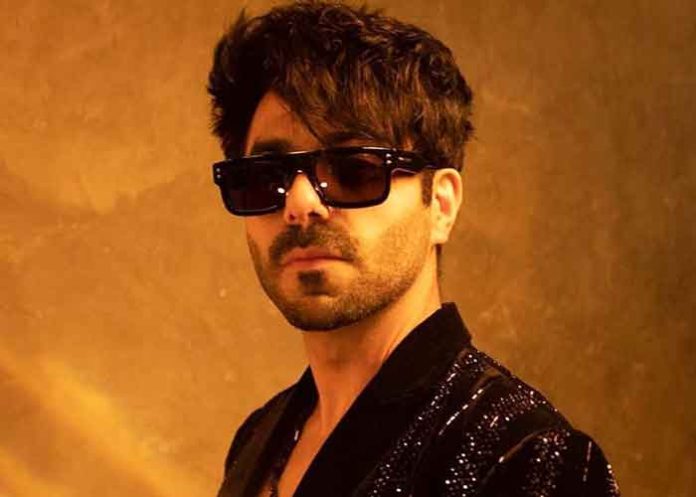
Bollywood actor Aparshakti Khurana is all set to make his Tamil debut with “ROOT: Running Out Of Time”.

Shedding light on what it was like to work in a language he is not too familiar with, Aparshakti shared that it is not easy to act in a language one does not think in.

Talking about his next, he said, “I saw the rushes of a web series that the film’s director Sooriyaprathap sir had made, and it looked promising. So, I decided to collaborate with him.”

Reflecting on the difficulties he faced while working in a Kollywood drama, the ‘Dangal’ actor stated, “It’s difficult to enact in a language that you are not thinking in.”

He revealed that he used to think in English, translate it, and then deliver the performance.

“It changes your impromptu behaviour and certain reflexes. Having said that, before hitting the floor, we did enough workshops to understand the language we are entering,” Aparshakti explained.

He further opened up about the growing acceptance of cinema among viewers, irrespective of the language.

Elated about the blurring boundaries between industries and artistes working across languages, Aparshakti added, “We all stay in India, and when audiences have started accepting all sorts of languages and cinema, why shouldn’t artistes from one world be cast in another? It’s a lot of fun for the actor, writer, director, and audience to see what comes out of it. I’m looking forward to working in different languages.”

He described working on ‘ROOTS’ as a “fine experience of filmmaking.”.

“Before ROOT, there were a couple of Tamil scripts that came my way. However, the talks did not progress further. It’s beautiful to be working with this amazing and talented cast and crew. We’ve made a film that all of us are very proud of. It’s extremely different from what I’ve done so far. Now, I’m already reading another Tamil script,” the ‘Stree’ actor added.

Written and directed by Sooriyaprathap S, “ROOT” has Gautham Ram Karthik in a key role, along with Narain, Bhavya Trikha, Y Gee Mahendra, Pavni Reddy, Linga, and RJ Anandhi as part of the ensemble cast.(Agency)

Anil Kapoor plays army man navigating civilian life in ‘Subedaar’ teaser

Anil Kapoor Actor 2

Mumbai, Feb 11, 2026
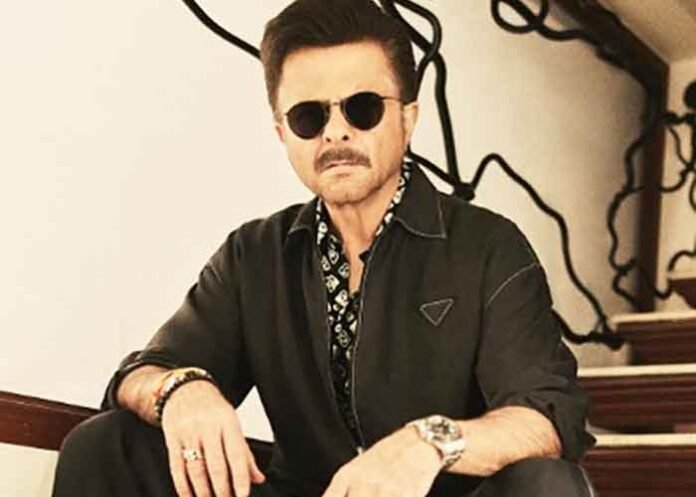
The teaser of the upcoming streaming film ‘Subedaar’ was unveiled on Wednesday. It is stark, controlled, and unapologetically intense. Actor Anil Kapoor essays the titular role of Subedaar Arjun Morya. With minimal dialogue and maximum impact, the actor crafts a presence that feels seasoned, battle-worn, and quietly volatile.

Sharing the teaser with a bold warning, “They f**** with the wrong man”, the makers made it clear that this is not a story of noise, but of consequence. The punchline has already struck a chord online, amplifying the anticipation around the film.

Subedaar is a grounded, and hard-hitting drama that explores the emotional and psychological aftermath of a life spent in uniform.

The film follows Arjun Morya, an officer navigating a civilian world that no longer operates by the codes he lived and fought by. Rather than glorifying power, he examines what happens when discipline collides with chaos, and when a man trained to command must confront battles that are no longer fought on the battlefield.

The film is helmed by Suresh Triveni, and also stars Radhika Madan, Aditya Rawal, Saurabh Shukla, and Mona Singh, hinting at a layered narrative grounded in emotional realism.

While Anil Kapoor has played men of authority before, ‘Subedaar’ feels like progression, not repetition. It’s a role that doesn’t rely on volume or nostalgia, but on precision and depth, proof that a true cinema icon doesn’t reinvent loudly, he evolves decisively. The film is set to release on March 5, 2026 on OTT.

Earlier, Anil Kapoor celebrated 42 years of his film ‘Mashaal’ with a special social media post. Commemorating the milestone, Anil shared a photo collage of some scenes from the movie on the Stories section of his Instagram account, claiming that the fire continues to burn strongly even after more than 4 decades.

He wrote in the caption, “42 years of Mashaal and the fire still burns just as strong (fire emoji) A film that will always live in my heart @yrf”.

If the reports are to be believed, the role essayed by Anil in the movie was initially offered to Amitabh Bachchan and then to Kamal Haasan. However, after both of them turned down the offer, the part finally went to Anil. Directed and produced by Yash Chopra, ‘Mashaal’ saw Dilip Kumar, Waheeda Rehman, and Rati Agnihotri in key roles, along with others.

The project marked Anil’s primary on-screen collaboration with Dilip Kumar. ‘Mashaal’ talks about Vinod Kumar (Played by Dilip Kumar), a respected, law-abiding citizen who turns to crime to seek revenge.

The project was adapted from the Marathi play ‘Ashroonchi Zhali Phule’ written by Marathi writer Vasant Kanetkar. The movie was later remade in Malayalam with the title ‘Ithile Iniyum Varu’ with Mammootty in the lead.(Agency)

India’s greatest assets are its people and data, Budget fails to protect them: Rahul Gandhi in Lok Sabha

Rahul Gandhi in Lok Sabha

New Delhi, Feb 11, 2026
The Leader of Opposition in the Lok Sabha, Rahul Gandhi, on Wednesday stated that India’s people are its biggest strengths and underscored the importance of protecting the nation’s vibrant database for standing along with global peers; however, he added that the Union Budget has nothing substantial to protect them.

Gandhi, while speaking on the Union Budget in the Lower House, highlighted three points as the cornerstone of a strong nation — Artificial Intelligence (AI), food and Energy. He added, in the same breath, that the government has failed to address all these concerns in the Union Budget.

“India’s biggest strength is its 1.4 billion people. Everybody is talking about AI. The petrol for AI is data. If you have AI and you don’t have data, you have nothing,” he said.

He said that it was important that India protects its energy security interests to maintain its global standing in turbulent times, but, sadly, the government has utterly failed in doing so, accusing it of capitulating India’s interests before the US while negotiating the trade deal.

“Today, Energy and finance are being weaponised the world over, but our Budget is completely silent on this,” Rahul remarked.

The LoP further stated that had the INDIA bloc negotiated the trade deal with the US, it would have made sure that India’s interests supersede everything, and there “remained a level-playing field and not any subjugation as done in this deal”.

“If the INDIA alliance was negotiating, we would have said, President Trump, you must treat India in equal measure and respect the Indian people. We would have told him that our energy security is ours and we will stand for it always, and we won’t accept any compromise on our human potential,” he said.

He further said that if Americans want to remain a superpower and if they want to protect their dollar, “we must stand behind our people and protect the sanctity of our data”.

“India must be in condition to negotiate with its ‘human power’. In the 20th century, the population was seen as a disaster, but in the 21st century, it’s a power, but only if due attention is given to it,” Gandhi said. (Agency)

Abhishek, Chakaravarthy retain top spots in ICC rankings; Raza becomes No. 1 all-rounder

Abhishek Sharma Indian Cricketer 1

New Delhi, Feb 11, 2026
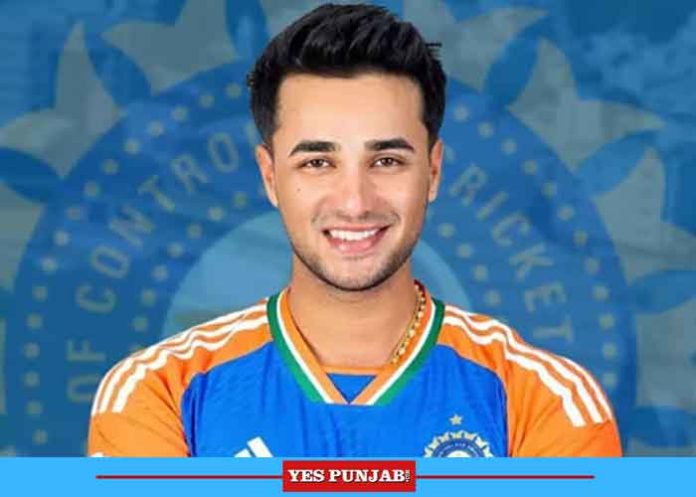
India opener Abhishek Sharma maintained his place at the top of the T20I batter chart, Varun Chakravarthy holds a narrow advantage over Pakistan’s Abrar Ahmed at the top of the list for T20I bowlers, while Zimbabwe captain Sikandar Raza became the top all-rounder in the latest ICC rankings released on Wednesday.

Abhishek has 909 points to be placed ahead of England’s PhilSalt (821), Pakistan’s Sahibzada Farhan (769), Jos Buttler (766) and Pathum Nissanka (754).

New Zealand’s Tim Seifert (up one place to eighth), Sri Lanka’s Kusal Mendis (up six spots to 12th), Scotland’s George Munsey (up seven rungs to equal 23rd), India’s Ishan Kishan (up seven slots to 25th) and the Netherlands’ Michael Levitt (up six places to 27th) among the other movers.

In the bowler’s chart, Chakravarthy is holding a narrow advantage over Pakistan’s Abrar Ahmed at the top of the list, with Sri Lanka all-rounder Wanindu Hasaranga (up one place to fifth) the only significant mover inside the top 10.

There is plenty of movement outside though, as Arshdeep Singh (up three places to 11th), Salman Mirza (up nine spots to 13th), Brad Evans (up 16 rungs to equal 15th, Mitchell Santner (up four slots to equal 19th), Bradley Currie (up 25 places to 24th) all make gains.

In the allrounders list, Raza has been rewarded for his side’s strong start to the ICC Men’s T20 World Cup by regaining the No.1 spot.

Zimbabwe registered an impressive eight-wicket victory over Oman in their T20 World Cup opener in Colombo and Raza’s efforts with both bat and ball saw the veteran return to the top spot on the list for T20I all-rounders.

Raza picked up figures of 1/17 from four economical overs to help restrict Oman to just 103 at the Sinhalese Sports Club Ground and later returned to hit the winning runs to ensure Zimbabwe made a fast start to the 20-over showcase.

It saw Raza gain one place on the latest rankings for T20I all-rounders and move past Pakistan opener Saim Ayub into the premier position, a spot he first claimed towards the backend of last year.(Agency)

‘Islamabad under fire’: ISKP’s calculated return amid Pakistan’s security strain

Islamabad Mosque Blast Pakistan

New Delhi, Feb 11, 2026
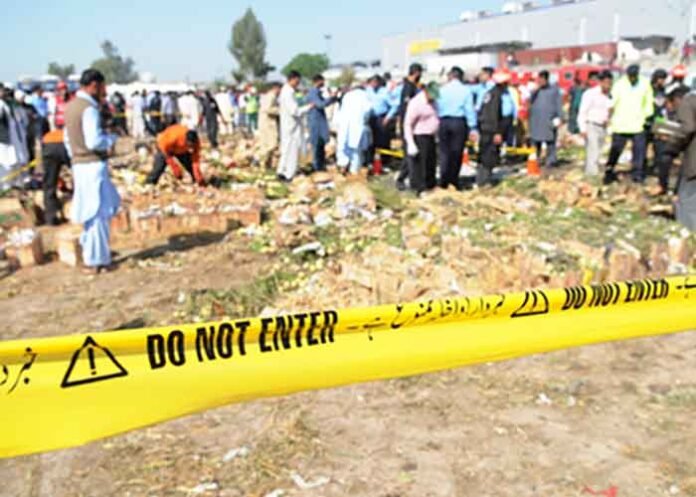
The recent bombing at a mosque in Islamabad by the Islamic State Khorasan Province (ISKP) clearly shows that the terror outfit has exploited the failing security mechanism in Pakistan.

The ISKP was quiet when it came to operations in Pakistan for almost a year.

The last attack that the ISKP claimed responsibility for was at Balochistan’s Mastung on April 15, 2025, when a bus carrying personnel of the Pakistani security forces was targeted, resulting in the death of three.

Security analysts say that the ISKP has been carrying out attacks in Pakistan since 2015. However, until 2022, the attacks were fewer, and there were years when just one strike was claimed by the ISKP.

However, the number of attacks went up considerably after 2022 and in all, there have been 90 attacks of various natures claimed by the ISKP since then.

2021 was the year that the ISKP gradually began moving major operations out of Afghanistan and setting up a base in Pakistan, which it has openly called “an enemy nation” and “an un-Islamic state”.

The ISKP has sought to establish an Islamic state in Pakistan and hence wants the establishment out.

The Islamabad Mosque attack, which took place last week, was timed with the Balochistan Liberation Army (BLA) launching ‘Operation Herof 2.0’ against the Pakistan security forces.

The vacuum in the security mechanism, as the focus was largely on Balochistan, was capitalised upon by the ISKP. It chose the exact time to strike at Islamabad as security was lax, officials say.

An Intelligence Bureau official said that apart from the timing of the attack, the ISKP also sought to send out a loud message to the United States.

Pakistan has been boasting about its newfound friendship with the US, and this has not gone down too well with the ISKP.

In January this year, the US began air strikes against the Islamic State in Syria and Africa. The Islamic State in Africa, in particular, has suffered significant losses in the air strikes. The Islamabad bombings were also a way of sending a loud message to the US in a bid to reassert its power, the official said.

Officials also say that they notice a change in the pattern of the attacks. Earlier, they stuck largely to areas in and around Balochistan. Now, they have come to the mainland and have struck at Islamabad, Karachi, among others.

The recent attacks have been high-impact ones, which bear the signature of the Islamic State.

Basically, the ISKP has taken complete advantage of the breakdown in security in Pakistan owing to the rise of the Balochis and also the breakdown of the ceasefire with the Tehreek-e-Taliban Pakistan (TTP). Its larger plan is to strengthen itself to such an extent that it can take on the Taliban in Afghanistan. It also intends to weaken Pakistan to such an extent that it would want to control the country.

Currently, it is in the process of establishing a strong foothold in Pakistan, while also trying to build an organisation which is capable of overthrowing the Taliban in Afghanistan. Officials say that the way in which the ISKP has gone about its activities in Pakistan clearly shows that Pakistan played a game, and it failed badly.

The ISI had in 2017 reached a deal with the ISKP that it would not strike in Pakistan, but limit itself to Afghanistan. The ISKP, however, did not keep up its part of the promise.

The ISI once again reached out to the ISKP in the aftermath of ‘Operation Sindoor’ as it needed help in rebuilding the terror groups. At the same time, ties between Pakistan and the Taliban soured.

Pakistan also has a big problem in the form of the BLA and the TTP. The ISI tried roping in the ISKP to fight alongside the Lashkar-e-Taiba against the TTP, BLA and also the Afghan Taliban.

The Islamabad mosque blast confirms that the ISKP is not in any mood to strike deals with Islamabad and proposes to carry out its plans of weakening the Pakistani establishment, another official said.(Agency)

Pakistan’s stablecoin experiment could weaken its currency further: Report

Gold, silver prices fiu-coins

New Delhi, Feb 11, 2026
Pakistan’s plan to embrace a dollar‑linked stablecoin through a partnership with US crypto firm World Liberty Financial could accelerate the country’s dollarisation and undermine its macroeconomic stability, a new report has said.

The report in the Daily Mirror said that a dollar-pegged stablecoin embeds a preference for the dollar as store of value and medium of exchange encouraging households to hold it as a state-tolerated alternative and move away from Pakistani rupee (PKR).

Currency substitution through stablecoins could intensify exchange‑rate pressures and activate a feedback loop that accelerates rupee weakness.

“For a country with a fragile currency, recurring balance-of-payments stress, and limited monetary policy space, the introduction of an officially endorsed dollar-linked stablecoin risks amplifying rather than reducing instability,” the report said.

Further, the report noted that stablecoins bypass banks, diverting household and business liquidity into digital wallets outside the regulated system. In Pakistan, where monetary policy transmission depends heavily on banks’ balance sheets, this could blunt the impact of interest‑rate changes and complicate liquidity management, it said.

The report highlighted that the confidence in PKR is already shaken by recurrent inflation spikes, sharp devaluations, and International Monetary Fund (IMF)-driven stabilization cycles.

The IMF has repeatedly warned that widespread stablecoin adoption could drain deposits from local banks and undermine monetary frameworks in vulnerable economies.

The Bank for International Settlements also argued that such instruments fail basic tests of sound money and pose risks to monetary sovereignty.

Despite State Bank of Pakistan historically having taken a cautious stance on crypto, the new agreement with US President Donald Trump’s family-linked crypto business, World Liberty Financial, gave quasi‑official legitimacy to a foreign‑controlled stablecoin ecosystem, “under pressure from powers within Pakistan”, the report said.

The report also warned that crypto coins are private liabilities, and their stability depends on the quality of the reserves, the legal enforceability of the instrument, and the issuer’s ability to meet redemptions under stress.

“In advanced economies, such risks are mitigated by strong supervision and deep markets. Pakistan has neither control over the issuer nor the capacity to backstop a crisis involving a foreign-controlled stablecoin,” the report highlighted.(Agency)