Monday, February 23, 2026
Home Blog Page 179

‘There should be freedom, can’t force it on anyone’: Shia cleric Kalbe Jawad on new ‘Vande Mataram’ protocol

Lucknow, Feb 11, 2026

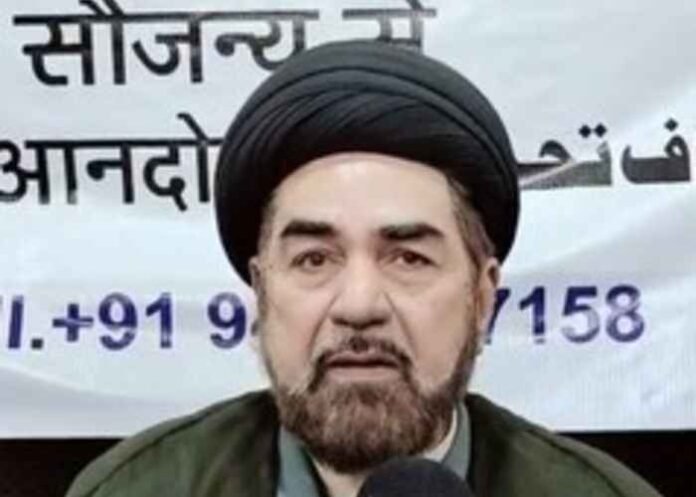
As the Union Home Ministry issued fresh guidelines mandating that all six stanzas of ‘Vande Mataram’ be sung or played at designated government functions and in schools across the country, Shia Muslim cleric Kalbe Jawad on Wednesday said there should be freedom and that it cannot be forced on anyone.

The new rules also state that when both the national song and the national anthem are performed at the same event, ‘Vande Mataram’ must precede ‘Jana Gana Mana’.

Reacting to the guidelines, the Lucknow-based cleric said that people should have the freedom to choose whether they want to recite the song or not. He also pointed out that Bankim Chandra Chatterjee wrote ‘Vande Mataram’ during British rule and said it was originally meant as a message against colonial rulers.

Talking to IANS, Kalbe Jawad said: “There should be freedom, whether you read it or not. You cannot force anything on anyone. You cannot force religion on anyone. This is a religious slogan.”

“Chattopadhyay wrote this at a time when the British were ruling in the country. He wrote it in his book when we had not yet got freedom from the British. He wrote that book to advocate against the British. So, it was meant for the British, not for India or the countrymen.”

“But making it necessary for everyone is not good. There should be freedom in whether someone reads it or not,” he further said.

The Union Home Ministry said that those present are required to stand to attention during the rendition of the national song. However, it clarified that this requirement will not apply in cinema halls when the song is played as part of a film or documentary.

Until now, ‘Vande Mataram’ has not had a clearly defined national protocol, unlike the national anthem, which has long been governed by formal rules and guidelines.

According to the Centre, the move is aimed at standardising respect for the national song and removing what it described as an artificial distinction between ‘acceptable’ and ‘excluded’ verses. The government has argued that the song should be treated as a single, complete composition, as originally written by Bankim Chandra Chatterjee, rather than as a selectively edited text.

The guidelines have been issued amid the Narendra Modi government’s year-long programme marking 150 years of ‘Vande Mataram’. They also follow an extended parliamentary debate in which the ruling party questioned why a national symbol continued to be used in a truncated form decades after Independence.(Agency)

SC asks Calcutta HC to examine NIA’s invocation of UAPA in Beldanga violence case

Supreme Court orders

New Delhi, Feb 11, 2026

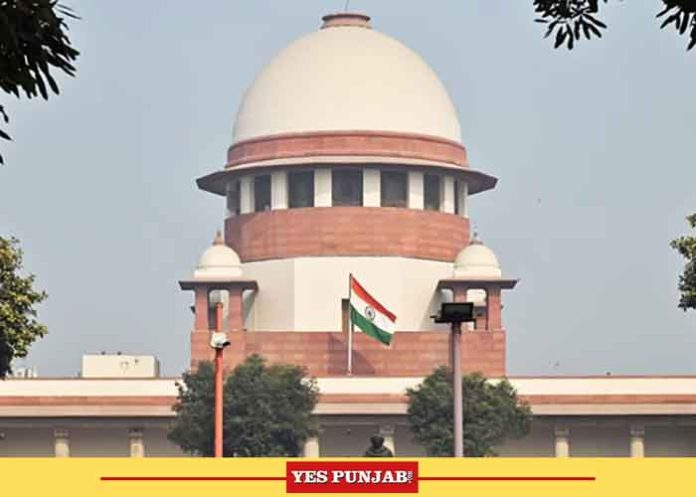
The Supreme Court on Wednesday asked the Calcutta High Court to independently examine whether the invocation of provisions of the Unlawful Activities (Prevention) Act (UAPA) by the National Investigation Agency (NIA) was justified in connection with the recent violence at Beldanga in West Bengal’s Murshidabad district.

A Bench of Chief Justice of India (CJI) Surya Kant and Justice Joymalya Bagchi was hearing a petition filed by the West Bengal government challenging the Calcutta High Court order, which had granted liberty to the Union government to consider an NIA probe into the Beldanga violence, along with the subsequent notification by the Union Ministry of Home Affairs entrusting the probe to the anti-terror agency.

Dismissing the state government’s plea, the apex court directed the NIA to submit its status report — whether post-investigation or during the course of investigation — before the Calcutta High Court in a sealed cover, indicating whether a prima facie case under the UAPA was made out on the basis of material gathered.

“Since there are only passing observations in the impugned order of the High Court, without any definite opinion in relation to the attraction of the UAPA, we request the High Court to consider the status report of the NIA independently and issue consequential directions,” the CJI Kant-led Bench ordered.

The apex court clarified that it has not expressed any opinion on the merits of the matter and directed that the West Bengal government’s plea be heard by a Division Bench headed by the Chief Justice of the Calcutta High Court, before whom a related petition is already pending.

During the hearing, the CJI Kant-led Bench orally questioned the basis on which the NIA had invoked the UAPA while registering the FIR in the matter.

“Without looking into documents, you have said Section 15 UAPA is justified. The case diary was not placed before you. This is a pre-decisional conclusion arrived at,” it observed.

The Supreme Court cautioned that “every emotional outburst cannot be packaged as a threat to economic security”.

Senior advocate Kalyan Banerjee, appearing for the West Bengal government, submitted that no scheduled offence under the NIA Act had been committed to warrant the Central agency’s intervention.

He argued that the West Bengal Police had already registered FIRs and made arrests in connection with the violence and questioned how the offence of terrorism under Section 15(1) of the UAPA was attracted, particularly in the absence of explosives.

At this, the CJI Kant-led Bench remarked that these submissions could be made before the Calcutta High Court while seeking reconsideration of the earlier order.

Additional Solicitor General (ASG) S.V. Raju, representing the Centre, informed the apex court that the Union Ministry of Home Affairs had, on January 28, directed the NIA to take over the investigation.

The Centre’s law officer argued that the incident occurred near the Bangladesh border, involved the use of deadly weapons, and raised concerns relating to national security. “This is a porous border near Bangladesh. There was violence, and deadly weapons were used. We are doing an independent investigation. They are not handing over probe papers to us. Please direct them to do so,” ASG Raju submitted, alleging non-cooperation by the West Bengal Police.

The Supreme Court observed that while the state government had challenged an order giving liberty to the Centre to entrust the probe to the NIA, the question whether the anti-terror agency’s invocation of UAPA provisions was justified would have to be assessed by the Calcutta High Court upon perusal of the material placed before it.

In an order passed on January 20, a Division Bench of the Calcutta High Court, headed by Chief Justice Sujoy Paul, had granted liberty to the Union government to order an NIA probe into the violence and tension that prevailed for two days in Beldanga, a minority-dominated area of Murshidabad district, following protests over the alleged murder of a migrant worker in Jharkhand.

Acting on a public interest litigation (PIL) filed by the Leader of Opposition in the West Bengal Assembly, Suvendu Adhikari, the Calcutta High Court also directed the deployment of Central Armed Police Forces (CAPF) in the troubled area till normalcy was restored. Subsequently, the Union Ministry of Home Affairs handed over the probe to the NIA, prompting the West Bengal government to move the Supreme Court. (Agency)

Dehradun firing: Gas agency operator killed in broad daylight, IG assures strict action

Pistol-Gun-Shot

Dehradun, Feb 11, 2026

Unidentified assailants shot dead a 40-year-old businessman in broad daylight at the busy Tibetan Market area of Dehradun on Wednesday, triggering panic among shopkeepers and passersby

The deceased has been identified as Arjun Sharma, the operator of Amardeep Gas Agency located on GMS Road. According to officials, Sharma was attacked by armed assailants who opened fire at him before fleeing the spot.

He was immediately rushed to Doon Hospital, where doctors declared him brought dead.

Confirming the incident, IG Garhwal Range, Rajeev Swaroop said, “An incident has taken place in which a person named Arjun Sharma had come here when some attackers opened fire at him. He was then admitted to Doon Hospital, where doctors declared him dead. The SSP Dehradun has visited the spot.”

Police teams have cordoned off the area and launched a manhunt to trace the accused. Forensic teams have collected evidence from the crime scene, and CCTV footage from nearby establishments is being examined to identify the attackers.

Vijay, who had reportedly been working with Sharma for several years, alleged that the deceased had a property-related transaction worth around Rs 40–42 crore with a person named Vijay Uniyal. He claimed that Sharma had received threats earlier in connection with the property dispute.

Police said they are verifying all angles, including the alleged property dispute. The matter is linked to the Vasant Vihar Police Station area.

Assuring strict action, IG Swaroop said, “We will review all these incidents very thoroughly and seriously. Wherever there is any negligence, and if it is found that any personnel have been careless in their duties, strict action will be taken against them. We will further strengthen effective policing measures in the coming days, building on the systems already in place, to ensure that such crimes are prevented and controlled effectively.”

He added that while 2025 had largely remained incident-free, there had been a slight increase in such incidents over the past 15–20 days.

“We are analysing all aspects of this matter. We have reviewed the situation thoroughly and will fix accountability and responsibility, clearly determining who is responsible for what. If any incident occurs within a particular jurisdiction, the accountability of the concerned Station House Officer and the area officer will also be fixed accordingly,” the IG said.

Further investigation into the case is underway.(Agency)

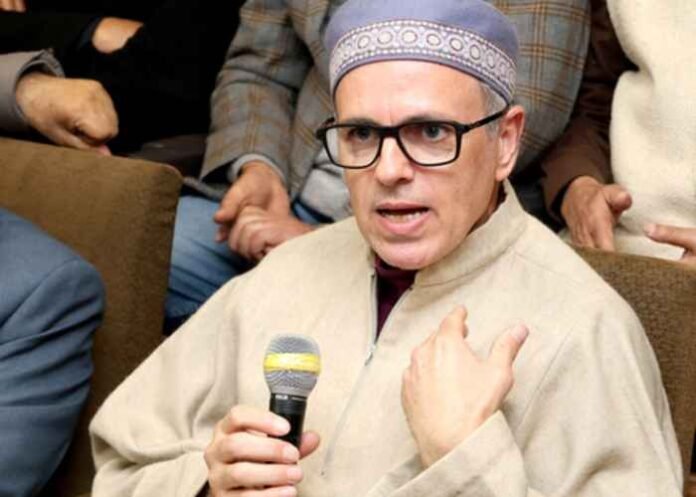
BJP MLAs stall proceedings of J&K Assembly over Omar Abdullah’s ‘unparliamentary remarks’

Jammu, Feb 11, 2026

Opposition Bharatiya Janata Party (BJP) MLAs stalled the proceedings of J&K Legislative Assembly on Wednesday when they stormed into the Well of the House demanding an apology from the Chief Minister, Omar Abdullah, for what they alleged were his unparliamentary remarks.

Before creating the ruckus, BJP members had staged a walkout from the House and then returned at the end of the Question Hour.

The BJP members said the Chief Minister had left the House when he saw the BJP members entering the Assembly at the end of the walkout.

They gathered in a row and continued chanting slogans against the government seeking apology from the Chief Minister.

However, the Speaker said they cannot raise the issue again after walking out from the House on the issue.

The Speaker ruled that the BJP protest should not be recorded in the House proceedings.

Later, the BJP members stormed into the Well of the House and staged a sit-in.

Earlier, also the House witnessed noisy scenes before the question hour when Sham Lal Sharma of the BJP stood up and asked the chief minister to apologise.

Sharma said such an incident has no precedent in the history of Jammu and Kashmir Assembly.

“The language used by the chief minister, is not the language that can be used in any Parliament. I want to ask the Leader of the House whether he withdraws the words he used yesterday in this House about the BJP legislative party. If he does not withdraw them, then we leave it to his conscience, what his inner voice tells him, whether the words used in this House were appropriate or not. If the chief minister is not present here, then I leave it to the Chair to make a response. It is your responsibility to say something about this matter,” he said.

Speaker, Abdul Rahim Rather tried to persuade the BJP members to allow the Question Hour to continue and rake up the issue when the Leader of the House is on the floor.

“Whatever happened yesterday (Tuesday) was unfortunate. Let the chief minister come and if he wishes he can make a statement. I can’t make a statement on his behalf,” the Speaker said.

Health Minister Sakeena Itoo accused BJP members of using unparliamentary words as well, particularly against Deputy Chief Minister Surinder Choudhary and speaking lies in the House.

Choudhary suggested the chair to examine all the unparliamentary words used from both sides and expunge these from the records to continue the proceedings without any disruption.

Leader of Opposition, BJP MLA, Sunil Sharma opposed the suggestion and refused to budge and later led the walkout, chanting slogans like “derogatory Sarkar Hai Hai, unparliamentary Sarkar Hai Hai, Bharat Mata ki Jai”.

Pandemonium had broken out in the House during Omar Abdullah’s speech yesterday when BJP members objected to some of his remarks against them and demanded an apology.

Omar Abdullah was winding up the discussion on the Union Territory’s Budget presented on February 6 when BJP members termed certain remarks made by him “unparliamentary.”

While the chief minister has ruled out apologising to BJP members for the remarks, saying he was willing to withdraw his words, but was not allowed to speak amid repeated disruptions, Sham Lal Sharma said the party would not allow the House to function until Omar Abdullah tendered an unconditional apology on the floor of the House.

The NC government is supported by 6 Congress MLAs while the opposition is constituted by 29 BJP members, 4 PDP, one PC, 1 AIP and one AAP member.(Agency)

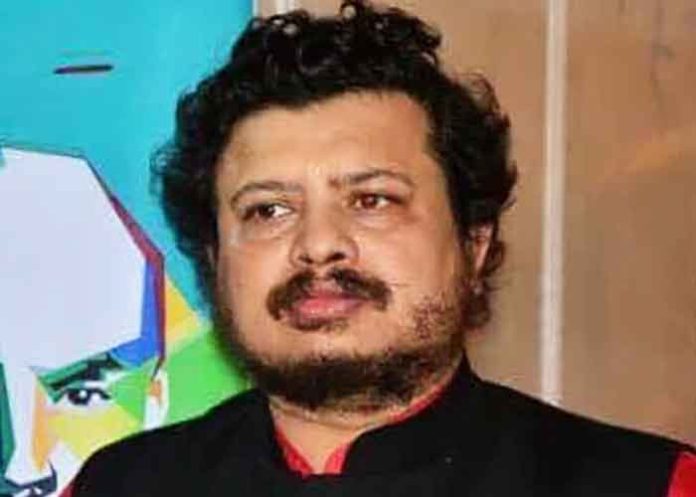
Bengal revolutionaries who never wrote ‘mercy petitions’ forgotten: Trinamool MP in Rajya Sabha

Ritabrata Banerjee

New Delhi, Feb 11, 2026

Trinamool Congress Rajya Sabha member Ritabrata Banerjee on Wednesday highlighted during Zero Hour the overlooked legacy of 12 fearless freedom fighters from West Bengal, deported to the notorious Cellular Jail in the Andaman Islands following the landmark Alipore Bomb Case (also known as the Alipore Conspiracy Case) of 1908-1909.

In his intervention, Banerjee drew attention to prominent revolutionaries Barindrakumar Ghosh (Barin Ghosh), Ullaskar Dutt, and Hem Chandra Kanungo (Hemchandra Das Kanungo), who were among those sentenced and transported for life after the trial stemming from revolutionary activities aimed at overthrowing British colonial rule.

“These are the uncompromised figures who fought against the British colonial power,” Banerjee stated.

Barindrakumar Ghosh, brother of Sri Aurobindo Ghosh, established bomb-making units and an underground network in West Bengal as part of the Jugantar and Anushilan Samiti movements. Ullaskar Dutt was the principal bomb-maker for the group, while Hem Chandra Kanungo returned from Paris with expertise in explosives and revolutionary organisation.

The MP emphasised that the 12 revolutionaries, including the three he spotlighted, endured years of brutal torture in the Cellular Jail — infamous as ‘Kala Pani’ for its harsh solitary confinement, hard labour like oil extraction, and dehumanising conditions — yet remained steadfast.

Banerjee lamented that these heroes have been “conveniently forgotten”, contrasting their resolve with others who sought clemency.

“These revolutionaries never ever wrote a mercy petition,” he asserted, adding that they deserve due respect and recognition for their unwavering commitment to India’s Independence struggle.

The Alipore case, tried in Calcutta’s Sessions Court from 1908 to 1909, involved charges of waging war against the Crown following bomb-making and assassination attempts, including the Muzaffarpur bombing targeting a British magistrate.

While some, like Sri Aurobindo, were acquitted, Barin Ghosh and Ullaskar Dutt initially faced death sentences (later commuted to life imprisonment), and others received transportation for life.

Banerjee’s comments arose amid debates on the recognition of Bengal’s revolutionary contributions, which included a notable number of early inmates at Cellular Jail (approximately 46 Bengalis among the initial groups from 1909-1921). He urged Parliament and the nation to accord these “uncompromised” figures the honour they merit, ensuring their sacrifices are remembered in India’s freedom narrative.(Agency)

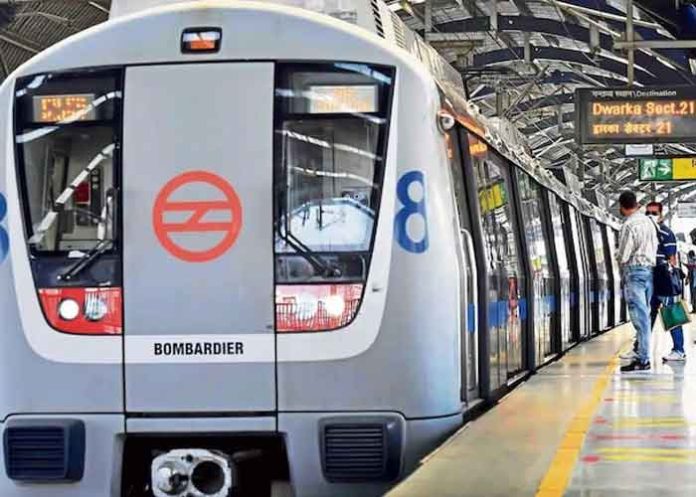
Magenta Line to become longest Delhi Metro corridor with maximum interchanges, underground stations

Delhi Metro

New Delhi, Feb 11, 2026

The Magenta Line (Line-8) of the Delhi Metro network is set to emerge as the longest corridor in the system, featuring the highest number of interchange stations and underground stations. The expansion is expected to significantly enhance cross-city connectivity across Delhi-NCR, officials said on Wednesday.

In light of the recently sanctioned Phase –V (A) corridor, namely Line 8 (Magenta Line) extension from Ramakrishna Ashram Marg to Indraprastha (Via Central Vista), the Indraprastha – Inderlok corridor of Phase –IV shall be implemented as an extension of the Magenta Line.

With these additions, the total length of the Magenta Line, stretching from Noida Botanical Garden to Inderlok, will be approximately 89 kilometres, making it the longest corridor in the Delhi Metro network. The line will run from Botanical Garden to Inderlok and, once fully operational, will function entirely as a driverless Metro corridor, Anuj Dayal, Principal Executive Director (Corporate Communications), DMRC, shared the details of the project expansion.

Following completion of the Phase-IV and Phase-V (A) expansions, the Magenta Line will have a total of 21 interchange stations. At present, the operational stretch has four interchange stations — Kalkaji Mandir, Botanical Garden, Janakpuri West and Hauz Khas.

An additional 17 interchange stations will be added under Phase-IV and Phase-V (A). These include Kalindi Kunj, Chirag Delhi, Terminal-1 IGI Airport, Peeragarhi, Pitampura (Madhuban Chowk), Haiderpur Badli Mor, Majlis Park, Azadpur, Pulbangash, Nabi Karim, Ramakrishna Ashram Marg, Shivaji Stadium, Central Secretariat, Indraprastha, Delhi Gate, New Delhi and Inderlok.

Officials said that Central Secretariat, Azadpur, New Delhi and Inderlok will become triple interchange stations, offering connectivity with three different Metro lines each.

Once completed, the Magenta Line corridor from Botanical Garden to Inderlok will have 65 stations, out of which 40 will be underground stations. The extensive interchange facilities are expected to reduce travel time, decongest major corridors and provide seamless end-to-end connectivity across Delhi-NCR.

The Magenta Line is also distinguished by hosting two significant engineering landmarks of the Delhi Metro network. Haiderpur Badli Mor, located on this corridor, is the highest elevated station in the system (Rail level height of approximately 28.362 metres at Pier no 340), while Hauz Khas, also on the Magenta Line, is the deepest underground Metro station (at approx 29 metres). These milestones highlight the corridor’s complex engineering and technological excellence.(Agency)

‘There are spin specialists and batting specialists; Pakistan are u-turn specialist’, laughs ex-spinner Kaneria

Danish-Kaneria

New Delhi, Feb 11, 2026

After Pakistan reversed their stance and agreed to play the T20 World Cup match against India, former spinner Danish Kaneria took a dig at the decision, saying, “there are spin specialists and batting specialists, but Pakistan are U-turn specialist.”

The Pakistan government had earlier asked the team not to take the field for the clash against archrivals India to show support to Bangladesh, which was thrown out of the ICC T20 World Cup and replaced by Scotland after its demand for relocating its matches from India to Sri Lanka was rejected by the ICC.

But on Monday night, the Pakistan government made a U-turn on its earlier stance and has now allowed the men’s cricket team to play its scheduled match against India in the ICC Men’s T20 World Cup on February 15 at R. Premadasa Stadium in Colombo.

“There’s a limit to everything… I had said earlier that this drama wouldn’t stop and that they would take a U-turn, because they’re specialists in it — just like there are spin specialists and batting specialists, Pakistan is a U-turn specialist. I’ve never seen anyone take U-turns better than them,” Kaneria told IANS on Wednesday.

“The world started laughing at Pakistan — saying that one moment they say one thing, and the next moment something completely different. Pakistan then went on to put forward its own demands, such as agreeing to play only on a bilateral basis, and so on.

“As pressure began to mount — with the ICC warning of possible sanctions, the risk of significant financial losses, and the chance that foreign players might not receive NOCs to participate in the PSL — the whole situation seemed illogical. There was no justification for suddenly announcing a boycott of the game,” he added.

Kaneria further questioned Pakistan’s boycott decision and the logic of linking it to Bangladesh, saying, “What has Bangladesh ever done for Pakistan cricket?”

“What Bangladesh did was a matter between them and the ICC. I don’t understand when Bangladesh has ever helped the PCB in any way. You were making such big statements about boycotting — so what happened now? What suddenly changed that you’re being forced to play?” said Kaneria.

He continued, “If you’re going to make a decision, then at least stand by it. But suddenly taking a U-turn and creating a media frenzy — saying we did this, we did that — only makes things worse. This issue has escalated so much that it could become a major headache in the future.

“Right now, I honestly find the whole situation laughable. If you’ve taken a stand, then stick to it — no means no. It seemed like Pakistan was worried about being isolated or getting knocked out of the tournament, so in the end they said, “Alright, we’ll play.”

Kaneria highlighted the psychological challenges of high-stakes India-Pakistan matches, noting that when a team mentally prepares for a no-contest scenario and is suddenly forced to face the tournament’s biggest game, the sudden shift can create pressure for both the teams.

“Given everything that has happened, politics and cricket have clearly been mixed together, so there is definitely pressure on the players. Pakistan has now agreed to play, and already the hype has started — “Shaheen vs Abhishek,” building it up like some massive battle. The old rivalry had actually faded because of Pakistan’s recent performances and India consistently beating them. But by first refusing and then taking a U-turn, Pakistan has reignited the rivalry itself and added pressure on its own team,” he said.

“There is pressure on both sides. Earlier, the players were mentally in a zone where they thought they wouldn’t play India, would get two points, and move on to the Super 8. But suddenly, everything changed now they have to play the match.

That means preparation doubles, and so does the pressure. You’ll probably see heated moments and some words exchanged between players. In the end, the team that handles this pressure better will be the winner,” Kaneria concluded.(Agency)

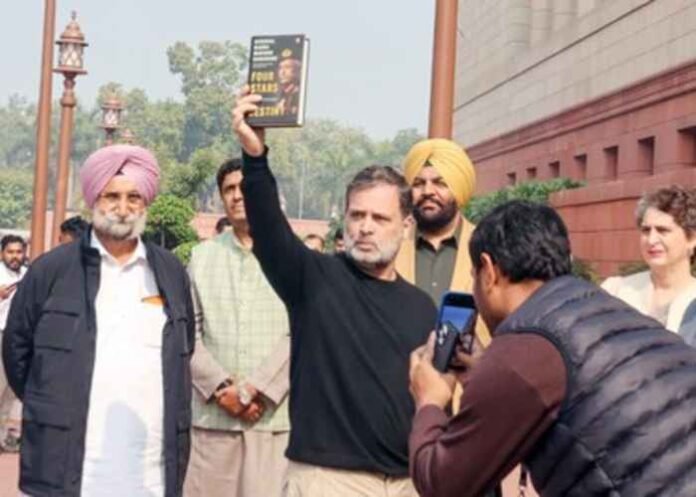
‘Fake and fraudulent’: BJP attacks Rahul Gandhi amid Naravane book row

New Delhi, Feb 11, 2026

Amid the controversy surrounding the unpublished book ‘Four Stars of Destiny’ by former Army Chief Gen. M.M. Naravane, the BJP asserted on Wednesday that the Lok Sabha Leader of Opposition, Rahul Gandhi, along with other ‘fake’ leaders, is deceiving the nation by disseminating falsehoods.

Speaking to IANS, BJP National General Secretary Tarun Chugh said, “To please foreign powers, Rahul Gandhi and other fake leaders are misleading the country by lying. The one who wrote that book and the one who is publishing that book are clearly saying that the book has not been published. But fake leader Rahul Gandhi, to get cheap popularity through a foreign toolkit, is repeating filmy drama, which is far from reality. Rahul Gandhi should publicly apologise to the whole nation.”

BJP MP Damodar Agrawal said, “The matter is very clear. The book has not been published. The Defence Minister has clearly stated this in the House. But if someone insists otherwise, then they themselves should clarify that it is published. After that, there will be action as per the law.”

C.R. Kesavan, the BJP National Spokesperson, also attacked the Congress and said, “Mr Rahul Gandhi’s fake and fraudulent book bomb has now been totally busted. The deception of the Congress party’s dirty tricks department has also been completely exposed by the former Army chief’s tweet reiterating the publisher’s stand that the said book has not been published.”

On the other hand, CPI(M) MP Amra Ram questioned the government’s handling of the issue. “Whether this actually happened or not, check with Naravane. You spoke to the Defence Minister and Home Minister in 2023. The way the government is acting, it seems they are not willing to listen to the people’s voice. The Leader of Opposition is not being allowed to speak,” he said.

Amra Ram also said, “I have been in the Rajasthan Assembly for 20 years. The Leader of Opposition and even the Defence Minister have no time restrictions. Whenever they want to raise an issue, they have the opportunity to respond and present the opposition’s voice.”

Eight days after his unpublished memoir triggered a political firestorm that continues to rage, former Army chief General (retired) Manoj Mukund Naravane on Tuesday broke his silence on the controversial autobiography. He endorsed his publisher’s stand that the book has not been published and that no copies were “printed, distributed, sold or otherwise made available to the public” either in print or digital form.

Congress MP Rahul Gandhi responded on Tuesday to Penguin Random House India’s note about the memoir, which has become the focus of a sharp political confrontation in Parliament between the ruling BJP and the opposition.

Penguin Random House India on Tuesday confirmed that it holds exclusive publishing rights and that the manuscript has not been published in any form so far. The publishing house said it wished to make its position clear in light of reports suggesting that unauthorised copies were being circulated.

The controversy has sparked intense debate in Parliament, with the BJP accusing the Congress party of spreading misinformation, while opposition leaders have demanded clarity on the contents and circumstances related to the book.

Naravane served as the Army Chief from December 31, 2019, to April 30, 2022 — a period marked by heightened military activity in eastern Ladakh in the backdrop of the standoff along the contested Line of Actual Control (LAC).(Agency)

If compliance is satisfactory, cricket matches will be allowed at Chinnaswamy Stadium: K’taka HM

Bengaluru, Feb 11, 2026

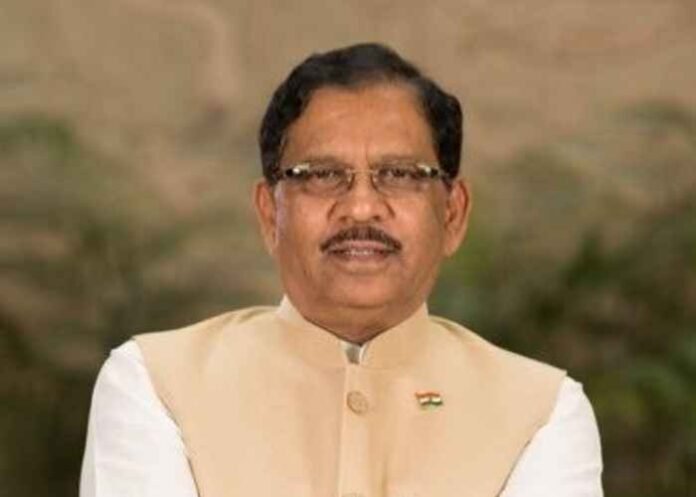
Commenting on the possibility of permitting international and IPL cricket matches at Bengaluru’s M. Chinnaswamy Stadium, Karnataka Home Minister G. Parameshwara said that if the compliance of safety recommendations by the Karnataka State Cricket Association (KSCA) is satisfactory, matches will be allowed; otherwise, permission will not be granted.

Speaking to reporters in Bengaluru, Parameshwara, when asked about the meeting scheduled for Thursday, and whether there would be good news, said, “There is no question of good news or bad news. We will see how they have complied with the Justice Michael D’Cunha Committee recommendations. A committee has already been set up with the Greater Bengaluru Authority (GBA), Bengaluru Police Commissioner Seemanth Kumar Singh and others.”

“We will discuss the matter tomorrow. The recommendations include short-term, medium-term and long-term measures. The short-term measures that were to be implemented immediately must be complied with. They will submit a report on compliance. The stadium has already been inspected twice. If we are satisfied with the compliance, we will allow matches at the Chinnaswamy Stadium; otherwise, we will not,” he said.

When asked about action against police officers, including IPS officers, for their alleged lapses in connection with the stampede tragedy in which 11 persons were killed, Parameshwara said, “The procedure is underway.

Everything has become normal now. They have been reinstated. The punishments if found guilty and inquiries will be finalised at a later stage. However, we cannot keep all those senior officers out indefinitely. The Chief Minister has decided to reinstate them, and action will proceed accordingly.”

Notably, KSCA President and former Indian pacer Venkatesh Prasad had said that Royal Challengers Bengaluru (RCB) fans would receive good news in the next two or three days. The decision on hosting international cricket matches at the M. Chinnaswamy Stadium will be taken by the Karnataka government at a crucial meeting scheduled for February 12.

The iconic stadium was denied permission to host cricket matches by the state government following the stampede during the victory celebrations of RCB’s maiden IPL title on June 4, in which 11 people lost their lives.

Speaking about a theft case involving 200 grams of gold and cash reported from the Vidhana Soudha building in Bengaluru, Parameshwara said, “My main concern is how this bag went through the Vidhana Soudha entrance gates. I have ordered a probe into this. How the bag entered Vidhana Soudha, through which gate it came in, and how it reached a Minister’s office unnoticed – these are matters I have asked to be investigated.”

“All matters pertaining to whom the bag belongs to and to whom it was to be delivered should be probed. I have spoken to the Bengaluru Police Commissioner in this regard. The theft case is secondary; the real concern is how the bag entered Vidhana Soudha unnoticed despite CCTV cameras,” he said.

It was through CCTV footage that the accused, identified as Naveen, was arrested. “But our concern is how the bag entered Vidhana Soudha,” Parameshwara reiterated.

Commenting on an incident in Kalaburagi in which Mateen Patel, a supporter of Congress leader and Minister Priyank Kharge, was seen dancing with a gun, Parameshwara said, “Whoever it may be, we will take action.

If anyone indulges in activities that are against the law, action will be taken. Which party they belong to comes later, but legal action will definitely be initiated. Even if they are close to anyone, no one is allowed to act against the law. The police will take strict action as per the law.”(Agency)

Exiled envoy says 2026 election among ‘ugliest in Bangladesh’s history’

Muhammad Yunus Bangladesh Economist

Dhaka, Feb 11, 2026

Mohammad Harun Al Rashid, a seasoned Bangladeshi diplomat (now exiled), in an exclusive interview with a leading think tank, described Bangladesh’s national election slated for Thursday as one of the “ugliest” in the country’s history.

He warned that the interim government’s Chief Advisor Muhammad Yunus, who has long survived by repackaging the grotesque as virtue, cannot evade accountability.

In an interview with Sri Lanka-based think tank Trinco Centre for Strategic Studies (TSST), Rashid said, “Like everything Yunus calls ‘beautiful’, this election is among the ugliest in Bangladesh’s history, and that is not hyperbole. Yunus has long survived by repackaging the grotesque as virtue. This time, he will not get away with it.”

He asserted that what is unfolding is not a genuine election but a contest between two factions of the 2024 “jihadist coalition” that seized power by overthrowing former Bangladesh Prime Minister Sheikh Hasina.

He argued that on one side stands the Bangladesh Nationalist Party (BNP) and its allies, while on the other is the radical Islamist party Jamaat-e-Islami and its partners.

Ideologically, Rashid, speaking to TSST, said, the BNP resembles Egypt’s Muslim Brotherhood — if not structurally — while Jamaat parallels Hamas in Palestine, stressing that neither represents democratic values and that both reflect Islamist extremism.

“No genuinely democratic party has been permitted to contest. Yunus is openly manoeuvring to control the outcome so that he remains central to the next government. His preferred partners are Jamaat and its affiliates, including the NCP, whose cadres acted as suicide operatives during the 2024 jihadist violence disguised as the so-called quota movement,” the Bangladeshi diplomat stated.

“Add to this the involvement of foreign actors, particularly in the West, searching for the most obedient proxies. Call it an election if you wish. It is nothing of the sort,” he emphasised.

Responding to a question on how to interpret Bangladesh’s sudden transformation, from a secular republic to a state increasingly viewed through the prism of terror, Rashid told TSST, the shift represents a setback not only for Bangladesh but for humanity as a whole in the 21st century.

“The devastation caused by eighteen months of Yunus’s usurped rule has undone decades of progress. It has destroyed an economy painstakingly rebuilt under Sheikh Hasina and has systematically dismantled Bangladesh’s secular identity, historical memory, and the moral legacy of its Liberation War. This is not merely political regression; it is civilisational vandalism,” he added.

When asked about his claims that Bangladesh has “descended into terror” under Yunus, despite the latter’s long-standing image in the West as a liberal icon, Rashid said those who had closely observed Yunus viewed him as “a swindler, an international charlatan skilled at charming Western patrons by blinding them with rhetoric and reputation.”(Agency)