
New Delhi, October 21, 2026 (Yes Punjab News)
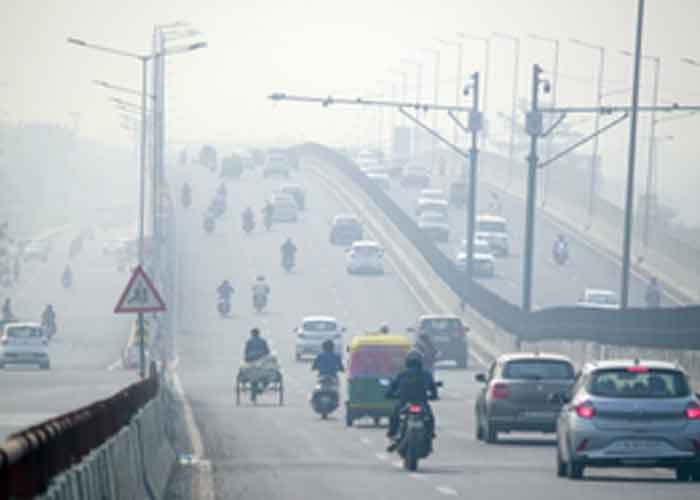
A layer of haze enveloped several parts of the national capital on Wednesday morning, reducing visibility as Delhi-NCR witnessed a deterioration in air quality following the Dussehra festivities.
According to the Air Quality Early Warning System (AQEWS), Delhi’s Air Quality Index (AQI) has entered the ‘poor’ category and is expected to remain there until October 23.
The national capital recorded an AQI of 179 on Tuesday, placing it in the ‘moderate’ category. However, the forecast indicates worsening pollution levels over the coming days, raising concerns as the region approaches winter, when air quality typically deteriorates.
According to the Central Pollution Control Board (CPCB), an AQI between zero and 50 is classified as ‘good’, 51 to 100 as ‘satisfactory’, 101 to 200 as ‘moderate’, 201 to 300 as ‘poor’, 301 to 400 as ‘very poor’, and 401 to 500 as ‘severe’.
Delhi last recorded ‘poor’ air quality on July 13, when its AQI reached 246. The anticipated deterioration comes amid changing weather conditions and the onset of a period when pollutants from multiple sources tend to accumulate over the region.
Stubble burning remains one of the factors contributing to seasonal air pollution in the capital. According to the ICAR-Indian Agricultural Research Institute, 19 incidents of crop residue burning were recorded across six monitored states earlier this month. Punjab and Uttar Pradesh reported seven incidents each, while Madhya Pradesh recorded four and Haryana one.
Farmers often burn crop residue to clear their fields before sowing the next crop, including wheat and vegetables. Pollution from neighbouring states, particularly Punjab and Haryana, can affect Delhi’s air quality, especially when unfavourable weather conditions restrict the dispersal of pollutants.
Meanwhile, temperatures at several weather stations in the national capital have remained below normal.
Safdarjung, Delhi’s primary meteorological station, recorded a maximum temperature of 31.8 degrees Celsius, 0.8 degrees below normal, while the minimum settled at 17.7 degrees Celsius, 0.7 degrees below the seasonal average.
At Palam, the maximum temperature was 29.3 degrees Celsius, 3.5 degrees below normal, while the minimum stood at 17.3 degrees Celsius, 1.6 degrees below normal. Lodhi Road recorded a maximum of 31.4 degrees Celsius, 0.6 degrees below normal, and a minimum of 17 degrees Celsius, in line with the seasonal average.
The weather department has forecast no rainfall over the coming week. Delhi is expected to experience mainly clear skies on October 21, 22 and 23, followed by partly cloudy conditions on October 24 and 25. The absence of rain could limit the natural removal of airborne pollutants, depending on wind speed and other atmospheric conditions.
With winter approaching, the Delhi government has announced a series of measures to curb pollution under its seasonal action plan. The measures under Chief Minister Rekha Gupta’s plan are scheduled to remain in force from November 1 to February 28.
One of the key initiatives is the ‘No Pollution Under Control Certificate (PUCC), No Fuel’ policy, under which petrol pumps will be prohibited from supplying fuel to vehicles without a valid pollution certificate. Automatic Number Plate Recognition cameras will be deployed to strengthen monitoring and enforcement at fuel stations.
The government has also announced restrictions on the entry of vehicles registered outside Delhi that do not meet BS-VI emission standards. These restrictions will apply from November 1, 2026, to January 31, 2027, while CNG and electric vehicles will be exempt.
Construction-related dust pollution will also face restrictions. Dust-generating demolition and outdoor civil construction activities will be prohibited from November 1, 2026, to January 31, 2027. Additionally, a complete ban on construction and demolition work is planned from December 10 to January 20.
The winter action plan also includes a proposed 50 per cent work-from-home arrangement for offices to reduce vehicular emissions and ease the seasonal pollution burden.
The measures aim to address the recurring deterioration in Delhi’s air quality during winter, when emissions from vehicles, construction activities, industrial sources and agricultural fires, combined with unfavourable weather conditions, can contribute to elevated pollution levels.
 FOLLOW NOW