New Delhi, Dec 17, 2025
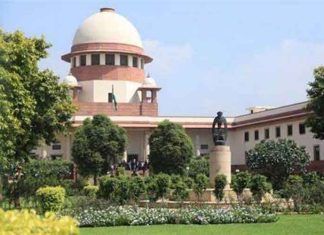
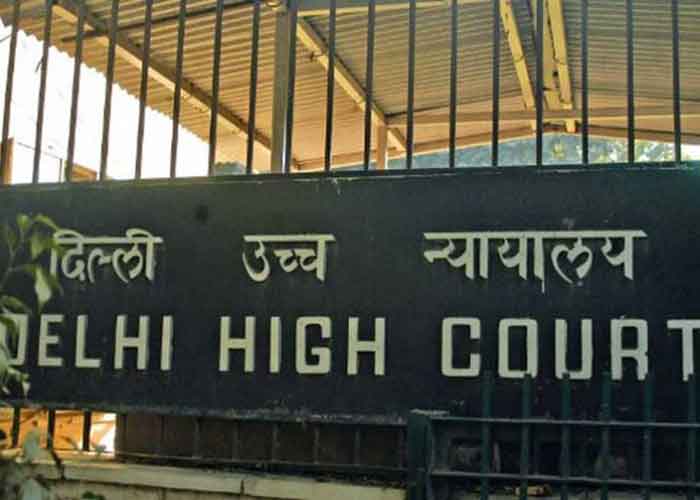
The Delhi High Court on Wednesday held that courts are not bound to mechanically stall a divorce by mutual consent on the ground of statutory timelines.
In appropriate cases, they may waive both the one‑year separation requirement and the six‑month cooling‑off period prescribed under the Hindu Marriage Act (HMA), 1955, ruled a Full Bench of Justices Navin Chawla, Anup Jairam Bhambhani and Renu Bhatnagar.
Answering a reference, the Justice Chawla-led Bench clarified the legal position on timelines under Section 13B of the HMA governing divorce by mutual consent.
The reference arose from divergent views on whether parties could file and pursue a petition for divorce by mutual consent without completing one year of separation, as required under Section 13B(1) of the HMA, and whether the subsequent six-month cooling-off period under Section 13B(2) could also be waived.
In its decision, the Delhi High Court ruled that the one-year separation period under Section 13B(1) can be waived by invoking the proviso to Section 14(1) of the HMA in cases of “exceptional hardship” or “exceptional depravity”. “The statutory period of 01-year prescribed under Section 13B(1) of the HMA as a prerequisite for presenting the first motion, can be waived, by applying the proviso to Section 14(1) of the HMA,” it held.
The Justice Chawla-led Bench went further to hold that waiver of the one-year separation period does not preclude waiver of the six-month cooling-off period under Section 13B(2). “Waiver of the 01-year period under section 13B(1), and the 06-month period under section 13B(2), are to be considered independently of each other,” it said.
Rejecting the argument that courts must compulsorily defer the effectiveness of a divorce decree until the completion of one year of separation, the Delhi High Court observed that once a court is satisfied that exceptional circumstances exist and consent is genuine, there is “no justification whatsoever” to withhold the decree till the one-year separation period is completed.
“Once spouses mutually agree to end their union, the law must not interfere in their decisional autonomy,” the judgment said, adding that forcing parties to remain in a dead marriage may infringe their dignity, privacy and autonomy under Article 21 of the Constitution.
The Full Bench also overruled earlier single-judge Bench decisions of the Delhi High Court, which had treated Section 13B as a “complete code” and had declined to apply the proviso to Section 14(1) in mutual consent divorces.
However, it cautioned that the waiver of the one‑year period under Section 13B(1) and the six‑month period under Section 13B(2) of the HMA is “not to be granted merely for the asking” and courts must carefully satisfy themselves about the parties’ free and informed consent, the absence of coercion, and the presence of exceptional circumstances.
Concluding its decision, the Delhi High Court held that courts are empowered to waive both statutory periods, grant divorce with immediate effect, and are not legally mandated to defer the decree, unless it is found that leave was obtained by misrepresentation or concealment.(Agency)
 FOLLOW NOW