

New Delhi, October 12, 2026 (Yes Punjab News)
The Centre on Monday informed the Supreme Court that it has decided to cap trade margins on anti-cancer medicines at 30 per cent of their maximum retail price (MRP), while the court called for a broader review of medicine pricing across the pharmaceutical sector.
Solicitor General Tushar Mehta, appearing for the Union government, told a Bench of Justices Vikram Nath and Sandeep Mehta that the Centre would notify a list of cancer drugs covered by the proposed cap.
Mehta said the list could be periodically updated to include additional anti-cancer medicines, depending on market developments and public health considerations, while excluding inexpensive drugs.
The development follows repeated questions from the Supreme Court over the substantial difference between the prices at which medicines are supplied to retailers and the MRPs printed on their packaging. The court has raised concerns about the financial burden on patients and the need for an effective regulatory framework.
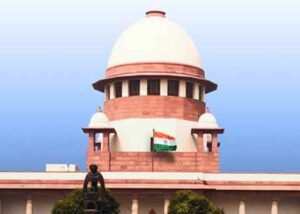
Supreme Court Questions Wider Medicine Pricing Practices
The Bench, however, questioned whether the proposed measure would address excessive trade margins on medicines and medical devices beyond the anti-cancer segment.
During the hearing, the court cited the example of an Indian-made cardiac stent supplied to retailers for around Rs 5,000 but carrying an MRP of Rs 25,000, asking what justified such a disparity.
Mehta responded that stents were already subject to price caps.
The Bench also referred to another medicine with an MRP of Rs 2,850 and a price to stockist (PTS) of Rs 78.29, questioning how such pricing arrangements benefited patients.
Additional Solicitor General Aishwarya Bhati submitted that pricing was only one aspect of the government’s pharmaceutical policy and that a balance needed to be maintained between affordability, availability and market considerations.
“We don’t want to control the entire ecosystem of drugs,” the Centre’s law officer said, arguing that excessive government intervention could adversely affect the market and the availability of medicines.
The Supreme Court questioned why regulation could not extend across the entire range of medicines and asked the Centre to explain how the existing pricing framework served patients’ interests.
It also referred to the Drugs (Prices Control) Order, 2013, and raised questions about whether medicines subject to price controls reached consumers at prices reflecting the prescribed trade margins.
The matter has been listed for further hearing on October 27.
Court Had Earlier Flagged Large Price Differences
The proceedings stem from public interest litigations (PILs) seeking regulation of medicine prices, initial price fixation for non-scheduled medicines, medical devices, generic medicines and prescription practices.
In earlier hearings, the Supreme Court had questioned why manufacturers were permitted to set MRPs substantially higher than the prices at which medicines were supplied to retailers.
On September 22, the Bench led by Justice Vikram Nath described a ten-fold difference between the retailer procurement price of an essential cancer medicine and its MRP as “broad daylight dacoity”.
On September 29, the court questioned why a uniform trade margin cap could not be prescribed for pharmaceutical products. It also raised concerns about corporate hospitals requiring patients to purchase medicines from their in-house pharmacies.
Separate Proceedings on Pharmaceutical Marketing
The latest hearing comes days after the Supreme Court, in separate proceedings, directed the Centre to constitute a committee to examine the need for statutory regulation of pharmaceutical companies’ marketing practices.
The proposed review will cover practices such as offering gifts, hospitality and other benefits to doctors to promote pharmaceutical products.
The committee is expected to consider suggestions and objections from stakeholders and recommend whether a statutory framework is required to regulate pharmaceutical marketing practices.
 FOLLOW NOW