
New Delhi, October 4, 2026 (Yes Punjab News)
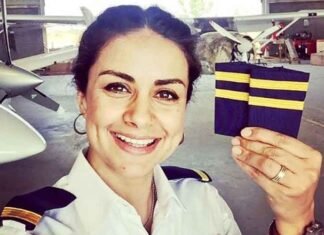
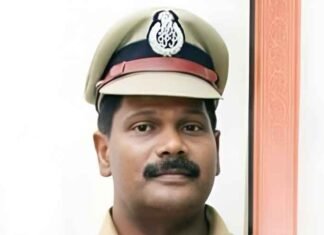
The social media meme — “It is better to be a Machchhar than a cockroach, and when life gives you a chance, choose the former over the latter” — may be irreverent, but it reflects a debate that has acquired a sharper meaning after the extraordinary courage shown by flydubai pilot Captain Smit Machchhar.
Memes may not appeal to everyone. Yet behind the humour is a distinction that deserves serious consideration: the difference between standing up when lives are at stake and creating noise for political or ideological reasons.
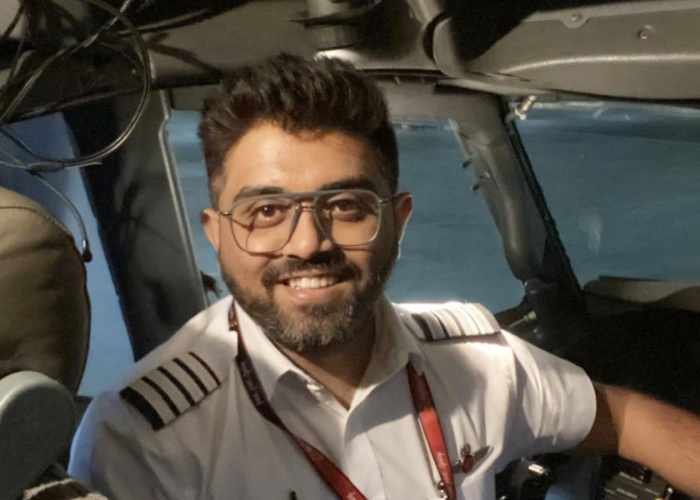
Captain Machchhar’s actions have already emerged as an extraordinary example of courage. According to the United Arab Emirates investigation, Hamam Al-Hammami, the co-pilot of the Dubai-Tel Aviv flydubai flight, attacked Captain Machchhar with a cockpit crash axe in what UAE authorities have described as a terrorist attack.
The aircraft was carrying more than 170 people when Al-Hammami allegedly attempted to take control of it after attacking Machchhar. Despite sustaining injuries, the Indian pilot managed to open the cockpit door, enabling passengers to enter, intervene and overpower the attacker.
The investigation is continuing and more details are expected to emerge about Al-Hammami, his background and the circumstances surrounding the attack. But one fact is already clear: Captain Machchhar’s actions helped prevent what could have been a major tragedy.
His response is particularly striking because the danger came from a colleague sitting beside him in the cockpit. Faced with a sudden and brutal attack, Machchhar had little time to process what was happening. Yet he acted decisively, putting the safety of hundreds of people ahead of his own.
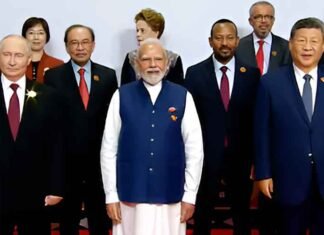
His courage has also highlighted the professionalism of Indian pilots. Prime Minister Narendra Modi, while speaking to Machchhar over a video call, underlined the wider significance of what had happened.
“Had this not happened, who knows what India would have had to face, what all Indian pilots would have had to endure, and how Indian pilots would have been viewed. You have saved everyone. You have done a very big thing,” Modi told him.
The episode has also prompted comparisons with the conduct of political activists and public figures, particularly at a time when young Indians are exposed to increasingly aggressive forms of political discourse on social media.
Dissent is an essential part of democracy. Questioning governments, challenging decisions and protesting against institutions are legitimate democratic rights. But criticism can lose its democratic character when it descends into personal abuse, violent conduct or attacks on institutions and individuals.
Questions have also been raised over whether some political movements apply their standards consistently. Critics of the Cockroach Janta Party (CJP), for instance, have pointed to its positions on student protests in different states and questioned whether political considerations influence which causes receive its attention. The party’s response and its own stated rationale remain relevant to that debate.
The contrast with Captain Machchhar is stark. His actions were driven by an immediate and unmistakable objective: protecting human life. There was no political calculation involved in confronting an attacker inside an aircraft. He acted despite being injured, and his actions gave passengers an opportunity to intervene.
That is why his story has resonated so widely.
The comparison has also entered the political conversation because of the reaction — or perceived lack of reaction — from some opposition figures and political activists. Social media users have questioned the absence of prominent public praise for Machchhar from Congress leaders Rahul Gandhi and Priyanka Gandhi Vadra, while similar questions have been raised about the CJP’s public response.
Such silence should not automatically be treated as proof of political motive. But in an environment where social media movements have made selective outrage and instant reactions a central part of public discourse, it is inevitable that people will compare who speaks up, when they speak and what causes they choose to champion.
The broader lesson, however, lies beyond party politics.
For a generation increasingly encountering public life through social media, Captain Machchhar offers a very different model of courage. It is courage without slogans, without political branding and without the need for an audience.
He was confronted with a potentially catastrophic situation and acted.
That is the distinction behind the “Machchhar versus cockroach” meme. One may dismiss it as just another internet joke, but its underlying question is more serious: when circumstances demand courage, do we stand up to protect others, or merely make noise from the sidelines?
Captain Machchhar has already answered that question through his actions.
He did not simply talk about courage. He demonstrated it when lives were at stake.
And for that, the Indian pilot deserves to be remembered not as a political symbol, but for what he actually was in that cockpit — a hero.
 FOLLOW NOW