


Chandigarh, November 20, 2026 (Yes Punjab News)
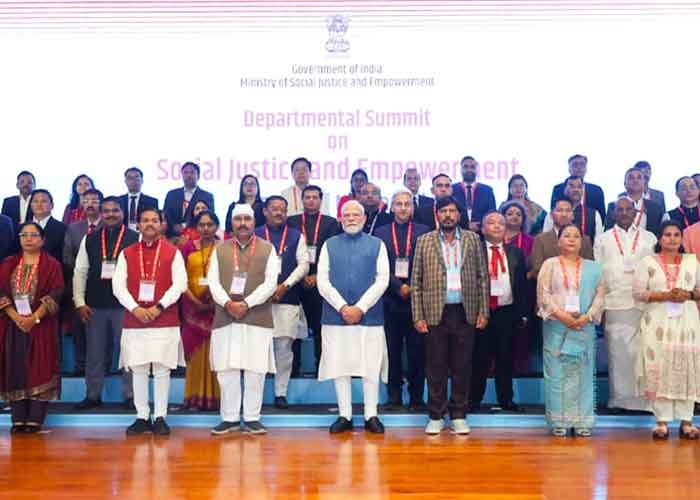
Punjab Cabinet Minister Dr. Baljit Kaur presented the state’s comprehensive anti-drug strategy at the ‘Samaveshi Niti Sankalp—Commitment to Policy for Inclusivity’ Departmental Summit-2026, organised by the
Dr. Baljit Kaur presented Punjab’s anti-drug strategy at a national summit, highlighting enforcement, treatment, rehabilitation and youth initiatives.
Union Ministry of Social Justice and Empowerment in New Delhi.
Speaking on the theme ‘New Thinking for Drug Prevention and Drug Demand Reduction for a Nasha Mukt Bharat’, she outlined Punjab’s multi-pronged approach, focusing on prevention, treatment, rehabilitation and community participation alongside strict action against drug trafficking.
Dr. Baljit Kaur said, “The fight against drugs is not merely about eradicating a problem; it is a mission to save lives, steer the youth in the right direction, and instill new hope in society.”
She said the Punjab Government, led by Chief Minister Bhagwant Singh Mann, viewed drug abuse not merely as a law-and-order issue but also as a public health and social challenge. The government was therefore focusing on treatment and rehabilitation alongside enforcement and public participation.
The Minister said the ‘Yudh Nashian Virudh’ campaign, launched on March 1, 2025, had brought departments, districts and citizens together in the fight against drugs. She said around 66,000 cases had been registered under the Narcotic Drugs and Psychotropic Substances (NDPS) Act, with a conviction rate of nearly 90 per cent. The police had also connected more than 12,000 drug-affected individuals with treatment facilities.
Highlighting the healthcare infrastructure, she said 547 Outpatient Opioid Assisted Treatment (OOAT) clinics were operational across Punjab, providing free treatment and counselling to approximately 3.2 lakh people. Monthly admissions for treatment had crossed 3,000, indicating a rise in people coming forward for help.
Under the ‘Soorma’ initiative, individuals who have remained drug-free for more than two years are being encouraged to share their recovery journeys in schools, rehabilitation centres and awareness programmes to motivate others.
She also highlighted the ‘Pindan De Pehredar’ initiative, under which more than 15,000 Village Defence Committees, comprising around 1.25 lakh members, are participating in anti-drug awareness and prevention efforts. Tip-offs received through these committees have led to the registration of 4,338 FIRs, while several affected individuals have been connected with treatment facilities.
On youth awareness, the Minister said more than 7.5 lakh students across over 3,600 schools were being sensitised to the dangers of substance abuse. A specialised curriculum developed with support from J-PAL had helped increase awareness among students about the risk of addiction from even a single use of heroin, commonly known as ‘chitta’, from 60 per cent to over 90 per cent, she said.
Dr. Baljit Kaur said mental health was also a key component of the state’s prevention strategy. Mental well-being activities were being conducted in government schools, around 30,000 teachers were being trained, ‘Sangat Clubs’ were being established in 40 colleges and 23 Mental Health Fellows had been deployed.
She further said sports were being promoted as a means of engaging young people in positive activities. The state had launched a Rs 1,500 crore initiative to develop playgrounds in 3,100 villages and increased the number of sports coaches from 500 to 2,458.
Highlighting public participation, the Minister said the ‘Safe Punjab’ WhatsApp chatbot had received 56,578 citizen tip-offs, resulting in the registration of 20,875 FIRs.
She added that addiction treatment facilities were also being provided inside prisons. OOAT clinics were operational in 20 jails, around 25,000 inmates had been screened and eight de-addiction centres had been made functional in prisons.
Dr. Baljit Kaur said the Punjab Government was pursuing a zero-tolerance policy against drug trafficking while ensuring dignity, support and rehabilitation opportunities for people recovering from addiction. She said Chief Minister Bhagwant Singh Mann’s vision was to channel the energy of the state’s youth towards building a healthy, prosperous and drug-free ‘Rangla Punjab’.
Prime Minister Narendra Modi also attended the summit at Sushma Swaraj Bhawan in New Delhi. The Minister said Punjab’s approach, based on strict enforcement, a humane response and public participation, could contribute significantly to the national goal of a ‘Nasha Mukt Bharat’.
 FOLLOW NOW