

New Delhi, November 20, 2026 (Yes Punjab News)
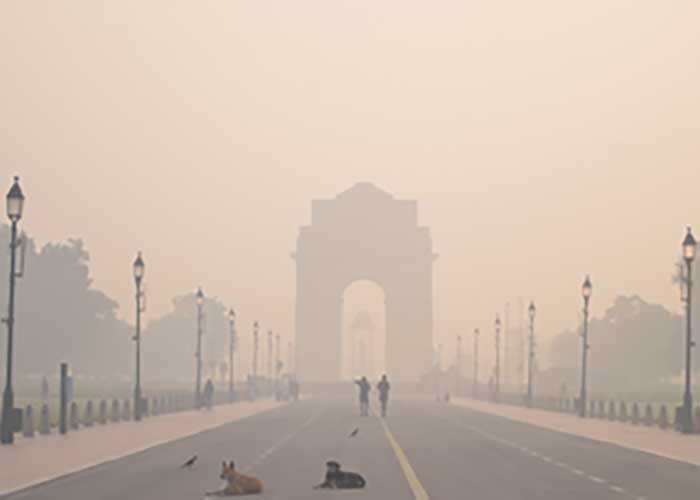
Delhi continued to battle poor air quality on Friday, with the city’s average Air Quality Index (AQI) recorded at 267, while several monitoring stations reported pollution levels in the ‘very poor’ category amid chilly morning conditions.
According to monitoring data, Sirifort recorded an AQI of 348, followed by JNU at 336, Pusa at 335, Burari Crossing at 333, NSUT Jaffarpur at 329, Ghoga and ITO at 321 each, DTU at 319, Talkatora Garden at 316, Punjabi Bagh at 310 and Jahangirpuri at 307.
Other locations also reported elevated pollution levels. Chandni Chowk recorded an AQI of 330, while Vivek Vihar stood at 277, Rohini at 276, Shadipur at 280, NIH Narela at 278, Bawana at 293, Burari at 290, IIT Delhi at 295 and Anand Vihar at 267.
The latest readings follow a rise in pollution on Thursday, when Delhi’s average AQI increased by 48 points to 280 from 232 a day earlier. Unfavourable weather conditions, which restricted the dispersion of pollutants, contributed to the deterioration.
The Central Pollution Control Board (CPCB) reported that 16 monitoring stations had recorded ‘very poor’ air quality at 4 p.m. on Thursday, while three stations remained in the ‘moderate’ category.
Separately, AQI.in data showed Delhi’s AQI touching 502 at 8.30 a.m. on Thursday and standing at 485 at 9.31 a.m. PM10 concentration was recorded at 484, nearly 10 times the World Health Organization’s recommended safe limit, according to the report.
The deterioration came just two days after the Commission for Air Quality Management (CAQM) lifted restrictions under Stage III of the Graded Response Action Plan (GRAP). Measures under Stages I and II, however, remain in force.
Meanwhile, Delhi recorded its lowest minimum temperature of the season so far on Thursday. The India Meteorological Department (IMD) said the minimum temperature at Safdarjung was 10.6 degrees Celsius, 1.7 degrees below the seasonal average.
 FOLLOW NOW