

New York, October 3, 2026 (Yes Punjab News)
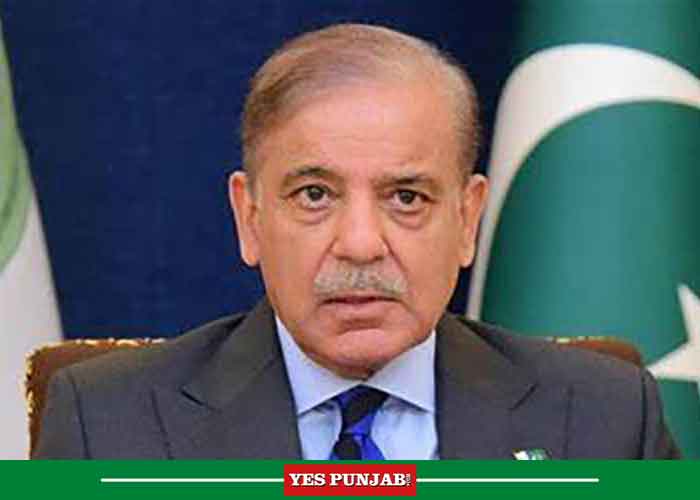
Pakistan Prime Minister Shehbaz Sharif’s address to the 81st session of the United Nations General Assembly has drawn attention to the country’s military-dominated power structure, domestic political tensions and economic challenges, according to an IANS analysis.
The analysis argues that Sharif’s speech reflected the close relationship between Pakistan’s civilian government and its powerful military establishment, particularly in the context of the May 2025 India-Pakistan military confrontation. During his address, Sharif praised the country’s armed forces under the leadership of Field Marshal Asim Munir, saying they had “responded with precision and professionalism”.
According to the analysis, the military’s growing influence has been reinforced by the 26th and 27th constitutional amendments, which critics argue have weakened judicial independence and strengthened the military’s authority. It contends that the civilian administration has limited autonomy in key policy decisions.
Sharif also warned at the UN that “any attempt to stop, impede or divert Pakistan’s share of the waters will be treated as an act of war”. The IANS analysis questions the consistency of this warning, noting that India placed the Indus Waters Treaty (IWT) in abeyance in April 2025 but did not formally terminate it. It argues that Pakistan’s public assertions about the issue have not been accompanied by evidence presented to build a broader international case.
The analysis also highlights a contrast between Sharif’s calls for dialogue at the international level and the treatment of political opposition within Pakistan. It refers to the continued incarceration of former prime minister Imran Khan, who is serving a 14-year prison sentence, and concerns over possible federal intervention in Khyber Pakhtunkhwa, a province governed by a party outside the ruling alliance.
The federal government has cited rising militancy in the region in discussions around possible intervention, while critics have questioned the rationale and implications of such a move.
The article further points to Pakistan’s economic difficulties, inflation and security challenges, arguing that these pressures have increased the civilian government’s reliance on the military establishment. It maintains that the country’s strategic and political direction is increasingly shaped by the military leadership, raising questions about civilian authority and institutional accountability.
The analysis concludes that Sharif’s UN address must be viewed against the backdrop of Pakistan’s domestic political and institutional challenges, which continue to shape its foreign policy messaging and international engagement.
 FOLLOW NOW