



Kolkata, September 24, 2026 (Yes Punjab News)
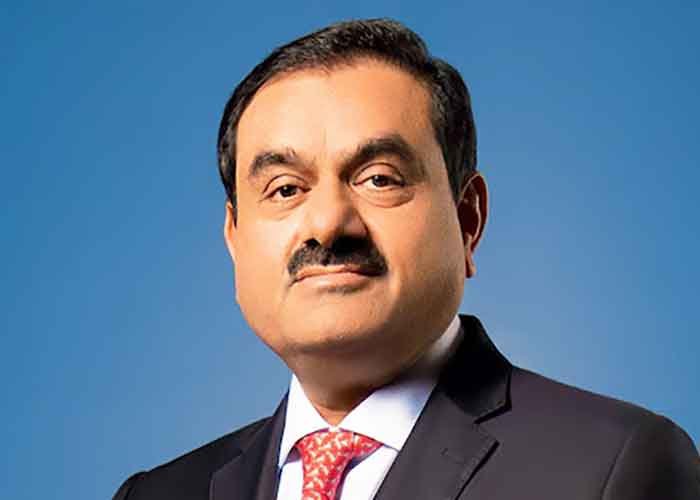
Adani Group Chairman Gautam Adani on Thursday said India’s next phase of economic growth must create new centres of economic activity in the eastern part of the country, asserting that Bengal would be crucial to the vision of a developed India.
“For India’s next trillion dollars of growth, the East must rise. And this is where Bengal becomes essential to fulfil the vision of Viksit Bharat. And, in my view, no location in India has Bengal’s combination of advantages,” Adani said while addressing the Indian Chamber of Commerce in Kolkata.
He said much of India’s economic momentum over the past several decades had been driven by the western and southern corridors, but the next phase would require the emergence of new growth centres.
Highlighting Bengal’s geographical advantages, Adani said Odisha, Jharkhand and Chhattisgarh, with their mineral and industrial resources, lie to the west of the state, while the Northeast lies to its north and east.
He also pointed to the Bay of Bengal’s access to Southeast Asian and Indo-Pacific markets, saying the region provides connectivity to 60 per cent of global GDP and 65 per cent of the world’s population.
“In the language of infrastructure, Bengal is not simply just another market. It is a strategic national node waiting for the expansion of its potential networks. And this is how, at Adani, we see the promise of Bengal,” he said.
Adani said the Adani Group’s commitment to West Bengal extends beyond individual projects and announced plans to deploy more than Rs 1 lakh crore across the state over the coming decade.
The proposed investments, he said, would cover ports, logistics, power generation, power transmission and distribution, roads, bridges and ropeways, green cement and hyperscale data centres.
He said development should not be measured only in terms of cargo volumes, megawatts, tonnes or terabytes, but should ultimately have a human dimension.
Adani cited the group’s plan to establish the Adani Arogya Mandir, a 2,000-bed medical institute in New Town, as part of this approach. Half of the hospital’s beds, he said, would be dedicated to people who cannot afford quality medical care.
He also highlighted initiatives aimed at supporting Bengal’s cultural heritage, including the revitalisation of Kumartuli Ghat, a curated Durga Puja programme to showcase the state’s artistes, taking Maa Durga celebrations to audiences globally, and supporting the conservation of the historic Writers’ Building.
Recalling the beginning of his entrepreneurial journey three decades ago, Adani described Mundra in Gujarat as his first “karmabhoomi” and said he hoped Bengal would become his second.
“Mundra in the West was to become my first karmabhoomi. Today, with the same humility and sense of responsibility, it is my prayer to Maa that Bengal in the East becomes my second karmabhoomi,” he said.
Adani added that Bengal should not seek to become another Gujarat but should instead build on its own geography, intellectual strengths, industrial legacy and historical role.
“Not because Bengal must become another Gujarat — but because Bengal must become the strongest version of Bengal itself, drawing upon its geography, its intellect, its industrial legacy, and its historic ability to awaken the nation,” he said.
 FOLLOW NOW