

Washington, April 14, 2026
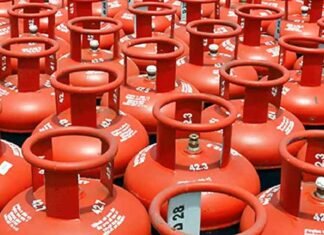
Governments should avoid large-scale energy subsidies and instead adopt targeted, temporary support measures as the global economy grapples with a fresh supply shock from the Middle East conflict, the International Monetary Fund (IMF) cautioned on Tuesday.
Speaking during a group interview with reporters from India, Japan, the UAE, the Netherlands and Chile, IMF Chief Economist Pierre-Olivier Gourinchas said fiscal responses must remain measured amid rising inflation and limited policy space.
“We’re somewhat concerned about it,” Gourinchas said, referring to government moves to cushion households and businesses through subsidies and price caps.
He noted that such measures are understandable but warned they could backfire if not carefully designed.
“It’s very understandable that governments would want to… shield part of their population and businesses against that external shock,” he said.
However, fiscal resources have become constrained after repeated interventions in recent years, including during the Covid-19 pandemic and earlier energy crises.
“Fiscal resources have become much more limited,” he said, noting that governments now face the challenge of rebuilding buffers while managing new shocks.
Gourinchas pointed to the scale of past interventions as a cautionary example.
“The fiscal measures… were quite expensive… on the order of two to three per cent of GDP,” he said, adding that such spending was largely financed through deficits and rising debt.
“In the environment we’re in… adding two to three (per cent)… that’s really not advisable,” he said.
He warned that excessive spending could unsettle financial markets.
“It could lead to a situation where you get markets becoming more nervous… interest rates rising… (and) financial instability,” he said.
Instead, the IMF is advocating a more calibrated approach focused on vulnerable groups.
“The support should be very targeted… (and) temporary,” Gourinchas said.
He stressed the importance of designing measures that automatically phase out.
“You put them in place for three months or six months… it rolls off on its own,” he said.
Another key concern is the interaction between fiscal and monetary policy at a time of rising inflation.
“If fiscal authorities (are) adding fiscal stimulus… that would make the inflation pressures even worse,” he said, complicating efforts by central banks to maintain price stability.
Gourinchas underlined that the current shock is fundamentally a supply problem.
“There isn’t enough energy… so the demand is gonna have to come down and meet supply,” he said.
Measures that artificially suppress prices, he added, do not address the underlying imbalance.
“Any measure that tries to keep the price unchanged… it doesn’t do the job,” he added.
The IMF’s warning comes as several countries consider or implement measures to shield consumers from rising fuel and energy costs following disruptions linked to the Middle East conflict.
Such policies, while politically necessary in the short term, risk adding to already elevated public debt levels and could undermine financial stability if sustained over longer periods.(Agency)
 FOLLOW NOW