

Washington, Feb 11, 2026
The United States called India the anchor of South Asia and the western Indo-Pacific, as the Trump administration outlined an “America first” strategy built on trade deals, defence cooperation, and targeted investment across the region.
Assistant Secretary of State for South and Central Asia Paul Kapur, in a written testimony submitted before the House Foreign Affairs Committee’s Subcommittee on South and Central Asia, said President Donald Trump’s National Security Strategy makes clear that Washington “must put America first and do so through active engagement with vital parts of the world.”
“Under the President’s leadership, this has advanced our economic and security interests while helping our partners,” Kapur said on the eve of his appearance before the House Foreign Affairs Committee’s Subcommittee on South and Central Asia.
He described South Asia as “vitally important,” noting that “India alone has well over one billion people and occupies a subcontinental landmass.”
He warned that “a hostile power dominating South Asia could exert coercive leverage over the world economy,” adding that “the United States must prevent this from happening and keep the region free and open.”
Kapur said India, “with its size, location, and commitment to a free and open region, anchors South Asia and, more broadly, the Western half of the Indo-Pacific.”
He pointed to growing bilateral engagement, including high-level diplomatic touchpoints and cooperation in defense, technology, and energy. He cited the renewed 10-year US-India Defence Framework Agreement, the TRUST initiative, and Indian purchases of US products “ranging from drones to liquefied natural gas.”
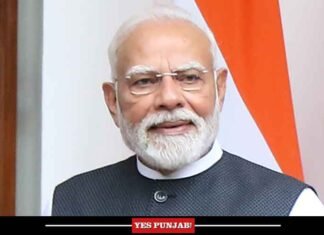
Kapur also highlighted recent trade moves. “Just last week, President Trump and Prime Minister Modi reached an agreement on a historic trade framework,” he said.
He added that “two days ago, the Trump Administration signed a trade deal with Bangladesh, providing American exporters with access to Bangladesh’s market of 175 million people.”
Beyond trade, he outlined “three broad approaches to strategic-capacity building”: “Defence cooperation, targeted investment, and diplomacy.”
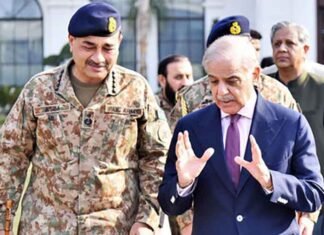
Calling Pakistan “another important partner,” Kapur said Washington is working with Islamabad to realize “the potential of its critical-mineral resources,” combining US government seed financing with private-sector know-how.
He also cited expanding trade in energy and agriculture and “ongoing counterterrorism cooperation.”
He said Bangladesh, Nepal, Maldives, Sri Lanka, and Bhutan have “outsized importance” due to their strategic locations but can become “targets for coercion.”
He warned against “the dangers of debt-trap diplomacy.”
Kapur urged bipartisan cooperation. “Let’s work together to build strategic capacity in the region, helping our partners to help themselves, and making the United States safer, stronger, and more prosperous.”
South Asia remains central to Washington’s Indo-Pacific strategy, particularly as the US seeks to counter China’s expanding economic and security footprint in the region. India has emerged as a key partner in that effort through defense coordination, multilateral groupings and expanded trade engagement.(Agency)
 FOLLOW NOW