
Washington/New Delhi, Jan 6, 2026
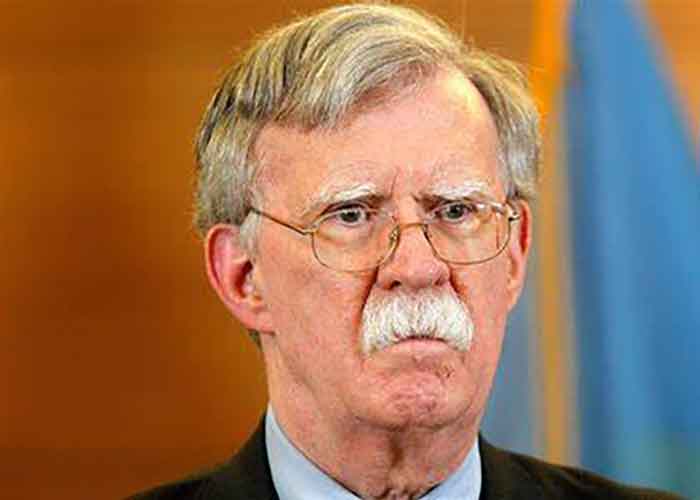
Former US National Security Adviser (NSA) John Bolton has backed the US administration’s action of extracting Venezuelan President Nicolas Maduro, calling it “in compliance” with the international law. However, in an exclusive interview with IANS, he stated that the US President Donald Trump has not managed to replace the authoritarian regime so far.
Bolton termed Trump’s statement that US oil companies will settle in Venezuela a “fantasy” and also warned against annexing Greenland, stressing that using military action would be a “catastrophic mistake for the United States” and the end of the North Atlantic Treaty Organization (NATO) alliance.
Bolton also spoke about Trump’s efforts in ending war in Ukraine, stating that Trump will pull back from trying to negotiate a deal between Russia and Ukraine as it’s unlikely that there’s going to be a settlement that will be acceptable to the people of Ukraine.
Excerpts:
IANS: How do you see the US action in Venezuela? It has been criticised a lot and termed as one against the international order…
John Bolton: I think we were fully in compliance with international law. We had the support of the legitimate opposition of Venezuela responding to Maduro’s holding onto power after having stolen the 2024 presidential election, which all neutral observers, Venezuelan and international, confirmed. By the way, he also stole the election in 2018 when we supported the interim president, Juan Guaido, in his effort to overthrow Maduro.
I think it’s important to understand that background because many people say that it’s a precedent for other activities like Russia’s invasion of Ukraine or China’s invasion of Taiwan. It absolutely is not. But, the problem is that Trump hasn’t really changed the regime. He’s extracted Maduro, but the authoritarian regime remains in place. And it’s very confusing because in comments Trump made on Saturday, he appears to be prepared to deal with the regime just so long as Maduro is not there.
IANS: How do you see the future implications of such a move?
John Bolton: I think it is a mistake ever to generalise what Trump does. He doesn’t operate from the basis of coherent philosophy or national security strategy. Its very transactional. In this case, he appears to be worried about getting access to Venezuelan oil. That obviously doesn’t follow in many other circumstances. So, I think at this early stage, with a lot still unknown, I’d be very hesitant to draw broader conclusions about what he may do elsewhere.
IANS: President Trump has said the US oil companies will settle in Venezuela and make money. How do you see his statement?
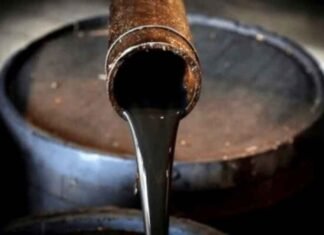
John Bolton: I think it’s a fantasy. The fact is that over 30 years of the Chavez-Maduro dictatorship in Venezuela, they have run the oil infrastructure of the country, the pumping, the transmission, the loading of the oil.
They’ve taken all that infrastructure and degraded it very severely. So, to get significant increases in Venezuela’s export capacity, you need billions and billions of dollars of investment over a long period of time.
This is not something you can turn on and off like a light switch. So, I think American and other foreign oil companies looking at a very uncertain political situation in Venezuela are going to be very hesitant about making extensive capital commitments until they know much more. And I don’t know when that point will come.
IANS: In this case, Trump has captured the Venezuelan President. Do you feel the US can take such actions in future as well with other leaders, or other countries can also follow the suit?
John Bolton: Well, remember the circumstances here. As I said, this is a situation where Maduro stole the 2024 election.
The leader of the opposition, Maria Corina Machado, has won the Nobel Peace Prize for the opposition’s effort to keep Maduro from continuing in power and this is very similar to what happened in 1990 when the legitimately-elected President of Panama, Guillermo Endara, asked the United States to intervene against the dictator Manuel Noriega.
When the legitimate government of the country, when the people who, as a result of free and fair elections, hold power, it hardly violates international law to cooperate with a free government to oust a usurper.
IANS: Don’t you feel capturing the leader of a country is against the international order?
John Bolton: Not if the leader is illegitimate. Not if the leader has committed aggression or other acts that endanger the security and stability of the United States, in this case, the Western Hemisphere.
Others may claim that they’re doing the same thing, but you have to justify that claim on the basis of fact. It’s not a basis just because of what’s happened in Venezuela for Russia to invade Ukraine. It’s a totally different situation. That was an act of unprovoked aggression. It was hardly invited by anyone in Ukraine and a Chinese attack on Taiwan could not be justified for the same reasons.
IANS: Can US action in Venezuela prompt China to take similar action in Taiwan?
John Bolton: I think China has made it clear that they’re threatening Taiwan. They have for a long time. The people of Taiwan have repeatedly spoken in free and fair elections. They do not want to rejoin the mainland.
They don’t consider themselves Chinese anymore, as any number of surveys in Taiwan have proven. It’s a free and democratically elected government, and I think the people of Taiwan are entitled to govern themselves. I think these threats by China are real threats to international peace and security.
IANS: After the capture of Venezuelan President, Trump insists on annexing Greenland. How do you assess such moves?
John Bolton: I think this is what we call trolling in the United States. Trump’s bargaining style is to say something outrageous and shock people, and then he’s happy if he gets 30 per cent of what he asked for.
I think it would be just inconceivable to me that he’s going to use military force against Greenland. If he did, it would be a catastrophic mistake for the United States. It could well mean the end of the NATO alliance. It would be a disaster..
IANS: Do you feel the US has lost leverage to broker a peace deal between Russia and Ukraine, considering its action in Venezuela?
John Bolton: No, I don’t think so. I think the Russians have played Trump along very well on this in Ukraine, and I think it’s unlikely there’s going to be a settlement there that the Ukrainians can find acceptable.
My guess is that, as he has over the past year at different times, Trump will pull back from trying to negotiate a deal between Russia and Ukraine. What he’s really seeking is the Nobel Peace Prize, and he’s not going to get it anytime soon for a deal between Russia and Ukraine because the parties are just too far apart.
IANS: Do you feel Trump will get the Nobel Peace Prize?
John Bolton: I’m sure if you give him another couple of days here, he’ll explain why extracting Maduro from Venezuela should get him the Nobel Peace Prize, but I think it’s unlikely.
IANS: How do you see President Trump’s recent statement about India?
John Bolton: Look, I think it’s been unfortunate for quite some time going back to announcing the tariffs against India before negotiations really.
He had a chance to conclude for adding the additional tariffs on India, but not on China or Turkey or anyone else for purchasing Russian oil has been unfortunate. I’d like to see a closer relationship restored because in it we have a mutual interest in worrying about China’s hegemonic aspirations.
IANS: What is the message you feel the US has conveyed to the world with this action in Venezuela?
John Bolton: I think in the case of Maduro, the hope was, the reality should be that we’re trying to eliminate threats within the hemisphere posed by outsiders like Russia, China and Iran and in coordination with Cuba, which is another threat that the Maduro regime allowed to use Venezuela as an operating base for and because the people of Venezuela have been oppressed by this regime for far too long. That’s the message we should be sending.
I’ll be frank to say I don’t think that’s what Trump is saying, but I think that is the real reason the removal of Maduro and now hopefully the rest of the regime is legitimate.
IANS: What according to you was the Venezuelan government doing that endangered the national security of the US?
John Bolton: For example, Russia uses Venezuela as an operating base for its activities in this hemisphere, which it regards as much safer than Cuba, since Cuba is still just 90 miles away from Florida and Venezuela is more distant. Cuba, which is still very much in Russia’s interest, relies on cheap Venezuelan oil to prop up the regime and keep it in power.
Russia wants to see that continue as well, that’s something unacceptable. China has been trying to get more access to Venezuelan oil. Right now, they buy approximately 80 per cent of Venezuela’s oil exports and would, I think, consider getting heavily involved themselves in the oil infrastructure because Venezuela’s oil reserves are the largest in the world, larger even than Saudi Arabia.
Iran has its biggest embassy in the world in Caracas to help oversee Hezbollah’s activities in the Western Hemisphere to help launder Venezuelan profits from illegal oil sales through Venezuela’s financial system and to keep an eye on Venezuela’s uranium reserves, which are among the largest in the world. So, this is all very troubling in the context of the Western Hemisphere, destabilising other countries and threatening the United States.
IANS: Can President Trump make a move to change the Constitution and run for the third time?
John Bolton: No, I think he’s basically given up on that. I don’t think he can change the constitution, too many steps are involved. It can’t possibly be done in three years and I think he has more and more publicly acknowledged that JD Vance would be his successor.
IANS: What is your assessment of the Trump administration as it completes its first year in office?
John Bolton: I think the economy is good, which is good for any incumbent President, but I think he’s done a lot of damage to US interests around the world and I hope that damage can be repaired, but it’s still three years to go.(Agency)
 FOLLOW NOW