
New Delhi/Chandigarh, February 11, 2026 (Yes Punjab News)
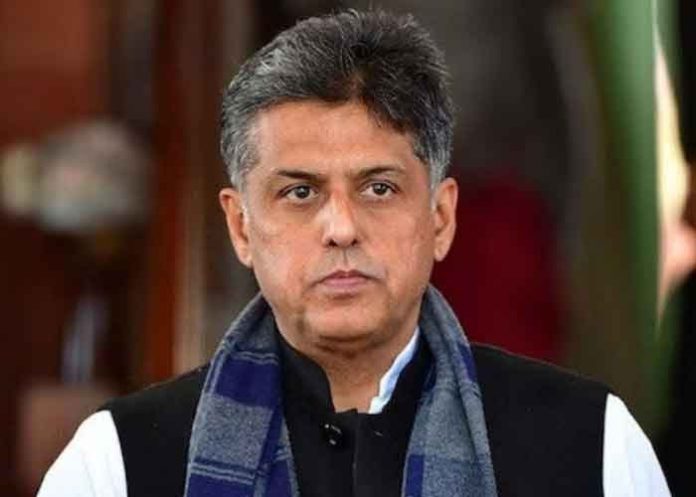
Chandigarh MP Manish Tewari has vociferously raised one of the most crucial and pressing concerns in the Lok Sabha – the re-development and strengthening of rail connectivity for Chandigarh, the City Beautiful.
Prior to the commencement of LS proceedings, Tewari had met Union Railway Minister Ashwani Vaishnav, urging him to examine the cost and time overruns in the re development of Chandigarh Railway Station and to enhance rail services by increasing train frequency, introducing additional stoppages and adding new trains from Chandigarh.
However, with no tangible outcome from his request, Tewari formally took up the matter in the Lok Sabha through Question No. 2021.
In his query, Tewari asked the Minister whether the Government is cognizant of the multiple representations he has submitted regarding improved train connectivity, including requests for superfast train stoppages at Chandigarh and Mohali on the Katra and Amritsar routes as well as enhanced connectivity to Rajasthan and if so, what the details are.
Tewari also sought details on whether any action has been initiated on these representations, including examining the feasibility of providing stoppages for Vande Bharat, Shatabdi, Sampark Kranti, Rajdhani and other superfast trains at Chandigarh and Mohali, emphasizing that a large number of students, professionals, lawyers and devotees rely on these routes.
Underscoring the need for direct connectivity to Khatushyam, Ajmer, Pushkar, Bikaner and other destinations, Tewari further asked what steps the Government has taken to provide direct connectivity to these stations.
Questioning whether the government proposes to address the public demand for the daily operation of Train No. 22451/22452 (Chandigarh–Bandra), Tewari said, “If anything concrete has been done in this regard, the Government should provide the necessary details and if nothing has been done, the Government must explain the reasons.”
Expressing deep dismay at the Government’s reply, Tewari said that although the Government, through its concerned minister, has provided a detailed reply but its disposition is not oriented towards the progress and re-development of Chandigarh.
“It is extremely unfortunate that genuine issues which matter greatly to Chandigarh are being overlooked by the Union Government,” rued Tewari, while urging both the Union Government and Railway Minister Ashwani Vaishnav to address all the representations and concerns he has raised for the welfare of the people without any further delay.






Experts recall UPA’s ‘nuclear concessions’ as Rahul Gandhi alleges ‘sellout’ over India-US trade deal
New Delhi, Feb 11, 2026
Congress MP and Leader of Opposition in Lok Sabha, Rahul Gandhi’s charge that the present government has “sold out Bharat Mata” over a trade and tariff framework with the United States would carry more weight if his own party’s record did not tell a very different story, say political observers.
Before accusing others of compromising national interest, it is worth revisiting what happened in 2008, when the Congress-led UPA government negotiated and signed the Indo–US Civil Nuclear Agreement, often celebrated by them as a historic diplomatic triumph, analysts argue.
The 123 Agreement was projected as a breakthrough that would end India’s so-called “nuclear isolation.” And indeed, it did open doors to global nuclear commerce and secured a waiver from the Nuclear Suppliers Group. But unfortunately, that access came with explicit, binding commitments that reshaped the structure of India’s nuclear programme in ways that critics even today describe as deeply intrusive.
Under the agreement, India was required to submit a formal “Separation Plan”. This was not a symbolic gesture. “India had to divide its nuclear infrastructure into civilian and military streams and place the entire civilian programme under permanent International Atomic Energy Agency (IAEA) safeguards.” Fourteen out of twenty-two power reactors at the time—including future civilian facilities—were brought under inspection “in perpetuity.” In simple terms, a large segment of India’s energy infrastructure was opened to continuous international monitoring.
According to observers, the United States made its expectations clear. In its own statement, it declared: “India has committed to separate its military and civil activities and submit its entire civil program to international inspection.” This was not an interpretation by critics; it was Washington’s official position.
The Hyde Act, a US domestic law that operationalised the deal, required the US President to submit annual compliance reports to the US Congress regarding India’s conduct, say nuclear watchers. Effectively, an aspect of India’s sovereign programme became subject to foreign legislative scrutiny, they add.
By agreeing to perpetual safeguards and restrictions on the transfer of enrichment and reprocessing technologies, India accepted limits that affected its long-term three-stage nuclear vision and closed fuel cycle strategy, experts explain. Moreover, the arrangement was linked to India’s unilateral moratorium on nuclear testing, creating strategic constraints in a volatile regional security environment.
At the time, this was hailed by the UPA as one of its greatest achievements. “Yet today, the same political leadership questions the patriotism of a government negotiating trade terms that are transparent, reciprocal, and subject to parliamentary oversight,” experts argue. According to them, sweeping accusations about “selling out” ring hollow when viewed against history.(Agency)