
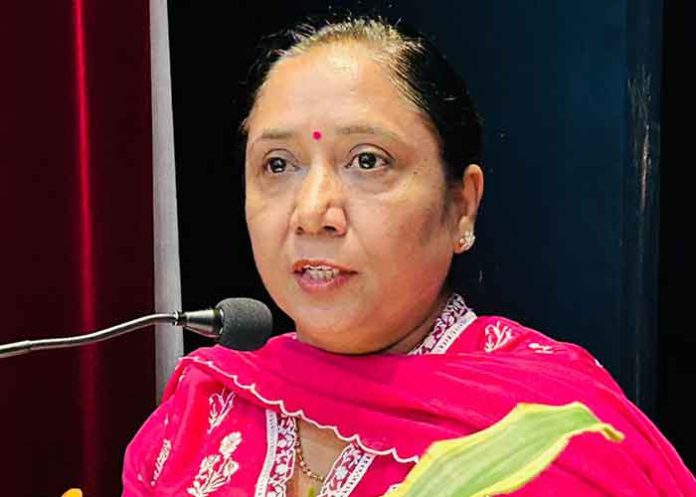
Chandigarh, Feb 11, 2026 (Yes Punjab News)
Punjab Social Security, Women and Child Development Minister Dr. Baljit Kaur on Wednesday said that under the dynamic leadership of Chief Minister Bhagwant Singh Mann, the Punjab Government regards senior citizens not merely as an important section of society, but as its living heritage and pride.
She said the government has translated the vision of “Our Elders, Our Pride” into concrete action by releasing over ₹3,806 crore under the Old Age Pension Scheme during the financial year 2025–26, up to January 2026.
The Minister further stated, “More than 23.62 lakh eligible elderly beneficiaries across Punjab are receiving regular financial assistance under the Old Age Pension Scheme. Every eligible senior citizen is being provided a monthly pension of ₹1,500, enabling them to lead their daily lives with dignity, security and independence.”
Highlighting the government’s commitment to seamless delivery, Minister Dr. Baljit Kaur said, “To ensure timely and transparent disbursement of pension to all beneficiaries, the Punjab Government has made a budgetary provision of ₹4,100 crore, ensuring that no eligible senior citizen faces inconvenience in receiving their rightful support.”
The Cabinet Minister also issued strict directions to departmental officers and said, “Pension payments must reach every eligible beneficiary on time and without any hindrance. Any delay, negligence or lapse in the distribution of pension will not be tolerated, and strict action will be taken against the responsible officials in accordance with rules.”
Underlining the broader vision of the government, Minister Dr. Baljit Kaur added, “Senior citizens are the custodians of Punjab’s social heritage, wisdom and values. Their safety, dignity and happiness are essential to realizing the dream of a ‘Rangla Punjab.’
The government is firmly resolved to ensure that every elderly citizen spends their later years free from worry, with dignity and strong government support, so that Punjab continues to remain prosperous, secure and vibrant.”


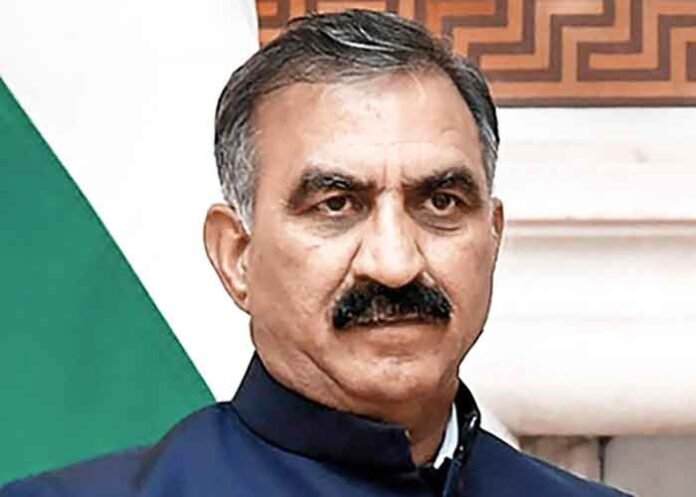







Experts recall UPA’s ‘nuclear concessions’ as Rahul Gandhi alleges ‘sellout’ over India-US trade deal
New Delhi, Feb 11, 2026
Congress MP and Leader of Opposition in Lok Sabha, Rahul Gandhi’s charge that the present government has “sold out Bharat Mata” over a trade and tariff framework with the United States would carry more weight if his own party’s record did not tell a very different story, say political observers.
Before accusing others of compromising national interest, it is worth revisiting what happened in 2008, when the Congress-led UPA government negotiated and signed the Indo–US Civil Nuclear Agreement, often celebrated by them as a historic diplomatic triumph, analysts argue.
The 123 Agreement was projected as a breakthrough that would end India’s so-called “nuclear isolation.” And indeed, it did open doors to global nuclear commerce and secured a waiver from the Nuclear Suppliers Group. But unfortunately, that access came with explicit, binding commitments that reshaped the structure of India’s nuclear programme in ways that critics even today describe as deeply intrusive.
Under the agreement, India was required to submit a formal “Separation Plan”. This was not a symbolic gesture. “India had to divide its nuclear infrastructure into civilian and military streams and place the entire civilian programme under permanent International Atomic Energy Agency (IAEA) safeguards.” Fourteen out of twenty-two power reactors at the time—including future civilian facilities—were brought under inspection “in perpetuity.” In simple terms, a large segment of India’s energy infrastructure was opened to continuous international monitoring.
According to observers, the United States made its expectations clear. In its own statement, it declared: “India has committed to separate its military and civil activities and submit its entire civil program to international inspection.” This was not an interpretation by critics; it was Washington’s official position.
The Hyde Act, a US domestic law that operationalised the deal, required the US President to submit annual compliance reports to the US Congress regarding India’s conduct, say nuclear watchers. Effectively, an aspect of India’s sovereign programme became subject to foreign legislative scrutiny, they add.
By agreeing to perpetual safeguards and restrictions on the transfer of enrichment and reprocessing technologies, India accepted limits that affected its long-term three-stage nuclear vision and closed fuel cycle strategy, experts explain. Moreover, the arrangement was linked to India’s unilateral moratorium on nuclear testing, creating strategic constraints in a volatile regional security environment.
At the time, this was hailed by the UPA as one of its greatest achievements. “Yet today, the same political leadership questions the patriotism of a government negotiating trade terms that are transparent, reciprocal, and subject to parliamentary oversight,” experts argue. According to them, sweeping accusations about “selling out” ring hollow when viewed against history.(Agency)