Sunday, February 22, 2026
Home Blog Page 160

Rahul Gandhi, Kiren Rijiju spar over ‘nation sold out’ charge during Budget debate in LS

Kiren Rijiju Union Minister 2

New Delhi, Feb 11, 2026
Leader of Opposition (LoP) in the Lok Sabha Rahul Gandhi launched a fierce critique of the Modi government over the Union Budget 2026-27, alleging that the Prime Minister “compromised” India’s energy security interests and sold out the nation to foreign powers, prompting loud protests from the treasury benches. Parliamentary Affairs Minister Kiren Rijiju objected to his “wild” references and asked him to engage in constructive criticism.

Remaining unfazed, Gandhi doubled down his pitch and accused the Centre of “shamelessly” striking a trade deal with the United States while “surrendering” its own interests.

His “nonsense” jibe at the government triggered fierce opposition from the ruling side and also an interjection from Jadambika Pal, the officiating Speaker in the House.

Rijiju objected to Rahul’s description of the trade deal as a “nonsense” move and demanded that unparliamentary language be expunged from the House proceedings.

The Chair also took note of Gandhi’s objectionable reference and asked him to refrain from the same.

The Congress MP, while acknowledging the same, went on to lambast the government, listing “a series of surrenders” to US President Donald Trump in sectors like Agriculture, IT, data and people.

The House witnessed chaos and sloganeering as Gandhi’s “surrender charge” was vehemently backed by opposition members, while those in the treasury bench kept booing the LoP.

Gandhi, while concluding his speech, said this government has “sold out the nation, its farmers, its IT sector, its energy security and stood in complete capitulation before the US”.

Rijiju was quick to return fire, stating, “(Koi maai ka laal paida hua nahin, jo desh ko bech sakta hai) No such person has taken a birth who can dare to sell the nation.”

“Prime Minister Narendra Modi is the most powerful person that the country has seen till date,” he added.

Gandhi also targeted Finance Minister Nirmala Sitharaman over the India-US trade agreement and the reported tax concessions extended to foreign cloud service providers, claiming that the arrangement is detrimental to India’s economic and strategic interests.

While taking a swipe at the Finance Minister, Gandhi remarked, “The Finance Minister is smiling, she likes to smile, she likes to smile a lot. Twenty-year free tax holiday to the big tax companies; this is what you did with our data?”(Agency)
Making all six stanzas mandatory is deliberate, forceful and wrong: Cong’s Dalwai on new ‘Vande Mataram’ protocol

Hussain Dalwai Congress Leader

New Delhi, Feb 11, 2026

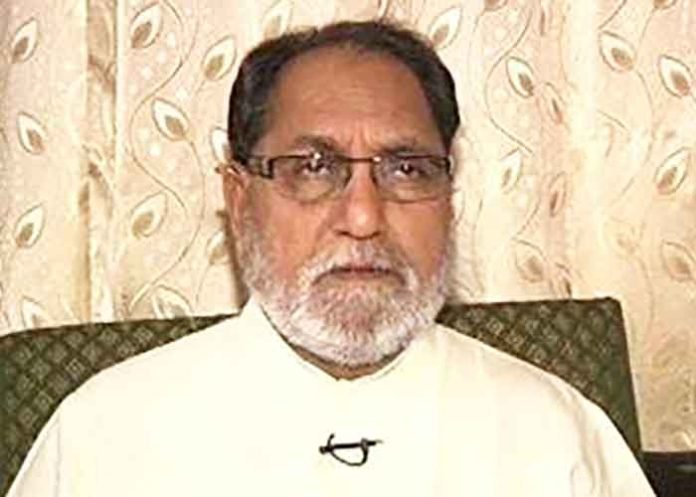
Congress leader Husain Dalwai on Wednesday criticised the Centre’s decision to make it mandatory to play or sing the complete six-stanza version of Vande Mataram at official occasions, calling the move “forceful” and claiming that it goes against earlier decisions on the national song’s recognition.

Reacting to the government’s fresh directive, Dalwai said, “This is forceful and wrong. It goes against the earlier decision. They do this deliberately…”

He further stated, “In the first stanza of Vande Mataram, it speaks about the nation, but later it refers to deities. This country is secular… Muslims do not oppose the first stanza of Vande Mataram. Therefore, by deliberately making all six stanzas mandatory, there has been an attempt somewhere to target Muslims. This is being done intentionally, which is wrong.”

Emphasising that there has historically been broad acceptance of the opening verse, Dalwai added, “Everyone says Vande Mataram and it should be respected, but only the first stanza of Vande Mataram has recognition. The committee formed for this included Shyama Prasad Mukherjee and Maulana Azad, and all of them had given recognition to it. However, all six stanzas were not given recognition.”

The Congress leader’s remarks come amid a political debate over the Centre’s newly-issued comprehensive guidelines governing the rendition of Vande Mataram at official functions.

Earlier in the day, the Union Home Ministry released detailed directives formalising the status and ceremonial role of the national song at public and government events across the country. The guidelines specify how and when Vande Mataram should be performed and outline the expected decorum from attendees, particularly in relation to the National Anthem.

As per the new protocol, the complete official version of Vande Mataram, comprising six stanzas and lasting approximately 3 minutes and 10 seconds, is to be performed or played during major state occasions. These include events such as the unfurling of the national flag, formal arrival and departure ceremonies of the President and Governors at official programmes, and before and after their scheduled addresses at such functions.

The directive underscores adherence to proper conduct during the rendition, placing greater emphasis on its observance at state and institutional gatherings.(Agency)

‘I’m confident that Siddaramaiah will keep promise’: Shivakumar’s brother on Karnataka Cong crisis

CM-Siddaramaiah-said

Bengaluru, Feb 11, 2026
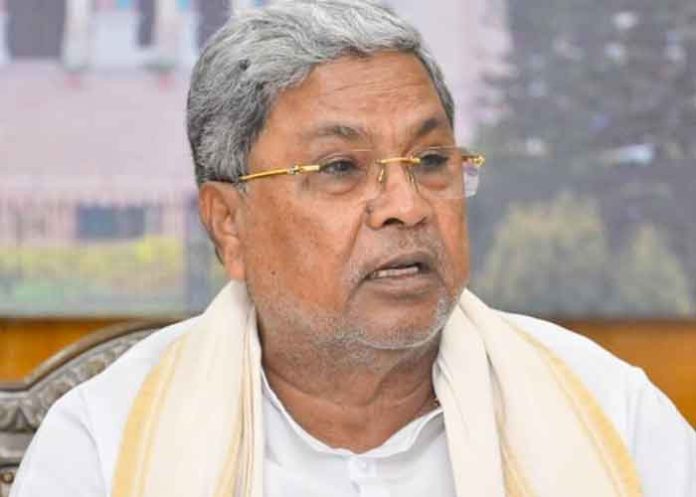
The Karnataka Congress crisis is likely to escalate, with Deputy Chief Minister D.K. Shivakumar’s brother and former Congress MP D.K. Suresh stating that he is confident Chief Minister Siddaramaiah will keep his word, hinting at a power-sharing formula.

The development took another serious turn with Deputy CM Shivakumar reiterating in Delhi that he and Siddaramaiah had spoken to each other in the presence of national leaders and that he would speak about it when the time comes.

Speaking to the media in Bengaluru on Wednesday, D.K. Suresh said, in response to a question, that he is confident that though it may be delayed, Chief Minister Siddaramaiah will keep his word.

Replying to questions regarding a possible leadership change and D.K. Suresh’s statement, Siddaramaiah said the media should not repeatedly ask the same question.

“Whatever the high command’s decision is, it has to be abided by both me and Shivakumar. The matter is left to the high command,” Siddaramaiah said.

“You (the media) keep leaving other issues and repeatedly ask me about the leadership change. Ask those who are making statements. Why do you ask me?” he said angrily, adding, “I will abide by whatever the high command decides.”

Responding to a question about legislators undertaking foreign tours to New Zealand and Australia, he said that MLAs and MLCs are travelling abroad at their own expense.

Siddaramaiah further said that meetings are being held with various departments and that the date of the Budget will be announced shortly.

Meanwhile, speaking to the media in Delhi, Deputy Chief Minister and State Congress President D.K. Shivakumar said on the leadership tussle, “I have already stated that the Chief Minister and I know what we have spoken to each other. We will speak about that later.”

When asked about his repeated statement that time will answer all questions, Shivakumar said he would respond at an appropriate time.

Responding to a question about D.K. Suresh’s statement that he is confident Chief Minister Siddaramaiah will keep his word, though delayed, Shivakumar said, “I have already said that time will answer.”

The development has assumed significance with the Deputy Chief Minister Shivakumar loyalists are openly demanding the high command’s intervention to end the confusion on leadership in Karnataka.

Shivakumar himself has made a public statement on the mutual agreement made with CM Siddaramaiah in the presence of national leaders.(Agency)

Ameesha Patel relives her college days as she returns to Boston

Ameesha Patel Actress 1

Mumbai, Feb 11, 2026

Actress Ameesha Patel decided to relive some of her fond memories from her college days as she visited Boston, U.S., where she went to university.

As part of her visit, Ameesha strolled through some familiar places, such as Boston Commons, Faneuil Hall, Copley Square, Newbury Street, Boston Harbour – all the places she used to visit during her student days.

A nostalgic Ameesha published a video of herself soaking in all the beauty of Boston.

Her post further included an emotional note, reflecting on her University days.

The ‘Gadar’ actress wrote on the photo-sharing app, “BOSTON—Strolling the Boston Commons, Fanieul Hall, Copley Square, Newbury Street, Boston harbour n wharf, doing part of the Freedom Trail n hopping in n out of the Prudential centre just seems soo natural!! Something I did as a student for 4 years whilst studying at Tufts University! The past student in me has melted in 2 the present girl! And I can’t seem to feel the Diffenrence!! These streets n areas make me feel like I belong here! BOSTON — willll always always have my heart (sic),” followed by a red heart emoji.”

Before this, Ameesha shared another glimpse of her Boston trip, along with the caption, “BOSTON —-back to my city where I studied n went to University !! Reliving my student days feels surreal”.

For the unaware, Ameesha completed her schooling at Cathedral and John Connon School in Mumbai. After this, she went on to attend the Tufts University in Boston, where she initially studied bio-genetic engineering for two years before switching her major to economics.

On the work front, Ameesha recently completed 26 years in Bollywood on January 14.

She made her acting debut with the blockbuster hit “Kaho Naa Pyaar Hai”, which made her and her co-star, Hrithik Roshan, overnight stars.(Agency)

Ameesha-Patel-Actress

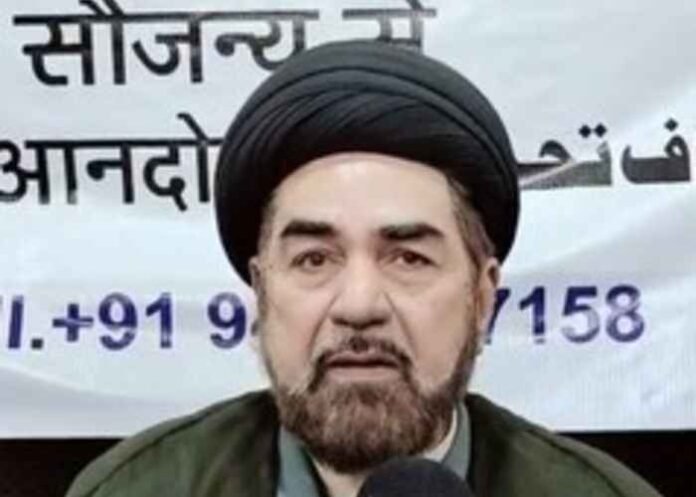
‘There should be freedom, can’t force it on anyone’: Shia cleric Kalbe Jawad on new ‘Vande Mataram’ protocol

Lucknow, Feb 11, 2026

As the Union Home Ministry issued fresh guidelines mandating that all six stanzas of ‘Vande Mataram’ be sung or played at designated government functions and in schools across the country, Shia Muslim cleric Kalbe Jawad on Wednesday said there should be freedom and that it cannot be forced on anyone.

The new rules also state that when both the national song and the national anthem are performed at the same event, ‘Vande Mataram’ must precede ‘Jana Gana Mana’.

Reacting to the guidelines, the Lucknow-based cleric said that people should have the freedom to choose whether they want to recite the song or not. He also pointed out that Bankim Chandra Chatterjee wrote ‘Vande Mataram’ during British rule and said it was originally meant as a message against colonial rulers.

Talking to IANS, Kalbe Jawad said: “There should be freedom, whether you read it or not. You cannot force anything on anyone. You cannot force religion on anyone. This is a religious slogan.”

“Chattopadhyay wrote this at a time when the British were ruling in the country. He wrote it in his book when we had not yet got freedom from the British. He wrote that book to advocate against the British. So, it was meant for the British, not for India or the countrymen.”

“But making it necessary for everyone is not good. There should be freedom in whether someone reads it or not,” he further said.

The Union Home Ministry said that those present are required to stand to attention during the rendition of the national song. However, it clarified that this requirement will not apply in cinema halls when the song is played as part of a film or documentary.

Until now, ‘Vande Mataram’ has not had a clearly defined national protocol, unlike the national anthem, which has long been governed by formal rules and guidelines.

According to the Centre, the move is aimed at standardising respect for the national song and removing what it described as an artificial distinction between ‘acceptable’ and ‘excluded’ verses. The government has argued that the song should be treated as a single, complete composition, as originally written by Bankim Chandra Chatterjee, rather than as a selectively edited text.

The guidelines have been issued amid the Narendra Modi government’s year-long programme marking 150 years of ‘Vande Mataram’. They also follow an extended parliamentary debate in which the ruling party questioned why a national symbol continued to be used in a truncated form decades after Independence.(Agency)

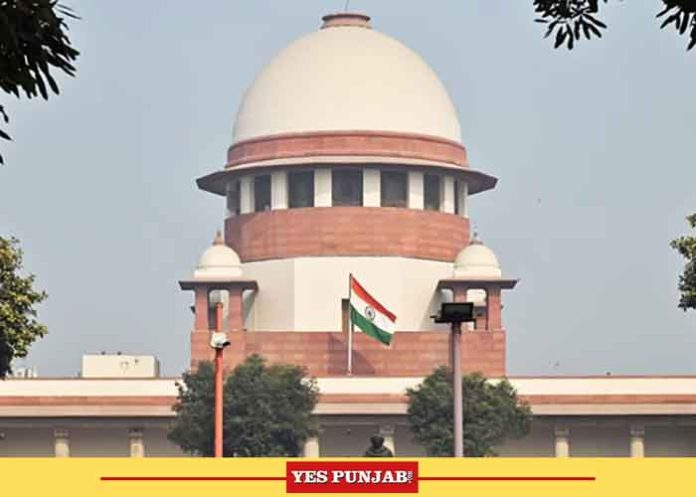
SC asks Calcutta HC to examine NIA’s invocation of UAPA in Beldanga violence case

Supreme Court orders

New Delhi, Feb 11, 2026

The Supreme Court on Wednesday asked the Calcutta High Court to independently examine whether the invocation of provisions of the Unlawful Activities (Prevention) Act (UAPA) by the National Investigation Agency (NIA) was justified in connection with the recent violence at Beldanga in West Bengal’s Murshidabad district.

A Bench of Chief Justice of India (CJI) Surya Kant and Justice Joymalya Bagchi was hearing a petition filed by the West Bengal government challenging the Calcutta High Court order, which had granted liberty to the Union government to consider an NIA probe into the Beldanga violence, along with the subsequent notification by the Union Ministry of Home Affairs entrusting the probe to the anti-terror agency.

Dismissing the state government’s plea, the apex court directed the NIA to submit its status report — whether post-investigation or during the course of investigation — before the Calcutta High Court in a sealed cover, indicating whether a prima facie case under the UAPA was made out on the basis of material gathered.

“Since there are only passing observations in the impugned order of the High Court, without any definite opinion in relation to the attraction of the UAPA, we request the High Court to consider the status report of the NIA independently and issue consequential directions,” the CJI Kant-led Bench ordered.

The apex court clarified that it has not expressed any opinion on the merits of the matter and directed that the West Bengal government’s plea be heard by a Division Bench headed by the Chief Justice of the Calcutta High Court, before whom a related petition is already pending.

During the hearing, the CJI Kant-led Bench orally questioned the basis on which the NIA had invoked the UAPA while registering the FIR in the matter.

“Without looking into documents, you have said Section 15 UAPA is justified. The case diary was not placed before you. This is a pre-decisional conclusion arrived at,” it observed.

The Supreme Court cautioned that “every emotional outburst cannot be packaged as a threat to economic security”.

Senior advocate Kalyan Banerjee, appearing for the West Bengal government, submitted that no scheduled offence under the NIA Act had been committed to warrant the Central agency’s intervention.

He argued that the West Bengal Police had already registered FIRs and made arrests in connection with the violence and questioned how the offence of terrorism under Section 15(1) of the UAPA was attracted, particularly in the absence of explosives.

At this, the CJI Kant-led Bench remarked that these submissions could be made before the Calcutta High Court while seeking reconsideration of the earlier order.

Additional Solicitor General (ASG) S.V. Raju, representing the Centre, informed the apex court that the Union Ministry of Home Affairs had, on January 28, directed the NIA to take over the investigation.

The Centre’s law officer argued that the incident occurred near the Bangladesh border, involved the use of deadly weapons, and raised concerns relating to national security. “This is a porous border near Bangladesh. There was violence, and deadly weapons were used. We are doing an independent investigation. They are not handing over probe papers to us. Please direct them to do so,” ASG Raju submitted, alleging non-cooperation by the West Bengal Police.

The Supreme Court observed that while the state government had challenged an order giving liberty to the Centre to entrust the probe to the NIA, the question whether the anti-terror agency’s invocation of UAPA provisions was justified would have to be assessed by the Calcutta High Court upon perusal of the material placed before it.

In an order passed on January 20, a Division Bench of the Calcutta High Court, headed by Chief Justice Sujoy Paul, had granted liberty to the Union government to order an NIA probe into the violence and tension that prevailed for two days in Beldanga, a minority-dominated area of Murshidabad district, following protests over the alleged murder of a migrant worker in Jharkhand.

Acting on a public interest litigation (PIL) filed by the Leader of Opposition in the West Bengal Assembly, Suvendu Adhikari, the Calcutta High Court also directed the deployment of Central Armed Police Forces (CAPF) in the troubled area till normalcy was restored. Subsequently, the Union Ministry of Home Affairs handed over the probe to the NIA, prompting the West Bengal government to move the Supreme Court. (Agency)

Dehradun firing: Gas agency operator killed in broad daylight, IG assures strict action

Pistol-Gun-Shot

Dehradun, Feb 11, 2026

Unidentified assailants shot dead a 40-year-old businessman in broad daylight at the busy Tibetan Market area of Dehradun on Wednesday, triggering panic among shopkeepers and passersby

The deceased has been identified as Arjun Sharma, the operator of Amardeep Gas Agency located on GMS Road. According to officials, Sharma was attacked by armed assailants who opened fire at him before fleeing the spot.

He was immediately rushed to Doon Hospital, where doctors declared him brought dead.

Confirming the incident, IG Garhwal Range, Rajeev Swaroop said, “An incident has taken place in which a person named Arjun Sharma had come here when some attackers opened fire at him. He was then admitted to Doon Hospital, where doctors declared him dead. The SSP Dehradun has visited the spot.”

Police teams have cordoned off the area and launched a manhunt to trace the accused. Forensic teams have collected evidence from the crime scene, and CCTV footage from nearby establishments is being examined to identify the attackers.

Vijay, who had reportedly been working with Sharma for several years, alleged that the deceased had a property-related transaction worth around Rs 40–42 crore with a person named Vijay Uniyal. He claimed that Sharma had received threats earlier in connection with the property dispute.

Police said they are verifying all angles, including the alleged property dispute. The matter is linked to the Vasant Vihar Police Station area.

Assuring strict action, IG Swaroop said, “We will review all these incidents very thoroughly and seriously. Wherever there is any negligence, and if it is found that any personnel have been careless in their duties, strict action will be taken against them. We will further strengthen effective policing measures in the coming days, building on the systems already in place, to ensure that such crimes are prevented and controlled effectively.”

He added that while 2025 had largely remained incident-free, there had been a slight increase in such incidents over the past 15–20 days.

“We are analysing all aspects of this matter. We have reviewed the situation thoroughly and will fix accountability and responsibility, clearly determining who is responsible for what. If any incident occurs within a particular jurisdiction, the accountability of the concerned Station House Officer and the area officer will also be fixed accordingly,” the IG said.

Further investigation into the case is underway.(Agency)

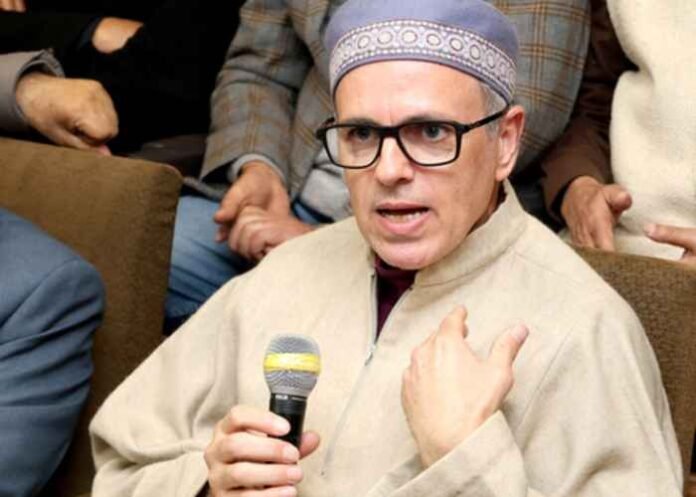
BJP MLAs stall proceedings of J&K Assembly over Omar Abdullah’s ‘unparliamentary remarks’

Jammu, Feb 11, 2026

Opposition Bharatiya Janata Party (BJP) MLAs stalled the proceedings of J&K Legislative Assembly on Wednesday when they stormed into the Well of the House demanding an apology from the Chief Minister, Omar Abdullah, for what they alleged were his unparliamentary remarks.

Before creating the ruckus, BJP members had staged a walkout from the House and then returned at the end of the Question Hour.

The BJP members said the Chief Minister had left the House when he saw the BJP members entering the Assembly at the end of the walkout.

They gathered in a row and continued chanting slogans against the government seeking apology from the Chief Minister.

However, the Speaker said they cannot raise the issue again after walking out from the House on the issue.

The Speaker ruled that the BJP protest should not be recorded in the House proceedings.

Later, the BJP members stormed into the Well of the House and staged a sit-in.

Earlier, also the House witnessed noisy scenes before the question hour when Sham Lal Sharma of the BJP stood up and asked the chief minister to apologise.

Sharma said such an incident has no precedent in the history of Jammu and Kashmir Assembly.

“The language used by the chief minister, is not the language that can be used in any Parliament. I want to ask the Leader of the House whether he withdraws the words he used yesterday in this House about the BJP legislative party. If he does not withdraw them, then we leave it to his conscience, what his inner voice tells him, whether the words used in this House were appropriate or not. If the chief minister is not present here, then I leave it to the Chair to make a response. It is your responsibility to say something about this matter,” he said.

Speaker, Abdul Rahim Rather tried to persuade the BJP members to allow the Question Hour to continue and rake up the issue when the Leader of the House is on the floor.

“Whatever happened yesterday (Tuesday) was unfortunate. Let the chief minister come and if he wishes he can make a statement. I can’t make a statement on his behalf,” the Speaker said.

Health Minister Sakeena Itoo accused BJP members of using unparliamentary words as well, particularly against Deputy Chief Minister Surinder Choudhary and speaking lies in the House.

Choudhary suggested the chair to examine all the unparliamentary words used from both sides and expunge these from the records to continue the proceedings without any disruption.

Leader of Opposition, BJP MLA, Sunil Sharma opposed the suggestion and refused to budge and later led the walkout, chanting slogans like “derogatory Sarkar Hai Hai, unparliamentary Sarkar Hai Hai, Bharat Mata ki Jai”.

Pandemonium had broken out in the House during Omar Abdullah’s speech yesterday when BJP members objected to some of his remarks against them and demanded an apology.

Omar Abdullah was winding up the discussion on the Union Territory’s Budget presented on February 6 when BJP members termed certain remarks made by him “unparliamentary.”

While the chief minister has ruled out apologising to BJP members for the remarks, saying he was willing to withdraw his words, but was not allowed to speak amid repeated disruptions, Sham Lal Sharma said the party would not allow the House to function until Omar Abdullah tendered an unconditional apology on the floor of the House.

The NC government is supported by 6 Congress MLAs while the opposition is constituted by 29 BJP members, 4 PDP, one PC, 1 AIP and one AAP member.(Agency)

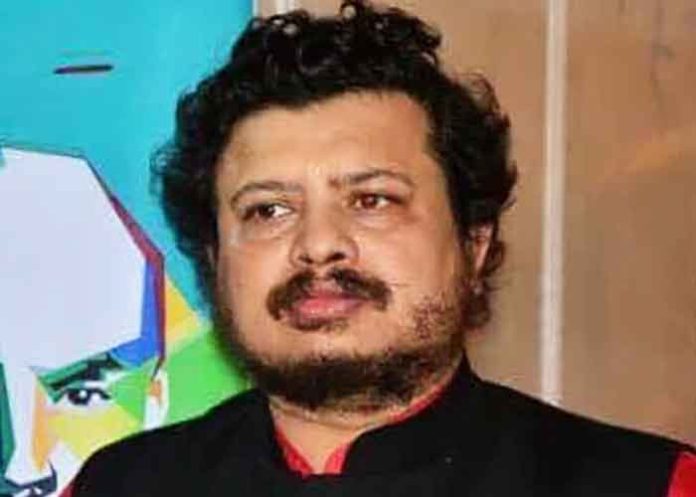
Bengal revolutionaries who never wrote ‘mercy petitions’ forgotten: Trinamool MP in Rajya Sabha

Ritabrata Banerjee

New Delhi, Feb 11, 2026

Trinamool Congress Rajya Sabha member Ritabrata Banerjee on Wednesday highlighted during Zero Hour the overlooked legacy of 12 fearless freedom fighters from West Bengal, deported to the notorious Cellular Jail in the Andaman Islands following the landmark Alipore Bomb Case (also known as the Alipore Conspiracy Case) of 1908-1909.

In his intervention, Banerjee drew attention to prominent revolutionaries Barindrakumar Ghosh (Barin Ghosh), Ullaskar Dutt, and Hem Chandra Kanungo (Hemchandra Das Kanungo), who were among those sentenced and transported for life after the trial stemming from revolutionary activities aimed at overthrowing British colonial rule.

“These are the uncompromised figures who fought against the British colonial power,” Banerjee stated.

Barindrakumar Ghosh, brother of Sri Aurobindo Ghosh, established bomb-making units and an underground network in West Bengal as part of the Jugantar and Anushilan Samiti movements. Ullaskar Dutt was the principal bomb-maker for the group, while Hem Chandra Kanungo returned from Paris with expertise in explosives and revolutionary organisation.

The MP emphasised that the 12 revolutionaries, including the three he spotlighted, endured years of brutal torture in the Cellular Jail — infamous as ‘Kala Pani’ for its harsh solitary confinement, hard labour like oil extraction, and dehumanising conditions — yet remained steadfast.

Banerjee lamented that these heroes have been “conveniently forgotten”, contrasting their resolve with others who sought clemency.

“These revolutionaries never ever wrote a mercy petition,” he asserted, adding that they deserve due respect and recognition for their unwavering commitment to India’s Independence struggle.

The Alipore case, tried in Calcutta’s Sessions Court from 1908 to 1909, involved charges of waging war against the Crown following bomb-making and assassination attempts, including the Muzaffarpur bombing targeting a British magistrate.

While some, like Sri Aurobindo, were acquitted, Barin Ghosh and Ullaskar Dutt initially faced death sentences (later commuted to life imprisonment), and others received transportation for life.

Banerjee’s comments arose amid debates on the recognition of Bengal’s revolutionary contributions, which included a notable number of early inmates at Cellular Jail (approximately 46 Bengalis among the initial groups from 1909-1921). He urged Parliament and the nation to accord these “uncompromised” figures the honour they merit, ensuring their sacrifices are remembered in India’s freedom narrative.(Agency)

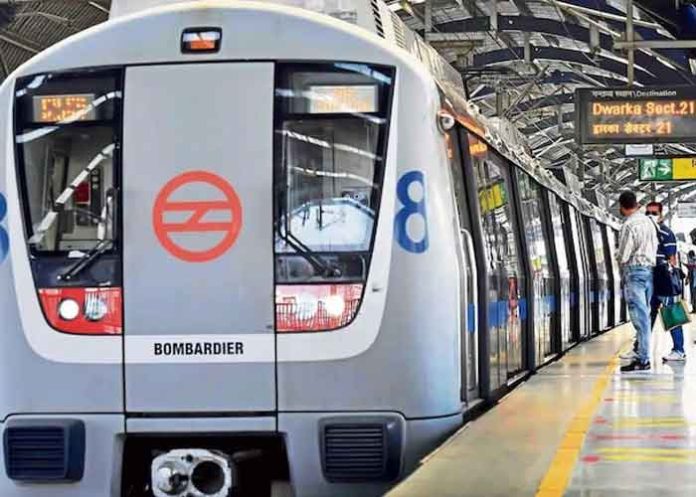
Magenta Line to become longest Delhi Metro corridor with maximum interchanges, underground stations

Delhi Metro

New Delhi, Feb 11, 2026

The Magenta Line (Line-8) of the Delhi Metro network is set to emerge as the longest corridor in the system, featuring the highest number of interchange stations and underground stations. The expansion is expected to significantly enhance cross-city connectivity across Delhi-NCR, officials said on Wednesday.

In light of the recently sanctioned Phase –V (A) corridor, namely Line 8 (Magenta Line) extension from Ramakrishna Ashram Marg to Indraprastha (Via Central Vista), the Indraprastha – Inderlok corridor of Phase –IV shall be implemented as an extension of the Magenta Line.

With these additions, the total length of the Magenta Line, stretching from Noida Botanical Garden to Inderlok, will be approximately 89 kilometres, making it the longest corridor in the Delhi Metro network. The line will run from Botanical Garden to Inderlok and, once fully operational, will function entirely as a driverless Metro corridor, Anuj Dayal, Principal Executive Director (Corporate Communications), DMRC, shared the details of the project expansion.

Following completion of the Phase-IV and Phase-V (A) expansions, the Magenta Line will have a total of 21 interchange stations. At present, the operational stretch has four interchange stations — Kalkaji Mandir, Botanical Garden, Janakpuri West and Hauz Khas.

An additional 17 interchange stations will be added under Phase-IV and Phase-V (A). These include Kalindi Kunj, Chirag Delhi, Terminal-1 IGI Airport, Peeragarhi, Pitampura (Madhuban Chowk), Haiderpur Badli Mor, Majlis Park, Azadpur, Pulbangash, Nabi Karim, Ramakrishna Ashram Marg, Shivaji Stadium, Central Secretariat, Indraprastha, Delhi Gate, New Delhi and Inderlok.

Officials said that Central Secretariat, Azadpur, New Delhi and Inderlok will become triple interchange stations, offering connectivity with three different Metro lines each.

Once completed, the Magenta Line corridor from Botanical Garden to Inderlok will have 65 stations, out of which 40 will be underground stations. The extensive interchange facilities are expected to reduce travel time, decongest major corridors and provide seamless end-to-end connectivity across Delhi-NCR.

The Magenta Line is also distinguished by hosting two significant engineering landmarks of the Delhi Metro network. Haiderpur Badli Mor, located on this corridor, is the highest elevated station in the system (Rail level height of approximately 28.362 metres at Pier no 340), while Hauz Khas, also on the Magenta Line, is the deepest underground Metro station (at approx 29 metres). These milestones highlight the corridor’s complex engineering and technological excellence.(Agency)