Saturday, February 21, 2026
Home Blog Page 147

‘Stand firmly with issues, struggles of workers, farmers’: Rahul Gandhi on Bharat Bandh

Rahul Gandhi Congress LoP

New Delhi, Feb 12, 2026

As the joint forum of central trade unions announced nationwide protests against the Centre’s labour and economic policies, Congress leader Rahul Gandhi, on Thursday, extended his support, saying he stands firmly with the issues and struggles of workers and farmers.

Rahul Gandhi said that workers fear the four labour codes will weaken their rights, while farmers believe the India-US trade agreement could harm their livelihoods.

Taking to social media platform X, Rahul Gandhi wrote, “Today, lakhs of laborers and farmers across the country are on the streets to raise their voice for their rights. Workers fear that the four labor codes will weaken their rights. Farmers fear that the trade agreement will hurt their livelihoods.”

He further warned that weakening or eliminating the Mahatma Gandhi National Rural Employment Guarantee Act (MNREGA) could take away the last support system for villages.

“And weakening or eliminating MNREGA could take away the last support of the villages. When decisions were made about their future, their voices were ignored. Will Modiji listen now? Or does someone have a very strong grip on him? I stand firmly with the issues and struggles of the workers and farmers,” Gandhi said.

Farmer unions under the banner of SKM have announced nationwide protests, calling the interim India-US trade framework “a direct threat to Indian agriculture, dairy and rural livelihoods”. The unions have planned demonstrations across the country, culminating in a general strike.

The farmer unions have argued that the “framework contradicts” repeated assurances by Commerce Minister Piyush Goyal that agriculture and dairy would be kept outside Free Trade Agreements (FTAs). They also raised concerns over provisions in other recent FTAs, including those signed with New Zealand, the European Union (EU) and the UK.

Farmer organisations have further highlighted that tariffs on Indian goods entering the US have risen to 18 per cent compared to the period before US President Donald Trump introduced his so-called reciprocal tariffs.

The unions have demanded that the government clarify its stand on agriculture and dairy in trade negotiations and protect domestic farmers and rural workers from potential adverse impacts.

Meanwhile, Tamil Nadu is set to witness disruptions in banking, public services and sections of transport operations on Thursday as trade unions across the state join a nationwide general strike called to press the Union government to roll back key labour reforms and policy decisions.

The strike, observed across nearly 600 districts in the country, has been organised by 10 central trade unions, including the All India Trade Union Congress (AITUC) and the Centre of Indian Trade Unions (CITU).

Trade union leaders claim that nearly 30 crore workers are participating in the protest.

In Tamil Nadu, the ruling DMK’s trade union wing, the Workers Progressive Association (WPA), has extended support to the strike.

Farmer groups under the banner of the Joint Kisan Morcha and several student organisations have also backed the agitation, broadening its support base.

The protesters are demanding the withdrawal of the four new labour codes, alleging they were passed without adequate consultation with state governments and trade unions.

Other key demands include halting amendments to the Electricity Act, ensuring a five-day work week for bank employees, stopping privatisation of public sector undertakings, and condemning changes made to the rural employment guarantee scheme.

The Aam Aadmi Party (AAP) has also announced support for the nationwide Bharat Bandh. The AAP appealed to all workers, farmers, shopkeepers, small traders and common citizens in Punjab and across the country to make the Bharat Bandh a success in a peaceful manner.

The party said this bandh is not about any one political party, but about the self-respect, justice and rights of crores of hardworking people, and affirmed that the AAP stands on the frontline of this struggle.

The AAP condemned the BJP-led Union government’s “anti-worker labour policies and anti-farmer economic decisions”. It announced that its cadres across Punjab and the rest of the country would join the shutdown shoulder to shoulder with workers and farmers.(Agency)
India reducing Russian oil buys, claims US

Washington, Feb 12, 2026

The United States has claimed India has been “reducing” its purchases of Russian oil and diversifying energy imports, as lawmakers pressed the State Department on enforcement challenges tied to Moscow’s war in Ukraine.

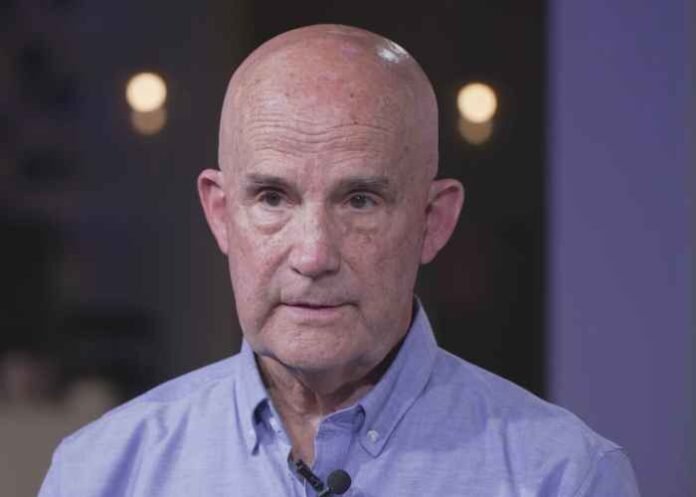
During a House subcommittee hearing on South and Central Asia on Wednesday (local time), Republican Rep. Keith Self raised concerns that continued Russian oil sales were helping finance the war.

“The sale of Russian oil continues to fund the Ukraine war,” Self said, questioning how Washington would ensure compliance if India pledged to scale back purchases.

“Does that include third-party traders, blended cargo, ship-to-ship, ghost ships?” Self asked, referring to mechanisms used to obscure energy origins.

Assistant Secretary of State for South and Central Asian Affairs Paul Kapur said enforcement questions would fall outside his bureau but acknowledged the broader issue.

“I don’t know the details of how that’s going to be worked out. I’m happy to stay in touch with you about it,” Kapur said.

However, he emphasised a shift underway in India’s energy sourcing.

“The Indians have been reducing their purchases of Russian oil and diversifying away, which is what we wanted them to do,” Kapur said.

“They’ve actually been buying more US energy,” he added.

Kapur suggested that substituting US supplies could offer a constructive path forward.

“That’s, I think a promising possibility is to substitute some US energy for the Russian energy, but other — and buying from other places around the world too, of course,” he said.

Self argued that enforcement complexities could undermine sanctions.

“We have credible reports … that Russia sold energy to India, which turned around and then exported it to Europe,” he said, warning that indirect trade flows could blunt Western efforts to restrict Moscow’s revenues.

The exchange underscored the delicate balance in US-India relations, where Washington has sought to expand trade and defence cooperation while encouraging New Delhi to reduce reliance on discounted Russian crude. However, India has not yet made any official comments on this.

India has historically maintained strategic autonomy in foreign policy and energy sourcing, even as it deepens ties with Washington through the Quad and other Indo-Pacific frameworks.

Kapur did not offer specific figures but framed India’s diversification as aligned with US objectives.

The issue highlights the broader geopolitical crosscurrents shaping US engagement in South Asia — strengthening partnerships with India while navigating the global ramifications of the Ukraine conflict and sanctions enforcement.

Since Russia’s invasion of Ukraine in 2022, Western nations have imposed sweeping sanctions on Moscow’s energy exports.

India increased purchases of discounted Russian crude in the early phases of the conflict, arguing energy security concerns, but has faced sustained diplomatic pressure from the United States and European partners to diversify supply sources.(Agency)

Diego Garcia vital for Indo-Pacific security, countering China, says US

Washington, Feb 12, 2026

Underscoring the strategic importance of the US naval support facility at Diego Garcia, lawmakers and a senior State Department official have said that safeguarding Indian Ocean sea lanes is central to countering China’s growing influence in the Indo-Pacific.

During a House subcommittee hearing on South and Central Asia, Congressman Bill Huizenga said: “The Indian Ocean is one of the busiest maritime corridors on the earth, carrying the lifeblood of global commerce and energy, including more than 80 per cent of global seaborne oil trade.”

“Safeguarding these sea lanes through enhanced naval cooperation with partners and allies will only serve to counter China’s growing influence and limit its malign behaviour in the region,” he added.

Huizenga stressed the importance of the US naval base in the region. “I see the importance of our naval base on Diego Garcia in the middle of the Indian Ocean,” he said, adding that “Preserving America’s military fortitude in the region will deter Chinese coercion, prevent piracy, and ensure the free flow of American and world trade.”

Assistant Secretary of State for South and Central Asian Affairs Paul Kapur echoed the strategic framing, placing the Indian Ocean at the heart of broader Indo-Pacific policy.

“The Indian Ocean is actually the — the Indo piece of the Indo Pacific,” Kapur said. “One of the insights of that term is that it recognises that this is a holistic — we have to take a holistic approach to the region.”

“We think about the Pacific, it’s not in isolation, but it actually connects all the way to the — to the Indian Ocean and even to the east coast of Africa,” he added.

On Diego Garcia specifically, Kapur said: “Diego Garcia is in kind of in the — in the middle of the ocean, but it’s a very important outpost for projecting air power, particularly.”

“The President has said that it’s a crucial asset,” he said.

Lawmakers also raised concerns about China’s expanding infrastructure footprint across Indian Ocean states.

Kapur warned that smaller regional countries can have “outsized impact on trade and energy flows” because of their geography and stressed the importance of strategic autonomy.

“It’s very important that those countries are able to maintain their freedom of action and not be coerced by China by predatory lending,” he said.

Citing Sri Lanka’s Hambantota Port, he noted: “If you think about Sri Lanka and Hambantota Port, they have a 99-year lease on it. Those are the kinds of dangers that we see with Chinese development schemes.”

Asked about Chinese activity in the Maldives, Kapur acknowledged: “There’s been some Chinese investment there,” adding Beijing is “interested for sure.”

He said Washington must provide viable alternatives.

“We need to be able to offer alternatives, high-quality, transparent, non-coercive alternatives,” Kapur said, pointing to US financing tools, technology, and private sector engagement.

The exchanges highlighted bipartisan concern over China’s efforts to expand economic and strategic leverage across maritime chokepoints in the Indian Ocean — a region critical to global energy supplies and trade flows.

Diego Garcia, located in the British Indian Ocean Territory, has served for decades as a key US logistics and air operations hub supporting missions across the Middle East, Africa and Asia.

The Indian Ocean’s sea lanes connect energy producers in the Gulf with markets in Asia and beyond, making control and access to maritime infrastructure central to strategic competition between Washington and Beijing.(Agency)

US lawmakers seek Ambassador Sergio Gor’s testimony on India

Washington, Feb 12, 2026

Lawmakers pressed the State Department to make the US ambassador to India available for congressional testimony, underscoring the strategic importance of the bilateral relationship and calling for greater oversight.

During a House subcommittee hearing on South and Central Asia on Wednesday (Local time), Democratic Ranking Member Sydney Kamlager-Dove asked Assistant Secretary of State for South and Central Asian Affairs Paul Kapur whether he would work with lawmakers to bring Sergio Gor, Ambassador to India, before the committee.

“You oversee the ambassadors,” Kamlager-Dove said, adding that “it would be important for him, given both of his roles, to come before the committee and answer questions, because as you mentioned, as we’ve all mentioned, this is an incredibly strategic and important and mighty region.”

Kapur defended the ambassador’s performance.

“Mr. Gor is, I think, a very effective ambassador,” he said.

He added that Gor “has done under his — actually, just he’s been there a short time. We’ve had a number of really good outcomes.”

Kapur also emphasised Gor’s relationship with the White House.

“He’s also a close confidant of the President. He has his trust and confidence, and he and I work together well,” he said.

However, Kapur stopped short of committing to a public appearance before the panel.

“I will discuss — discuss this possibility,” he said.

Kamlager-Dove pressed further, asking directly whether Kapur would “work with us to bring him here.”

“Well, he and I discuss many issues, and we will discuss — discuss this possibility,” Kapur repeated.

During the hearing, Kapur described India as anchoring “the western half of the Indo-Pacific,” while lawmakers highlighted the importance of the new US-India trade framework and expanding defence ties.

The request for Gor’s testimony comes amid heightened attention to ambassadorial accountability and coordination between the State Department and Congress.

Lawmakers signalled that, given India’s central role in US strategy — from counterbalancing China to maritime security in the Indian Ocean — direct engagement with the ambassador would provide clarity on diplomatic priorities and implementation.

Kapur reiterated that he and the ambassador maintain regular coordination and that Gor holds the President’s “trust and confidence.”

The hearing concluded without a firm commitment on timing, but the issue underscored Congress’s intent to remain closely involved in shaping and monitoring US engagement in South Asia’s most consequential bilateral relationship.

The US-India relationship has expanded significantly over the past two decades across defence, trade and technology sectors. As Washington positions New Delhi as a central partner in the Indo-Pacific, congressional oversight of diplomatic leadership and policy execution has taken on added significance.(Agency)

Concern grows in US over fate of Afghans awaiting resettlement

Washington, Feb 12, 2026

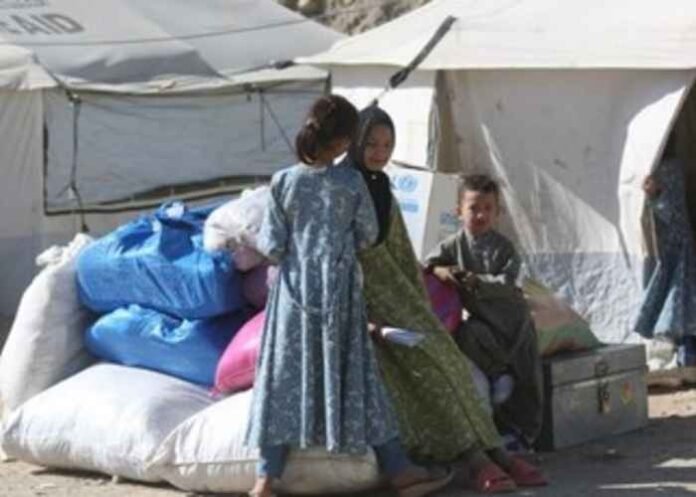
US lawmakers pressed the State Department over the fate of Afghan allies awaiting relocation, raising concerns about payments for voluntary return and the planned closure of a processing facility housing more than 1,000 Afghans.

During a House subcommittee hearing on South and Central Asia on Wednesday (local time), Assistant Secretary of State for South and Central Asian Affairs Paul Kapur faced pointed questions about US policy toward Afghans still in limbo.

The State Department “aims to close down” the relocation facility at CAS by the end of March and relocate “over 1000 Afghans to third countries,” Democratic Ranking Member Sydney Kamlager-Dove said, describing the situation as “a living nightmare” for those awaiting resettlement.

Kapur confirmed the numbers.

“There are between 1100 and 1200 Afghans on the facility at CAS, and we’re looking to relocate them,” he said.

“We’re in negotiations with third countries to do that,” Kapur added, arguing that indefinite stays were not viable. “Keeping them indefinitely on CAS is really not humane.”

Lawmakers questioned reports that the department was offering payments for voluntary departure.

Kamlager-Dove said the State Department “is offering payments to Afghan allies at best to self-deport back to the Taliban,” and asked how many had accepted.

“I believe it’s in the neighbourhood of 150,” Kapur responded, adding that he would confirm the figures.

He emphasised that returns were not being forced.

“We are not forcibly repatriating Afghans to Afghanistan; some have gone of their own volition, but we’re not forcing anybody,” Kapur said.

The hearing also addressed congressional oversight of the relocation process. Congress passed a law in 2024 requiring the appointment of a coordinator for Afghan relocation efforts.

Asked whether he was now serving in that role, Kapur said: “I am the Assistant Secretary of South and Central Asia, and care comes under SCA, the Office of Afghan Affairs.”

“I have that responsibility structurally now,” he added.

Kamlager-Dove urged greater transparency and regular briefings for members and staff, warning that the administration’s handling of Afghan allies would shape its legacy.

“The betrayal of our Afghan allies” is “one of the great moral catastrophes of this administration,” she said, adding that the issue would be remembered “for the history books.”

Subcommittee Chair Bill Huizenga also pressed Kapur for updates on the broader Afghanistan policy review, which he described as an “ongoing process.”

Kapur said the review was “an ongoing process” and “an interagency process,” adding that he would remain “as transparent and open as I possibly can be.”

The exchange reflected continuing tensions in Washington over the aftermath of the 2021 withdrawal and the handling of Afghans who worked alongside US forces.

Lawmakers also raised concerns about women and girls in Afghanistan and educational access, with Kapur saying the United States “support(s) that women should, and girls should be educated just like boys and men.”

The debate comes as the administration recalibrates its South and Central Asia strategy, balancing regional security priorities with humanitarian obligations.

Following the 2021 US withdrawal from Afghanistan and the Taliban’s return to power, thousands of Afghans who assisted American forces sought relocation under special visa and resettlement programs.(Agency)

US deepens minerals, security ties with Pakistan

Pakistan US Flags

Washington, Feb 12, 2026

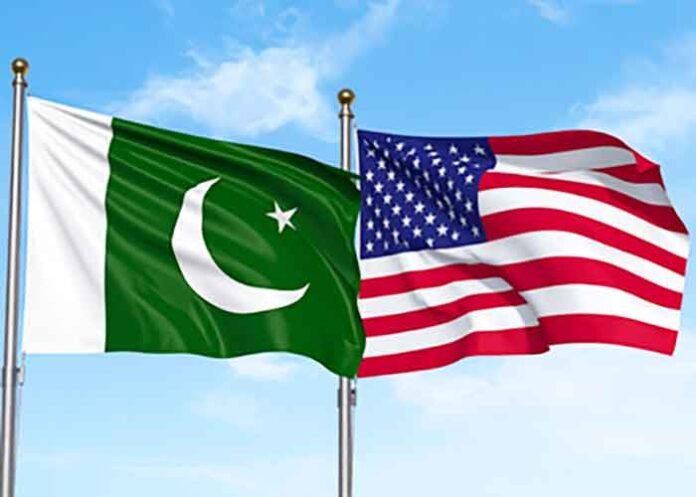
The United States has described Pakistan as “another important partner” in South Asia, outlining cooperation on critical minerals, trade and counterterrorism even as lawmakers highlighted regional tensions and the risks of instability.

Testifying before a House subcommittee hearing on US policy in South and Central Asia on Wednesday (local time), Assistant Secretary of State for South and Central Asian Affairs Paul Kapur said Washington is working with Islamabad to strengthen economic and security engagement.

“Pakistan is another important partner in the region,” Kapur told lawmakers.

“We’re working together with Pakistan to realise the potential of its critical mineral resources,” he said, describing efforts that combine “US government seed financing with private sector know-how to the benefit of both of our countries.”

Kapur said economic ties are expanding. “Our trade, energy, and agriculture are expanding as well,” he noted.

He framed the approach within a broader regional strategy, stating, “This will require us to help our partners build strategic capacity, enabling them to integrate into the world economy, preserve their autonomy, and contribute to a free and open region.”

Security cooperation, he added, remains central. “Our ongoing counterterrorism cooperation helps Pakistan combat internal security threats while addressing transnational dangers that could harm our partners.”

The hearing also revisited Pakistan’s long and complex history with militancy. Referencing his academic work, Kapur said: “The point of the book was to look back at Pakistani strategy and discuss how the Pakistanis had interacted with militant and terrorist groups.”

He acknowledged the broader challenge of combating extremist networks. “That’s one of the challenges of dealing with terrorism, that there are small numbers of people that blend into the population. It’s very hard to know,” he said.

Lawmakers underscored the high stakes of regional stability. Democratic Rep. Sydney Kamlager-Dove noted that “India and Pakistan fought their most serious military conflict in decades, risking nuclear escalation in a region of 2 billion people,” describing it as “a reminder of the indispensable role of US Diplomacy.”

Kapur did not elaborate on the current status of India-Pakistan tensions but emphasised that US engagement across South Asia is designed to prevent destabilising dominance by any single power.

“A hostile power dominating South Asia might exert coercive leverage over the world economy,” he said earlier in the hearing.

The renewed US focus on Pakistan’s mineral sector comes amid the broader efforts to diversify global supply chains and reduce strategic dependence on China in key sectors.

The testimony suggested that Pakistan continues to occupy a consequential space in Washington’s calculations — as a security partner, a mineral resource hub, and a key actor in a region where instability can carry global repercussions.

US-Pakistan relations have fluctuated over the past two decades, shaped by counterterrorism cooperation, tensions over Afghanistan, and concerns about extremist networks.(Agency)

Canada mass shooter was transgender female: Police

Ottawa, Feb 12, 2026

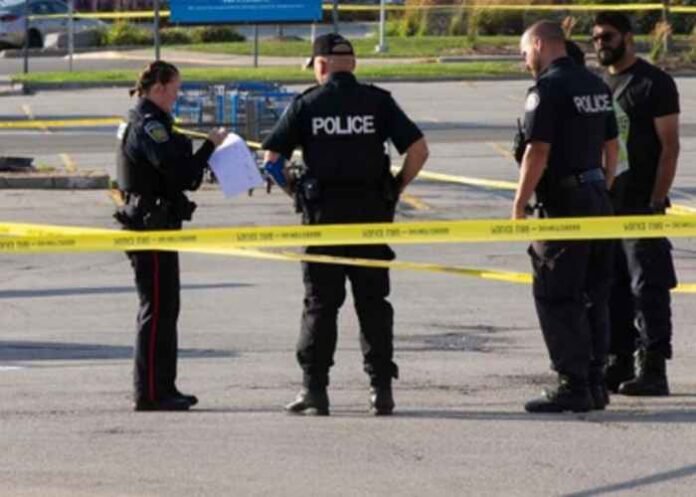
The shooter who killed eight people in British Columbia has been identified as a transgender female by officials, who said the person’s mother and stepbrother were among the victims.

Police also revised on Wednesday the number of victims in Tuesday’s shootings at a school and a home downwards to eight because they said they had mistakenly thought a woman being taken to hospital with serious injuries had died, but she was in a serious condition.

Including the shooter’s suicide, the total toll is nine.

As the country mourned the rare massacre in the nation of strict gun laws, Canadian federal police Deputy Commissioner Dwayne McDonald identified the shooter as Jesse Van Rootselaar, an 18-year-old male who began transitioning to female six years ago.

He said that he would refer to the person as a female.

Prime Minister Mark Carney told Parliament that the killings in Tumbler Ridge “left our nation in shock and all of us in mourning”.

“It is a town of miners, teachers, construction workers — families who have built their lives there, people who have always shown up for each other there”, he said.

The shootings reverberated across the small town of only about 2,400 people in a mining area.

Prime Minister Narendra Modi sent his condolences, saying in a X post, “India stands in solidarity with the people of Canada in this moment of profound grief”.

McDonald said the mother and stepbrother were first killed in their house by Van Rootselaar, who then went on a rampage at the local high school before dying of a self-inflicted gunshot wound.

He said that a woman educator and five students — three girls and two boys ranging in age between 12 and 13 years — were found dead at the school library and on a staircase when police got there within two minutes of being alerted.

Van Rootselaar had dropped out of the school about four years ago, McDonald said.

Police had been called to the shooter’s house several times for mental health issues, and weapons were involved in some instances, McDonald said.

He said that weapons had been seized from the house but were given back when the lawful owner petitioned for their return.

Unlike the US to the south, Canada has stricter gun laws and has fewer shootings and mass attacks are rare.

The last major incident involving a school was in Montreal in 1989 when 14 died.

The worst Canadian massacre in recent times was in Nova Scotia in 2020, when over two days, a man shot dead 13 people and killed nine others by setting fire.

In the US, there have been two recent cases of transgender people carrying out mass shootings linked to schools.

In 2023, a transgender male killed three students and three staff members at a Christian school in Nashville.

In Minneapolis last year, a transgender female attacked a Catholic church during a prayer service for children from its school.(Agency)

Strong India checks China’s leverage, says Trump admin official

Paul-Kapur

Washington, Feb 12, 2026

Calling South Asia “vitally important,” US Assistant Secretary of State for South and Central Asia S. Paul Kapur told lawmakers that India’s size and location make it the region’s anchor, arguing that a strong, independent New Delhi helps prevent any “single hegemon” from imposing “coercive leverage” over the Indo-Pacific.

Testifying before a House subcommittee hearing on US foreign policy in South and Central Asia on Wednesday (local time), Kapur said, “India alone has well over 1 billion people and occupies a subcontinental landmass; a hostile power dominating South Asia could exert coercive leverage over the world economy.”

“The United States must prevent this from happening and keep the region free and open,” he added.

Kapur framed the administration’s approach as one rooted in burden-sharing with partners. “America First does not mean America alone,” he said, stressing that Washington must “cooperate with like-minded partners who can share the burden.”

“All India, with its size, location, and commitment to a free and open region, anchors South Asia and more broadly the western half of the Indo-Pacific,” he told lawmakers.

Pressed on China’s growing reach, Kapur made clear the US objective. “What we’re trying to do fundamentally is not to keep China out of the region but to prevent China or any single hegemon from taking over or imposing coercive leverage on the region,” he said.

He argued that India’s strategic autonomy serves Washington’s interests.

“In India, that is able to be independent and preserve its freedom of action actually works to our strategic advantage and promotes our strategic interests,” Kapur said.

“In India, that is able to be independent and preserve its freedom of action, takes a huge swath of the Indo-Pacific off of China’s plate and almost by definition prevents it from becoming the dominant power in the region,” he added.

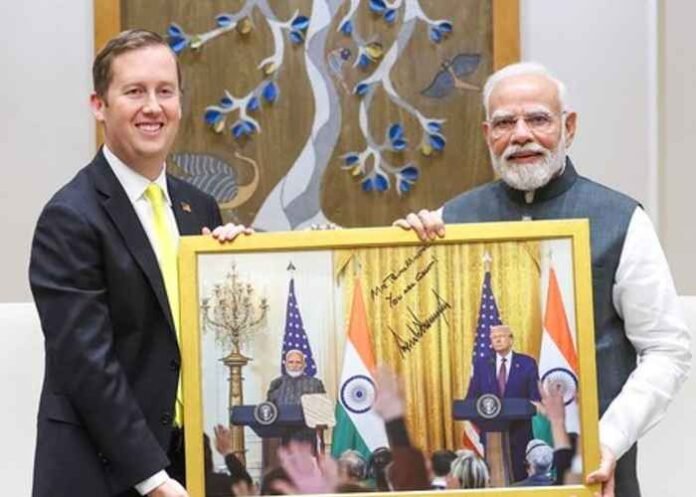
The testimony came days after President Donald Trump and Prime Minister Narendra Modi reached what Kapur called “a historic trade framework.”

“Just last week, President Trump and Prime Minister Modi reached an agreement on a historic trade framework,” he said, adding, “Following the trade framework President Trump reached last week with Prime Minister Modi, we can now focus on other shared priorities.”

House subcommittee chair Congressman Bill Huizenga underscored India’s place in US strategy. “India, the largest democracy in the world and one of the fastest growing economies, remains a vital strategic partner,” he said.

Huizenga pointed to the trade deal’s specifics. “The US-India trade deal sets India’s tariff rate at 18 per cent, one of the lowest regionally,” he said, adding that Delhi has agreed to buy more American energy.

He also framed India as central to countering Beijing. “India shares our objective of ensuring that China cannot bully its neighbours or threaten American assets in the Indian Ocean,” Huizenga said.

Beyond trade, Kapur outlined what he described as “three broad categories of approach to strategic capacity building” — “defence cooperation, targeted investment and diplomacy.”

On defence, he emphasised continuity despite recent trade tensions. “Despite some of the uncertainties surrounding the trade relationship in recent months, our other initiatives and efforts with India have continued forward, defence, energy, technology, and so on,” he said.

“We just signed the ten-year framework, which is going to help us move forward in interoperability, in joint exercises and many of the things that we — that we do and have been doing in recent years,” Kapur added.

He said there are “some potential purchases of weapons systems in the pipeline that will help India to protect itself better, ensure its sovereignty, and also will create American jobs.”

Kapur also highlighted “Indian purchases of US products ranging from drones to liquefied natural gas” as part of expanding energy and technology cooperation.

Democratic Congressman Ami Bera stressed bipartisan continuity in India policy. “This kind of strategic thinking has transcended both Democratic and Republican administrations,” he said.

Bera added that even amid turbulence, “we continued to move forward on most axes of the relationship in a pretty robust way.”

Kapur also referenced cooperation “bilaterally and also through the quad,” describing it as “a very important platform” that enables the United States to “connect and cooperate in unique ways with our like-minded partners.”

The US-India partnership has steadily expanded over the past two decades across defence, energy, and technology cooperation.(Agency)

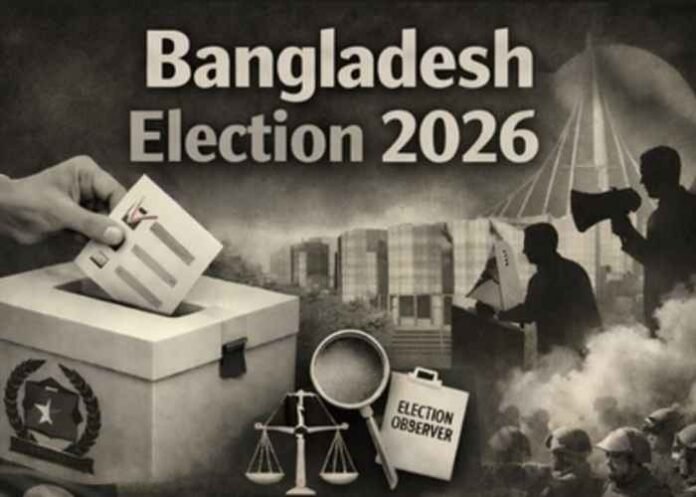
Bangladesh to vote today in first election since 2024 protests

Dhaka, Feb 12, 2026

Bangladesh is set to hold its crucial parliamentary elections on Thursday, nearly 18 months after the collapse of former Prime Minister Sheikh Hasina’s 15-year rule following massive nationwide protests.

The country has since been governed by an interim administration, during which Bangladesh witnessed continued protests, the rise of hardline Islamic groups, and incidents of violence against minorities.

The political landscape is now expected to undergo a significant shift with the formation of a democratically elected government, with many analysts projecting the Bangladesh National Party (BNP) as the likely winner.

Following the recent death of former Prime Minister Khaleda Zia, the BNP is currently being led by her son Tarique Rahman, who is widely seen as the frontrunner for the Prime Minister’s position.

The BNP’s principal challenger in the election is the Bangladesh Jamaat-e-Islami, a hardline Islamic party that previously shared an alliance with the BNP. Although political observers largely predict a BNP victory, many believe Jamaat-e-Islami could deliver its strongest electoral performance to date.

Since the removal of Sheikh Hasina from power last year, interim government Chief Advisor Muhammad Yunus has dissolved the Awami League and prohibited it from participating in the election.

The Awami League has strongly criticised the decision, terming the polls a “staged election” and alleging that BNP, Jamaat, and their allies are “continuously pressuring and threatening” party members as well as ordinary citizens to “force them to go to the polls”.

A significant number of voters, particularly younger citizens in their 20s and 30s, are expected to participate in the electoral process for the first time since Sheikh Hasina’s prolonged tenure, which ended in August 2024.

Voters aged between 18 and 37 constitute approximately 44 per cent of Bangladesh’s electorate, which totals around 127 million registered voters.

Polling for the 13th National Parliament elections and the 2026 referendum will be conducted across 299 parliamentary constituencies between 7:30 a.m. and 4:30 p.m., with the counting of votes scheduled to commence immediately after voting concludes.

According to a report published by leading Bangladeshi daily The Dhaka Tribune, more than 127 million voters are expected to cast their ballots in the parliamentary election, which is being held simultaneously with a nationwide referendum that could significantly alter Bangladesh’s constitutional framework.

The July National Charter proposes “sweeping constitutional reforms”, including imposing a two-term limit on the prime minister, restoring a neutral caretaker government system to supervise future elections, and establishing an upper house of parliament that would introduce 100 nominated members alongside the existing 350 elected lawmakers.

Out of the 127.7 million registered voters, 62.88 million are women, according to The Dhaka Tribune report. In a notable trend, around 2.7 million women have registered as first-time voters, significantly surpassing the 1.87 million newly registered male voters.

In several constituencies, particularly in parts of the Khulna division, female voters outnumber their male counterparts, prompting political parties to increasingly focus their manifestos and campaign messaging on issues concerning women voters.

Despite this growing voter participation, women remain underrepresented among candidates. Only 83 female candidates — including 63 nominated by political parties and 20 contesting as independents — are participating in the election, accounting for approximately four per cent of the total number of candidates.

To ensure security during the electoral process, authorities have deployed around 958,000 security personnel across the country, with increased deployment in sensitive and high-risk areas.

Additionally, more than 100,000 army personnel have been stationed to maintain law and order and to ensure the smooth conduct of polling.(Agency)

Buddhist monks end 2,300-mile peace walk in Washington

Washington, Feb 12, 2026

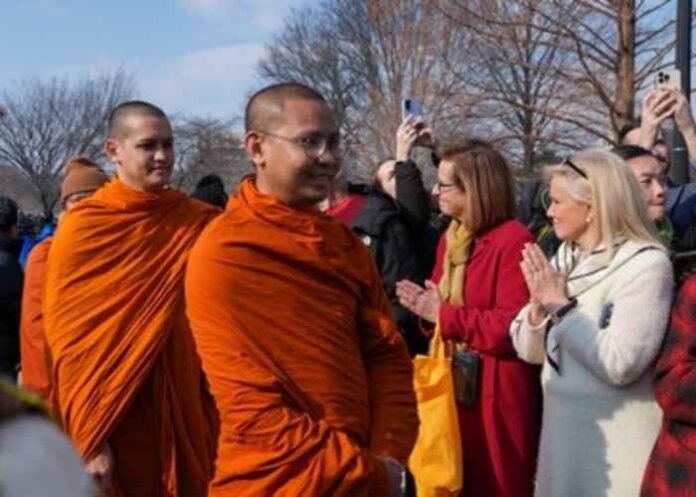
Nineteen Buddhist monks completed a 2,300-mile Walk for Peace to Washington, drawing lawmakers, faith leaders, and thousands of supporters as they delivered a message of compassion in the heart of the American Capital.

Congressional Asian Pacific American Caucus (CAPAC) Chair Grace Meng led 22 House and Senate Democrats in welcoming the monks at the Peace Monument west of the US Capitol on Wednesday (local time).

“It is a great honour to welcome the Venerable Monks who have walked thousands of miles across the United States to spread a message of peace that our nation desperately needs,” said Meng.

“Their journey inspired millions of people from different faiths and backgrounds to live each day with greater compassion, understanding, and respect for others. It is a movement we must sustain,” she said.

The monks began their 108-day journey on October 26, 2025, from the Huong Dao Vipassana Bhavana Centre in Fort Worth, Texas. Wearing saffron and maroon robes, they walked through winter storms and along icy sidewalks, accompanied by a rescue dog named Aloka.

Over 100 days, their simple message — peace, loving kindness and compassion — resonated widely. Thousands lined Washington’s streets as the monks walked single-file into the city. Nearly 3,500 people packed American University’s Bender Arena for their first public stop, observing silence as a sign of respect.

At the Washington National Cathedral, more than 100 Buddhist monks and nuns joined them for an interfaith gathering hosted in part by Washington Episcopal Bishop Mariann Budde.

“It is overwhelming for us,” said the Venerable Bhikkhu Pannakara, the group’s leader. “This is the moment I will remember for the rest of my life. And I hope you do the same.”

The trek was not without peril. In November, outside Houston, their escort vehicle was struck by a truck. Two monks were injured, and Venerable Maha Dam Phommasan lost his leg in the accident. He rejoined the group near Washington, entering the university arena in a wheelchair.

“There are so many things happening in the world,” said Jackson Vaughn, who travelled beside the monks after they passed through his hometown. “To see people gathering peacefully and setting an example, I think, is a wonderful thing.”

Long Si Dong, a spokesperson for the temple, stressed that the walk was not political.

“It’s a spiritual offering, an invitation to live peace through everyday actions, mindful steps and open hearts,” he said. “We believe when peace is cultivated within, it naturally ripples outward into society.”

On Wednesday, the monks walked through Capitol Hill and held a closing ceremony at the Lincoln Memorial before returning to Texas by bus. From downtown Fort Worth, they will walk six final miles back to the temple where their journey began.

Peace walks are a long-standing tradition in Theravada Buddhism. Vipassana meditation, which the monks practice and teach, traces its roots to ancient India and emphasises mindfulness of breath and the connection between mind and body.

In recent years, interfaith gatherings and public peace processions have gained visibility in the United States amid political polarisation and social tensions, drawing diverse communities seeking shared civic and spiritual space.(Agency)