




New Delhi, March 13, 2026
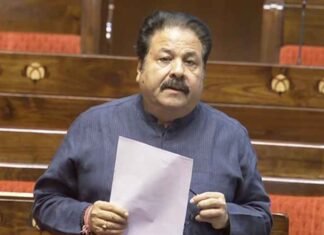
Amid reports of a move to initiate proceedings for the removal of Chief Election Commissioner (CEC) Gyanesh Kumar, Trinamool Congress MP Saugata Roy on Friday confirmed that notices have been submitted in both Lok Sabha and Rajya Sabha, and that these actions have been carried out in compliance with the law.
He added that the next step would be the constitution of a committee to examine the matter.
Speaking to reporters on the Parliament premises, Roy said the process for initiating action against the CEC follows constitutional provisions and established legal procedures.
“The committee will be formed as per the law. What is our hope? Our notice is in accordance with the law, and a committee should be formed. The main allegation is that he has disenfranchised people, and many names have been removed from the voter list. This is completely wrong. Also, many BLOs have lost their lives,” Roy said.
The Trinamool Congress leader further explained the constitutional mechanism for removing the Chief Election Commissioner from office.
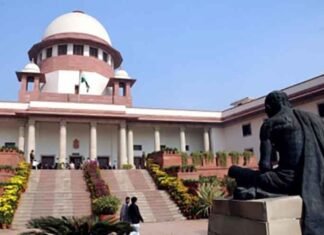
“As per the Constitution, the procedure to remove the CEC is similar to that for removing a Supreme Court judge. For that, at least 100 Lok Sabha MPs and 50 Rajya Sabha MPs must sign the notice. Once the signatures are collected, the Speaker will examine them. As per the rules under the Judges (Inquiry) Act, 1968, if it is found in order, a three-member committee will be formed,” Roy said.
He added that the committee would decide the further course of action.
“They will decide whether there will be discussions or not. So, the process has started from today,” he said.
Meanwhile, according to sources cited by NDTV, as many as 130 Lok Sabha MPs and 63 Rajya Sabha MPs have signed the notice seeking the removal of Chief Election Commissioner Gyanesh Kumar.
Concerns have also been raised over the Special Intensive Revision (SIR) exercise in West Bengal. Trinamool Congress supremo and West Bengal Chief Minister Mamata Banerjee has accused the Election Commission of deleting the names of genuine voters from the electoral rolls.
Under the constitutional framework, the removal of the Chief Election Commissioner is a complex process and can take place only on the grounds of proven misbehaviour or incapacity. The procedure is similar to that followed for the removal of a judge of the Supreme Court or a High Court.
Article 324(5) of the Constitution states that the Chief Election Commissioner shall not be removed from office except in the same manner and on the same grounds as a judge of the Supreme Court. It also specifies that the conditions of service of the CEC cannot be altered to his disadvantage after his appointment.
A motion for removal can be introduced in either House of Parliament. However, it must be passed by a special majority, which includes a majority of the total membership of the House as well as a two-thirds majority of members present and voting.
According to the law governing the appointment of the Chief Election Commissioner and Election Commissioners, the CEC enjoys protection similar to that of a Supreme Court judge. Other Election Commissioners, however, cannot be removed from office except on the recommendation of the Chief Election Commissioner.
The Judges (Inquiry) Act, 1968, lays down the detailed procedure to be followed once such a notice is submitted. If the notice is given on the same day in both Houses of Parliament, a committee will not be constituted unless the motion is admitted in both Houses.
After the motion is admitted, a committee will be constituted jointly by the Lok Sabha Speaker and the Chairman of the Rajya Sabha.
The committee will comprise the Chief Justice of India (CJI) or a judge of the Supreme Court, the Chief Justice of one of the High Courts, and a distinguished jurist.
The proceedings of the committee are conducted in a manner similar to court proceedings, where witnesses may be examined and cross-examined. The Chief Election Commissioner will also be allowed to present his defence before the committee.
Once the committee completes its inquiry, it will submit its report to Parliament. The report will then be tabled in the House, after which discussions on the motion for removal will begin.
For the removal to take effect, the motion must be passed by both Houses of Parliament with the required special majority.
During the debate in Parliament, the CEC will also have the right to defend himself/herself before the House.
Meanwhile, earlier this week, the opposition’s no-confidence motion against Lok Sabha Speaker Om Birla was rejected in the House. On Thursday, Birla resumed his duties as Speaker and asserted that his actions have always been unbiased.
In his remarks, Birla said he had consistently tried to ensure that every Member of Parliament gets an opportunity to speak in the Lok Sabha. He also stated that while the Leader of Opposition plays an important role, he is not “above the House”, in what was seen as a remark directed at Rahul Gandhi.(Agency)
 FOLLOW NOW








































































 requires special majority in Parliament.)