
New Delhi, March 20, 2026
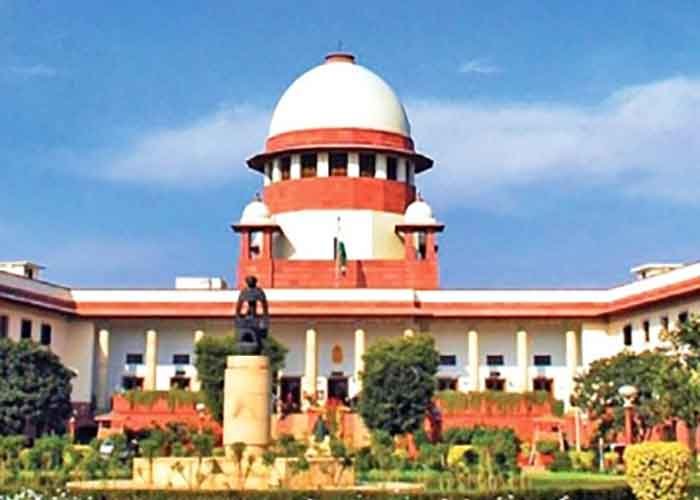
The Supreme Court has quashed criminal proceedings against a Gujarat-based man accused of abetting suicide over alleged harassment for repayment of loans, holding that mere demand for repayment of debt cannot constitute abetment.
Allowing the appeal filed by Dhirubhai Nanjibhai Patel Lotwala, a bench of Justices Manoj Misra and Manmohan set aside the Gujarat High Court’s order, which had refused to quash the FIR and subsequent proceedings under Sections 306 and 506(2) of the Indian Penal Code (IPC).
The case stemmed from the suicide, in Gujarat’s Morbi district, of a man who allegedly jumped under a tractor trolley, purportedly due to harassment by multiple creditors, including the appellant, for repayment of borrowed money.
An FIR was registered at Halvad police station in Morbi based on a suicide note recovered from the deceased, wherein he named nine creditors and alleged that they had been threatening him over unpaid dues.
The prosecution also relied on call detail records (CDR), which showed that the appellant had made around 40 calls to the deceased in the six months preceding the incident.
Before the apex court, the appellant contended that there was no material to establish abetment, arguing that asking for repayment of a loan is a lawful act and that the allegations of threats were vague and unsubstantiated.
In its order, the Justice Misra-led Bench observed that the case against the appellant was primarily based on the suicide note and call records, both of which were insufficient to establish the ingredients of abetment to suicide.
“As far as the suicide note is concerned, we find that it lacks material particulars regarding the nature of those threats and the time and place when those threats were extended,” it said.
The apex court further observed that the suicide note named as many as nine persons without specifying their individual roles.
“Moreover, the suicide note indicts as many as 9 accused without specifying the role of any one of them. It is not the case of the prosecution that all the accused belong to one family or were harassing the deceased as a group. Further, the deceased has painted all creditors with one brush. Therefore, a trial based on such a suicide note would be a futile exercise,” the top court added.
On the issue of repeated phone calls, the Supreme Court held that such conduct, by itself, does not amount to criminality.
“If a creditor makes a phone call to the debtor for return of his money, that being a lawful act, it cannot on its own constitute a ground to prosecute the creditor,” the bench said.
It also noted that there was no material to indicate that the deceased was subjected to physical assault or coercion.
“In such circumstances… there is hardly any material on the basis whereof it could be inferred that the appellant, by demanding his dues, abetted the commission of suicide by the deceased,” the apex court observed.
It concluded that continuation of the criminal proceedings would amount to an abuse of the process of law. “In our view, therefore, the continuance of the proceedings against the appellant would be a futile exercise and would amount to abuse of the process of the Court. Hence, to secure the ends of justice, it is necessary that the same be quashed,” the bench said.
Allowing the appeal, the Supreme Court set aside the Gujarat High Court’s order, which had earlier refused to quash the FIR and the subsequent charge sheet.(Agency)
 FOLLOW NOW