
New Delhi, Feb 14, 2026
The completion of the Bangladesh elections has come as a major relief not only for the people of the neighbouring country, but for India as well. However, Indian agencies are closely watching the areas in which the Jamaat-e-Islami registered major victories along the West Bengal border.
Ties with Bangladesh had literally come to a standstill under Muhammad Yunus and now with the Bangladesh Nationalist Party’s (BNP) Tarique Rahman set to take over as Prime Minister, New Delhi is confident that ties would be reset.
However, the Jamaat-e-Islami ended up with 70 seats and worryingly, a majority of them are along the West Bengal border. Though it has also won a few seats along the border with Meghalaya, but that is a smaller number when compared to how it performed along the border with West Bengal.
An Intelligence Bureau official says that this is a major concern for the security agencies. The Jamaat and its stooges always focussed on large scale illegal immigrations into India through West Bengal.
Moreover, with West Bengal elections round the corner, the Jamaat will use all its might to try and disrupt law and order in the Indian state.
Another worry is that there are a lot of Hindus who are in a minority who live in these areas where the Jamaat has won. The Jamaat may step up efforts to target them, although in their manifesto, they assured the Hindus of safety and protection, the official added.
While this is the best performance that the Jamaat has put up in all the elections that it has fought so far, it still seemed bitter after the results were announced. They questioned the fairness with which the votes were counted.
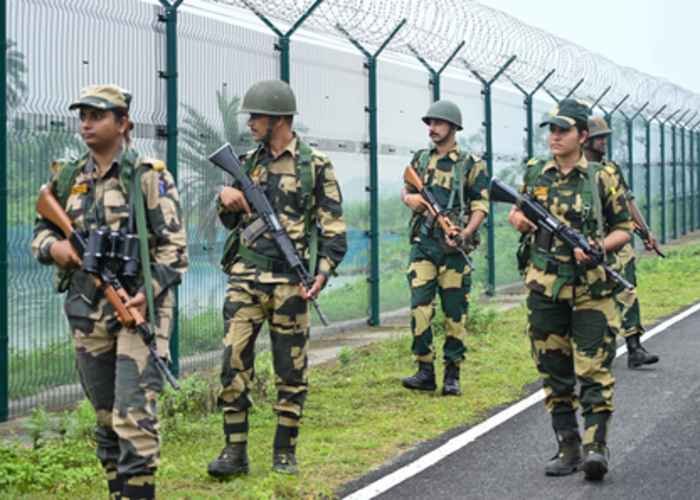
They are visibly upset and will look to disrupt peace, especially in those areas where they are strong. This could affect border security as the Jamaat has performed best in areas that share a border with India.
Another official said that ahead of the West Bengal elections, the Jamaat is likely to step up illegal immigration efforts. This is being done with the aim of creating demographic changes ahead of the elections so that the situation becomes communally volatile, the official added.
Over the years, the Jamaat has cultivated these constituencies which largely lie in rural Bangladesh. Madrasas have come up in large numbers in these areas very close to West Bengal. The Intelligence agencies have time and again flagged many of these Madrasas stating that they are used to facilitate illegal immigration and are radicalisation and recruitment hubs.
Officials say that not all Madrasas function at all times. Some of them are activated when something major is being planned and there are Intelligence inputs that clearly state these Madrasas are set to get operational again.
Under the Muhammad Yunus regime, radicals and even terrorists had a field day. Scores of them were released from jail and have been on the loose since then. Many terrorists who are part of terror groups such as the Harkat-ul-Jihad Islami (HuJI) and Jamaat-ul-Mujahideen, Bangladesh (JMB) were released when Yunus was at the helm. These terrorists were tasked by the ISI to create splinter groups and deploy them in areas that border India.
There are many operatives who have been sent to the border areas and they are waiting for instructions to strike in India. The ISI would want the strikes to happen during the West Bengal election process. The agencies are already picking up plenty of chatter online about the possible West Bengal operations. Scores of radical propaganda is being circulated on encrypted messaging channels.
The agencies have also picked up information that apart from groups such as the HuJI and JMB, even operatives of the Al-Qaeda in the subcontinent are part of this operation.(Agency)
 FOLLOW NOW