
New Delhi, March 4, 2026
In a social media post amid the global fallout from the US-Israeli strikes that killed Iran’s Supreme Leader Ayatollah Ali Khamenei, Bharatiya Janata Party (BJP) leader Amit Malviya has drawn a historical parallel to underscore the need for diplomatic restraint.
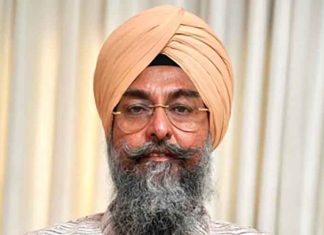
Malviya, who heads the BJP’s National Information and Technology Department and co-incharges West Bengal operations, shared a quote from India’s first Prime Minister Jawaharlal Nehru regarding the execution of Hungarian revolutionary Imre Nagy in 1958.
The post, which garnered over 1,600 views within hours, appears to subtly defend the Indian government’s measured response to the recent events in Iran.
The quote, attributed to Nehru in a letter dated around June 1958, reads: “While this is my clear opinion, it will have to be considered in what form and on what occasion I should express it. I agree with you that we need not make any governmental pronouncement on this subject, at this stage at least.”
Malviya accompanied the text with a historical photograph, believed to be a black-and-white image of Nehru engaged in correspondence, symbolising the era’s diplomatic deliberations.
For context, Imre Nagy, the reformist Prime Minister during Hungary’s 1956 uprising against Soviet control, was executed on June 16, 1958, by communist authorities in Budapest on charges of treason.
His death, two years after the failed revolution, drew international condemnation but elicited a cautious stance from Nehru, who was navigating the early days of the Non-Aligned Movement.
Nehru’s reluctance to issue an immediate official statement reflected India’s commitment to non-interference and balanced foreign policy amid Cold War pressures. Malviya’s invocation comes at a sensitive juncture.
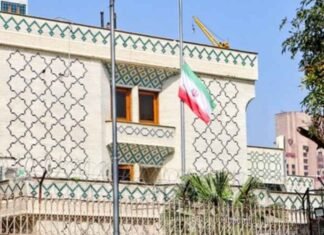
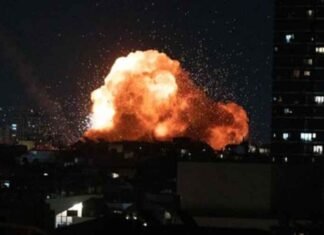
The death of 86-year-old Khamenei on February 28, during precision airstrikes on Tehran, has sparked intense domestic debate in India.
Opposition parties, including Congress, have criticised the Modi government for its perceived silence, accusing it of aligning too closely with Israel and the US due to Prime Minister Narendra Modi’s recent visit there.
Some have demanded a stronger condemnation of the strikes, viewing them as an assault on sovereignty, while others urge solidarity with Iran, a key oil supplier and strategic partner.
By resurfacing Nehru’s words, Malviya seems to argue for patience and strategic timing in official reactions, echoing the Congress icon’s approach.
“Nehru understood the perils of premature pronouncements in volatile international crises,” Malviya wrote in the post, without explicitly linking it to Iran but in a thread that references ongoing “global realignments.”
He added a parenthetical note on Nagy’s fate, highlighting the Hungarian’s role as a symbol of resistance against authoritarian reprisal.(Agency)
 FOLLOW NOW